


More news on this day
Major U.S. airlines are widening summer 2026 travel alerts to cover Alabama, joining Florida, Texas, Georgia, New York and several other states facing heightened risks of flight delays and cancellations amid severe weather and a strained national aviation network.
Get the latest news straight to your inbox!
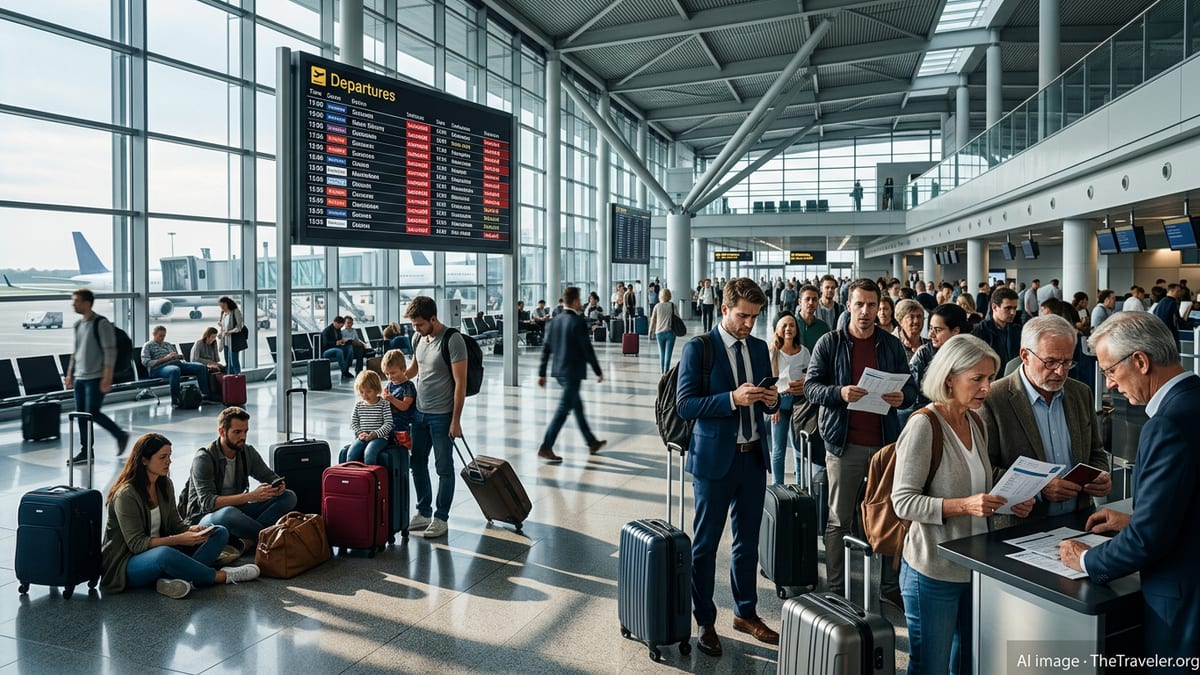
Alabama Added as Storm Belt Risks Expand Across the South
Alabama’s inclusion in the latest wave of airline travel alerts reflects how far-reaching this summer’s operational risks have become across the Southeast. Weather outlooks for June and July highlight repeated rounds of strong thunderstorms sweeping from the Gulf Coast through the Deep South into the Mid Atlantic and Northeast, a pattern that often disrupts flight schedules from Atlanta to New York and along the busy I‑95 corridor.
Reports from meteorological services in mid-June indicate that severe storms are expected to strike large sections of the Northeast, Mid Atlantic and parts of the Southeast, triggering delays on the ground and in the air. That weather corridor encompasses major hubs used by Alabama travelers, including Atlanta, Charlotte and the New York City area, even when their itineraries do not begin or end in a high-risk zone.
Travel advisories from major carriers show a growing list of affected states, initially centered on Florida, Texas, Georgia and New York, now extending inland as systems track across the interior South. Industry trackers note that when airlines activate weather waivers for clusters of Southern and East Coast airports, ripple effects frequently extend to regional airports in Alabama as aircraft and crews are repositioned.
For passengers flying from Birmingham, Huntsville, Mobile or Montgomery, the expanding alert footprint means that even short connections through hubs to the north or east may face disruption. Publicly available airline guidance urges customers in the region to monitor their reservations closely through carrier apps and to consider flexible rebooking options when storms appear in the forecast.
Nationwide Strain on the 2026 Summer Airline Network
The alerts unfolding across Alabama and neighboring states are part of a broader pattern of stress on the U.S. aviation system this year. Industry analyses released this spring describe 2026 as a convergence point for high demand, tight airline schedules, air traffic control staffing challenges and congested airspace during peak summer months.
Mid‑year outlooks from aviation consultancies and economic forecasters point to thin operating margins for on‑time performance, with relatively small shocks producing outsized impacts on delays and cancellations. According to one summer 2026 reliability report, a disproportionate share of North American delay minutes typically occurs between June and August, when thunderstorms, heavy passenger volumes and limited slack in schedules frequently collide.
Airline reliability data through early 2026 also indicate that disruptions never fully receded after the pandemic era. Published coverage on flight performance shows that cancellation rates climbed in 2025 and remained elevated into this year, influenced by government funding disruptions, staffing shortfalls and repeated bouts of severe weather at major hubs.
In response, airlines have been adjusting networks and cutting some peak flights at overburdened airports. Recent announcements from major carriers outline route suspensions and schedule trims at busy hubs such as Chicago O’Hare in order to align operations with federal capacity directives. Those cuts, while aimed at stabilizing performance, reduce the system’s ability to absorb additional shocks when major storm systems sweep across the country.
Weather Waivers and Dynamic Advisories in Florida, Texas, Georgia and New York
Florida, Texas, Georgia and New York remain at the center of the most active airline alerts this summer, illustrating how conditions at a handful of critical hubs can reverberate nationally. Publicly posted travel advisories from large U.S. carriers in June highlight recurring weather waivers for storms around Dallas–Fort Worth and Houston in Texas, as well as thunderstorms in Atlanta and along the Eastern Seaboard.
In the Northeast, multiple airlines have issued advisories for New York‑area airports when forecasters call for low ceilings, storms or strong winds. A current weather advisory published by one major carrier specifically notes that inclement conditions in the Northeast may affect flights to, from or through the region, allowing travelers to rebook within set windows without paying fare differences, provided they keep the same cabin of service.
Similar patterns are emerging in the Southeast and Gulf states. Informal operational summaries shared publicly by airline employees point to repeated ground stop threats at Dallas–Fort Worth and Charlotte when severe thunderstorms organize over Texas and the Carolinas. During such events, flights arriving from secondary markets including Alabama are often held at origin or rerouted, feeding into a wider network of delays.
Because these advisories are highly time‑sensitive, travelers are being directed to rely on live airline travel alert pages and mobile notifications rather than static announcements. Observers note that while airlines are increasingly proactive about publishing waivers, rapidly changing forecasts mean that airports in states such as Alabama may be added to or removed from coverage on short notice as systems evolve.
Fuel Costs, Global Tensions and Capacity Limits Add Pressure
Complicating the weather picture are economic and geopolitical forces that are reshaping airline schedules for the 2026 summer season. Industry coverage links the ongoing conflict involving Iran to disruptions in global oil markets, with higher jet fuel prices prompting some carriers to trim capacity and rethink marginal routes just as leisure and event travel surges.
Recent reporting on U.S. airlines details how at least one major carrier has temporarily suspended select summer routes, citing elevated fuel costs and the need to keep overall networks resilient. Economic briefings from financial and aviation groups echo those concerns, suggesting that higher operating costs may lead to leaner schedules and fewer backup aircraft and crews available when irregular operations hit.
At the same time, updated airspace and safety briefings for 2026 point to ongoing challenges such as reroutings around conflict zones, the risk of satellite navigation interference and continued strain in certain air traffic control sectors. These factors can add minutes to individual flights and complicate already tight connection banks at hubs, especially during afternoon and evening peak periods when storms are most likely to flare across the central and eastern United States.
Together, these forces create a fragile operating environment in which Alabama’s newly highlighted risks are best seen as one node in a complex national web. A thunderstorm complex over Houston, a ground delay program in New York or a staffing hiccup at a Florida hub can quickly cascade through the system, affecting flights, crews and aircraft positioned throughout the Southeast.
What Travelers Through Alabama and the South Can Expect
For travelers planning summer journeys that touch Alabama, the emerging pattern suggests a season where flexibility and preparation will be crucial. Publicly available disruption data and expert commentary point to an elevated likelihood of missed connections, rolling delays and last‑minute cancellations on days when storms or capacity restrictions hit multiple hubs at once.
Passengers connecting through Atlanta, Dallas–Fort Worth, Houston, Charlotte or the New York City airports are particularly exposed, as these hubs serve as primary gateways for much of Alabama’s domestic and international traffic. When airlines publish waivers for these cities, affected travelers from Alabama are often eligible for fee‑free changes but may find that their alternative options are limited due to high load factors and compressed schedules.
Consumer travel outlets advise that, during periods of widespread alerts, travelers build extra buffer time into itineraries, favor morning departures, and keep airline apps and notifications active for real‑time updates. Although such guidance cannot prevent disruptions, it may help passengers rebook onto earlier flights, secure remaining seats during irregular operations and make quicker decisions when anticipated storms threaten to upend travel plans.
With summer only just underway, the widening circle of travel alerts to include Alabama underlines how interconnected the 2026 aviation landscape has become. As airlines navigate volatile fuel prices, crowded skies and an increasingly storm‑prone season, travelers across the South are likely to feel the impact in longer travel days, tighter schedules and a greater need to adapt on the fly.