


More news on this day
Rail travel north of London was severely disrupted on Friday evening after reports indicated two passenger trains collided near Bedford, prompting a large emergency response and halting services on a key route into the capital.
Get the latest news straight to your inbox!
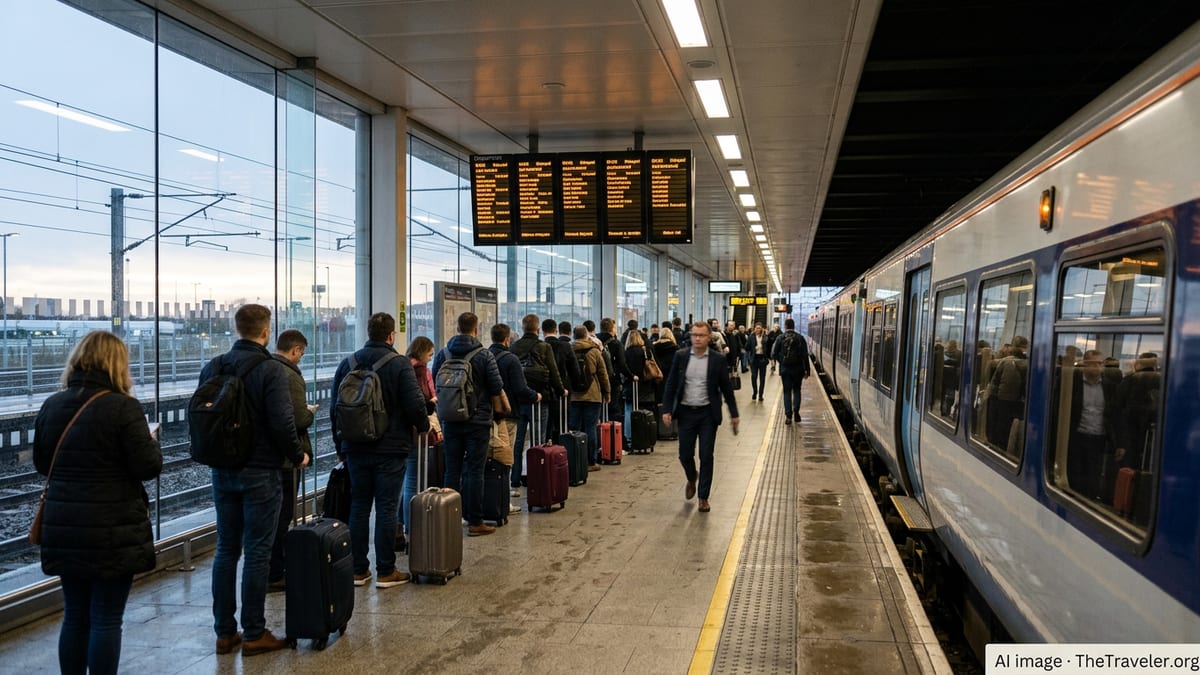
Collision reported on busy London–Bedford corridor
Published coverage indicates that the incident occurred on Friday evening near Bedford, around 50 miles north of central London, on one of the main lines linking London St Pancras with the East Midlands. Early reports describe a collision involving two southbound trains in the Bedford area, with images shared on social media showing damaged carriages and passengers being led away across adjacent fields.
Rail industry updates suggest that the collision involved a Luton Airport Express service and an East Midlands Railway intercity train heading towards London. Initial accounts point to one train coming to a stop on the line before a following service made contact with its rear, although the precise sequence of events has not yet been formally established.
The crash has taken place on a heavily used passenger corridor that serves daily commuters, airport travelers heading to and from Luton, and long-distance passengers connecting London with cities such as Leicester, Derby, Nottingham, and Sheffield. Early evening on a Friday is typically one of the busier periods on the route, raising concerns about the number of people who may have been affected.
Photographs circulated online show at least one train remaining upright on the tracks, with other coaches appearing to have suffered visible damage. The extent of any derailment is still being assessed, and no official casualty figures have been publicly confirmed at this stage.
Large emergency response and travel disruption
Publicly available information from local media and rail operators shows that emergency services were deployed in significant numbers to the scene shortly before 7 p.m. local time. Fire and rescue crews, paramedics, and police units have been reported in the area between Bedford and Flitwick, with air ambulances also seen overhead according to eyewitness descriptions.
Passengers posting from the scene describe a sudden impact and the lights going out, followed by evacuation onto the trackside and then into nearby fields. Some accounts mention minor injuries and shock among those on board, though detailed information on serious injuries is not yet available.
Rail operators on the Midland Main Line quickly suspended or diverted services while the extent of the damage and any infrastructure issues were assessed. East Midlands Railway and other operators are advising passengers not to travel on the affected stretch unless essential, as trains between London St Pancras and destinations to the north face significant disruption and potential cancellations.
Replacement transport is expected to be limited in the immediate aftermath, with local roads also busier than usual as emergency vehicles access the site. Travelers heading for Luton Airport or returning from late-afternoon flights are being urged via service updates to check the latest rail information and consider alternative routes, including road-based transfers from other London terminals.
What is known so far about how the crash occurred
Only preliminary indications are currently available about how the collision developed, and specialists are expected to require detailed examination of on-board data recorders, signalling logs, and track equipment before drawing firm conclusions. Rail-focused commentary and early reporting suggest that one of the trains may have come to a standstill on the main line after an apparent issue involving its safety systems.
Some rail observers have pointed specifically to the train protection equipment that intervenes to prevent trains from passing signals at danger or exceeding speed restrictions. In normal operation, such systems are designed to bring trains to a controlled halt if warning indications are not acknowledged by the driver. How this type of safety overlay might have contributed to the sequence of events near Bedford remains an open question that future technical inquiries will seek to address.
Images from the site show the leading end of one unit with heavy cab damage, consistent with a rear-end impact at speed. The position of the two trains, both reportedly heading south towards London, suggests that the collision took place on the same track rather than at a junction, though any role played by signalling layouts or track works will only become clear after formal investigation.
Past investigations into comparable low-frequency but high-consequence incidents on European main lines have often focused on a combination of human factors, technical safeguards, and operational rules. The same framework is likely to guide the work of inspectors and safety specialists in the weeks ahead as they attempt to reconstruct the Bedford collision in detail.
Impact on rail passengers and regional connectivity
The section of line affected near Bedford is a critical part of the network for both regional and long-distance services, and the timing of the incident has intensified its impact. Friday evenings see heavy commuter flows out of London, leisure travelers setting off for weekend breaks, and a steady stream of airport-bound passengers connecting to Luton services.
With trains unable to operate normally through the area, travelers face extended journey times, diversions via alternative routes, or last-minute changes to plans. Some passengers are being re-routed via other main lines where capacity allows, while others are likely to depend on buses, taxis, or private cars to complete their journeys between London and communities across Bedfordshire and the East Midlands.
For Luton Airport in particular, interruption to the dedicated express link from central London complicates travel for those on evening departures or arriving on late flights. Published updates indicate that coaching and bus alternatives are being explored where possible, but road congestion around Bedford and along the M1 corridor may limit how quickly new arrangements can be scaled up.
Local businesses that rely on the steady flow of rail passengers, including hotels and hospitality providers, may also feel short-term effects if disruption continues into the weekend. The longer-term impact on ridership confidence will likely depend on how swiftly normal services can be restored and how clearly the causes of the collision are communicated by the agencies leading the response and investigation.
Next steps for investigation and rail safety scrutiny
Attention is already turning to the official investigation process that follows a serious rail incident in the United Kingdom. In previous cases, specialist accident investigators have carried out multi-stage inquiries examining technical performance, operational decision-making, and the interaction between human behavior and automated systems, before issuing recommendations designed to prevent similar crashes in the future.
Given the prominence of the Bedford section of the network and the visibility of this evening’s events on national media and social platforms, scrutiny of existing safety measures is likely to be intense. Commentators are already raising questions about the resilience of current signalling and train protection systems, and whether further layers of automation or revised procedures are needed to reduce the risk of rear-end collisions on busy main lines.
Any formal report that may emerge from this incident typically takes months to complete, once evidence has been collected and thoroughly analyzed. In the short term, priority will remain on caring for passengers, clearing damaged rolling stock from the line, and inspecting track and signalling equipment so that services can safely restart, even if initially at reduced speeds or with temporary restrictions in place.
For travelers planning journeys over the coming days, publicly available information suggests that flexibility will be important. Rail operators are expected to issue rolling updates about service patterns, ticket acceptance on alternative routes, and the gradual restoration of through trains between London and the Midlands as recovery work progresses at the crash site.