


More news on this day
Summer travelers who show up at the airport without a compliant ID could face an unwelcome surprise at security this year: a new 45 dollar fee to verify their identity before flying.
Get the latest news straight to your inbox!
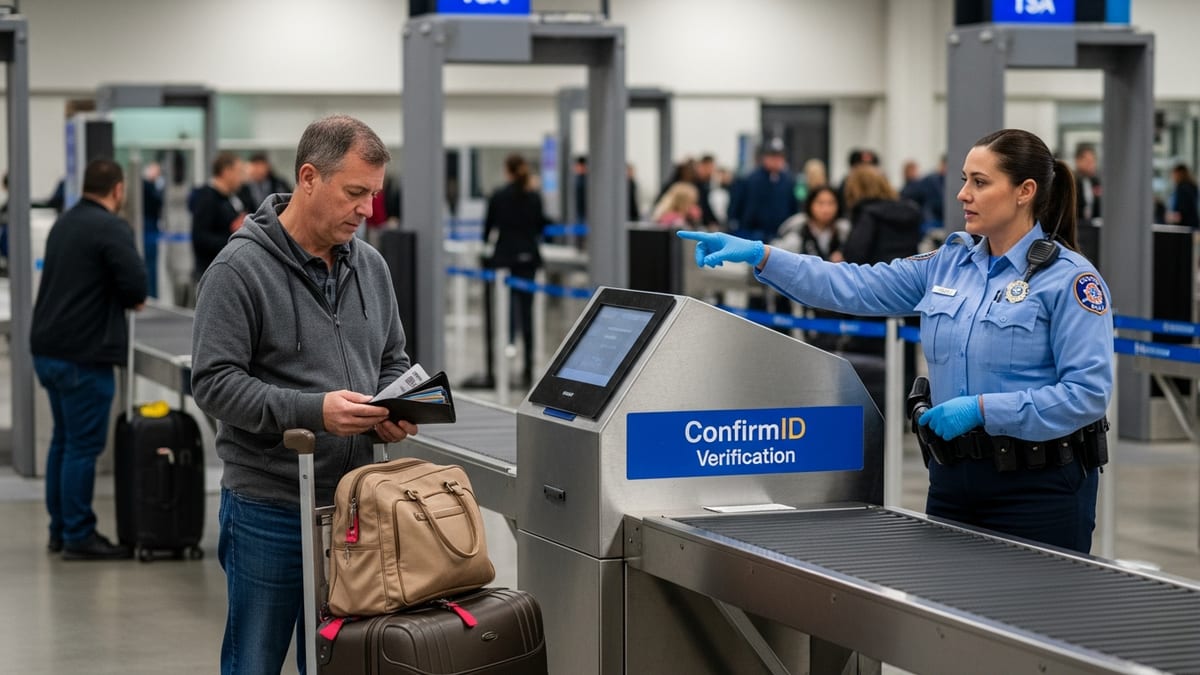
What the new 45 dollar ConfirmID fee actually is
Transportation Security Administration information shows that, starting February 1, 2026, travelers who arrive at airport checkpoints without a REAL ID compliant driver’s license, passport, or another acceptable document may be directed to a paid identity verification option known as TSA ConfirmID. The fee is set at 45 dollars per traveler and applies when a passenger does not present an approved form of identification and chooses to use this system to continue toward their flight.
According to publicly available federal documents and airport advisories, ConfirmID is described as a modernized “alternative identity verification” process. Instead of relying solely on a physical card, the system draws on government databases and additional information to attempt to confirm a traveler’s identity. The program is not marketed as a penalty, but as a user fee intended to cover the cost of the technology, staff time and background checks involved in verifying a passenger who lacks standard ID.
Coverage from outlets including national wire services and major newspapers notes that this is a shift from the long standing practice in which many passengers who forgot their wallet or lost their ID could still complete a manual identity check at no charge. Under the new structure, that option is being formalized into a fee based service that the traveler, rather than taxpayers, funds.
Government filings indicate that the fee grants access to ConfirmID for a set window, typically 10 days, allowing a traveler to use the process for both outbound and return flights within that period. After that, the traveler would need to either present an acceptable ID or pay again if they wished to use the system on a future trip.
Who could end up paying at the checkpoint this summer
Summer is peak travel season in the United States, and analysts warn that the combination of crowded terminals and new rules increases the risk of confusion. The travelers most likely to face the 45 dollar charge are adults 18 and older flying domestically who either do not have a REAL ID compliant license or passport, or who simply forget to bring any acceptable document to the airport.
Publicly available TSA guidance lists several categories that can trigger use of ConfirmID. These include passengers whose driver’s licenses are not marked as REAL ID compliant, people relying on temporary paper licenses that the checkpoint cannot verify with its credential scanners, and travelers whose IDs are lost, stolen or left at home. Adults using alternative documents that are not on TSA’s approved list could also be referred into the paid process.
Current rules still allow some flexibility. In many cases, TSA has continued to accept certain IDs for up to two years after their printed expiration date, and passengers with valid passports or military IDs do not need REAL ID at all. But travel experts caution that front line experiences can vary by airport and by checkpoint, and a traveler expecting leniency may still be sent to the 45 dollar option if their document does not pass electronic checks or cannot be authenticated quickly.
Families should note that the fee is assessed per traveler who requires ConfirmID. Children under 18 flying with an adult who has proper identification are typically not required to present ID for domestic flights, so they are less likely to be affected directly. However, any parent or guardian who lacks compliant documents could find themselves paying the additional cost just to reach the gate with their kids.
How the ConfirmID process works at and before the airport
Information released by TSA and summarized in airport advisories indicates that ConfirmID is designed to be completed online whenever possible. Travelers who know in advance that they do not have a compliant license or passport can visit a secure portal, enter personal details, answer verification questions and pay the 45 dollar fee before they travel. Once complete, they receive confirmation to present at the checkpoint alongside any supporting documents they do have.
For passengers who arrive at the airport unprepared, signage and staff at many terminals now direct them to kiosks or mobile access points where they can complete the same process on site. Reports from early pilots of the system describe a two step experience: first, the traveler provides biographical information and payment, and second, TSA systems attempt to verify that information against trusted data sources. If identity verification is successful, the traveler is then cleared to enter the standard security screening line, though they may still face additional screening of their person or carry ons.
Officials have emphasized in public documents that ConfirmID does not guarantee that every traveler will be allowed to fly. If the system cannot confidently match a passenger to records, or if there are unresolved issues, that person can still be denied access to the checkpoint even after paying the fee. For that reason, airports and consumer advocates stress that ConfirmID should be viewed as a backup option, not a guaranteed workaround for travelers who do not meet ID requirements.
Processing times are another concern for summer flyers. Some airport notices warn that completing ConfirmID at the terminal may add 30 minutes or more to the security experience, especially during busy periods. For travelers racing to make a morning departure, that delay, combined with the 45 dollar cost, could easily turn a simple oversight into a missed flight and an expensive rebooking.
Why TSA introduced the fee and how travelers are reacting
Federal Register notices and budget documents indicate that the 45 dollar ConfirmID fee is part of a broader effort to shift more security related costs from general taxpayers to the people who use the system. The agency previously floated a lower, 18 dollar fee for a similar alternative identity program, but subsequent filings show that estimated technology, staffing and vendor expenses led to the higher final amount.
Publicly available statements from the Department of Homeland Security frame the change as both a cost recovery measure and a way to encourage faster adoption of REAL ID standards, which have been delayed multiple times over the past decade. Government figures cited in news coverage suggest that a large majority of frequent flyers already hold compliant IDs or passports, meaning the fee is aimed at the remaining portion of travelers who have not updated their documents or who are occasional flyers caught off guard by the rules.
Early reaction from travelers, as reflected in consumer reporting and online forums, has been mixed. Some passengers argue that 45 dollars is a steep price for what used to be a courtesy, especially for families or lower income travelers who may already struggle with ticket prices, baggage fees and parking costs. Others note that the fee is avoidable with proper preparation and view it as a reasonable charge for a service that requires specialized staff, secure systems and additional background checks.
Travel industry observers point out that the timing of the rollout, just ahead of a busy summer season, is likely to amplify frustration among those caught unaware. While airlines have been updating their communications, and airports have added reminders throughout terminals, many occasional travelers may not encounter these notices until they are already in line. That gap between policy and passenger awareness is what has prompted renewed warnings from consumer advocates in recent weeks.
Steps travelers can take now to avoid a 45 dollar surprise
With vacation season underway and ConfirmID fees already built into TSA’s plans, travel experts stress that the most effective strategy is to treat ID as carefully as a boarding pass. Flyers are urged to check their wallet several days before departure to confirm they have either a REAL ID compliant license or a valid passport, and to verify that the document is not expired or damaged.
State motor vehicle agencies, passport acceptance facilities and post offices continue to process new REAL ID licenses and passport applications, but processing times can vary, and appointments may be scarce in some areas during summer. Public information from state and federal agencies recommends applying well in advance of any planned trip, particularly for first time passports, which can take weeks or longer during peak demand.
Travel planners also suggest building extra time into airport arrivals, especially for early morning and holiday weekend flights, to account for potential lines and new procedures. Even passengers who are confident in their documents may find themselves behind travelers who need to complete ConfirmID at the checkpoint, slowing the flow of security lines.
For those who know they lack compliant ID and cannot obtain one before a trip, reviewing TSA’s published list of acceptable documents and using the online ConfirmID portal ahead of time can minimize stress at the airport. But consumer groups continue to underline that the best way to avoid paying 45 dollars, and the delays that come with it, is straightforward: secure a valid, compliant ID well before heading to the airport and verify it is in hand before leaving home.