


Taksim Square is one of Istanbul’s most famous landmarks and a natural reference point for first-time visitors. It sits at the top of Istiklal Avenue in the central district of Beyoglu and functions as both a major transport hub and a social heart of the city. Whether you stay here or just pass through on your way to the historic peninsula, understanding Taksim will make navigating Istanbul far easier.
Get the latest updates straight to your inbox!
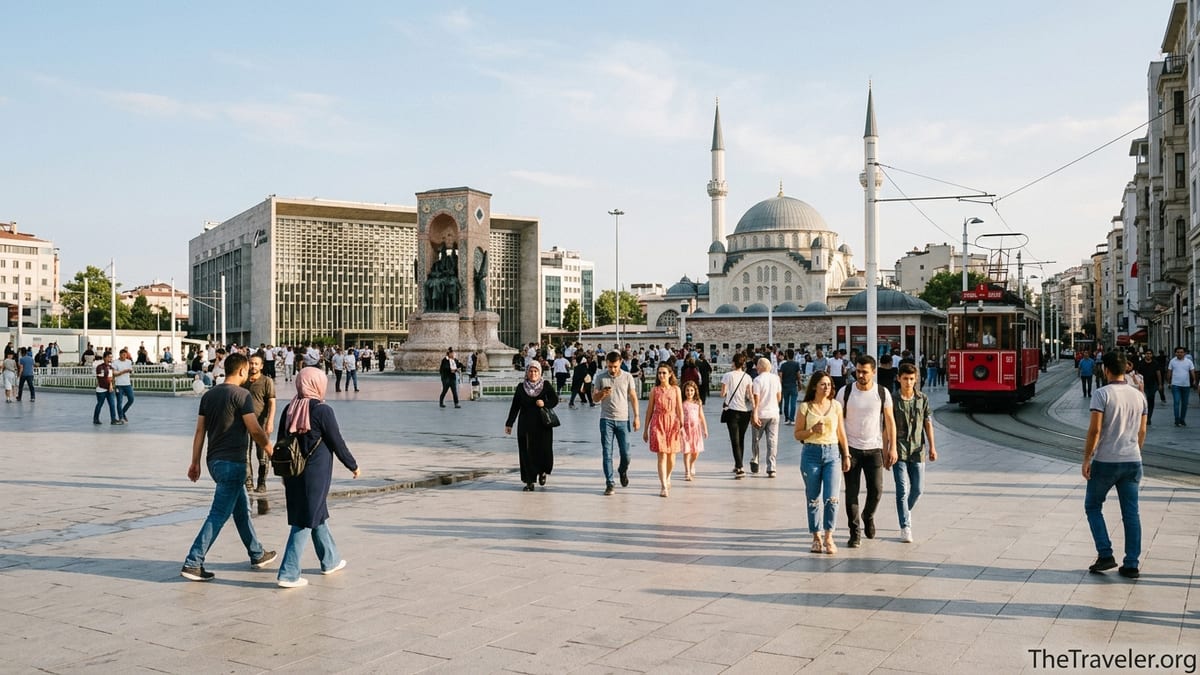
What Taksim Square Is and Why It Matters
Taksim Square is a broad open plaza on the European side of Istanbul, known for its constant motion: commuters changing buses and metros, families meeting under the Republic Monument, and travelers using it as a starting point for exploring the city. Unlike the domes and minarets of Sultanahmet, Taksim is modern in appearance, framed by the Ataturk Cultural Center, hotels, shopping arcades and the Taksim Mosque. It feels more like a European city square than an old Ottoman meydan, which is why it appeals to visitors who want to balance history with contemporary city life.
Historically, the area was where the city’s water distribution system "taksim" or division point was located, which gave the square its name. Today Taksim’s symbolic role is more political and social than practical. It is where national celebrations, football championship parties and public gatherings are often held, and where security can be tight around sensitive dates. For a first-time visitor, that means you are stepping into a space that is not only central geographically but also emotionally important to modern Istanbul.
The square itself is not a sight you linger at for hours. Most people spend 15 to 30 minutes taking photos, orienting themselves and then heading off either down Istiklal Avenue, into nearby neighborhoods like Cihangir, or toward the Bosphorus by funicular. Think of Taksim as Istanbul’s compass point: once you understand where it sits in relation to other districts, the city becomes much easier to read.
Where Taksim Is and How to Get There
Taksim Square lies in the Beyoglu district on Istanbul’s European side, roughly halfway between the historic old city around Sultanahmet and the business districts of Levent and Maslak. On a map you will see it at the northern end of Istiklal Avenue, a pedestrian artery that slopes down toward Galata and the Golden Horn. From Taksim, you are a short ride by tram and ferry from the Asian side, and a quick metro hop from many central neighborhoods.
The simplest way to reach Taksim for most visitors is via the M2 metro line, which runs from Yenikapi up through the city center. Taksim Metro station sits directly beneath the square and has multiple exits, including one that opens almost beside the Republic Monument and others feeding into Istiklal Avenue and the Ataturk Cultural Center. If you are staying in areas like Sisli, Levent or the old city, this line is usually the most efficient option during rush hour.
From Istanbul Airport, the most straightforward public transport link for newcomers is the Havaist airport shuttle to Taksim. In 2026, a one way ticket on the IST 19 or similar Taksim route generally costs in the mid 300 to low 400 Turkish lira range per person, and the journey typically takes 60 to 90 minutes depending on traffic. Tickets are paid by card or Istanbulkart at the airport kiosks before boarding. Licensed yellow taxis from the airport to Taksim are more expensive but can still be reasonable if shared between two or three travelers, with prices varying by traffic and official tariff changes.
From Sabiha Gokcen Airport on the Asian side, reaching Taksim usually involves either an airport bus to Kadikoy or Kadikoy Kartal metro and then a ferry to Karakoy or Besiktas followed by a short bus or taxi ride uphill, or a direct express bus to Taksim when available. Travel times from Sabiha Gokcen can easily stretch beyond 90 minutes in peak traffic, so if your hotel is around Taksim and you land there in the afternoon, plan with a generous time buffer before any fixed reservations.
The Republic Monument and Istiklal Avenue
At the heart of Taksim Square stands the Republic Monument, an imposing stone and bronze structure unveiled in 1928 to commemorate the founding of the modern Turkish Republic. It depicts Mustafa Kemal Ataturk and his companions in both military and civilian dress, symbolizing the transition from the War of Independence to the new republican era. Locals commonly use it as a meeting point, so if a friend or guide tells you to meet "by the monument" at Taksim, this is where they mean.
First-time visitors often underestimate how busy the area around the monument can get. On weekends and evenings, expect crowds of domestic tourists taking selfies, street vendors selling simit and roasted corn, and occasionally small-scale demonstrations or public events. It is a good spot to absorb the city’s energy in daylight, but if you want clearer photos, try early morning when the square is at its quietest and the light is softer.
Leading away from the southern edge of the square is Istiklal Avenue, a long pedestrian street running roughly 1.5 kilometers down to Tünel. This is one of Istanbul’s main shopping and strolling streets, lined with international brands, Turkish chain stores, patisseries, independent bookshops, churches tucked into side courtyards, and historic passages such as Çiçek Pasaji. The red nostalgic tram that rattles up and down Istiklal is more of a photo opportunity than a serious transport option, but it adds to the atmosphere and children in particular love riding it for a short stretch.
A practical note for first-timers: Istiklal changes character with time of day. In the morning, it feels almost subdued, with delivery vans and workers setting up. By afternoon it is a busy shopping street. After dark, especially on Friday and Saturday, it becomes a nightlife artery, with side alleys like Nevizade, Mis Sokak and Asmali Mescit filling with bar-goers and live music. If you prefer a calmer experience, consider visiting between late morning and early afternoon, then returning in the early evening only if you are comfortable in dense crowds.
Transport and Orientation Around Taksim
Once you are in Taksim, the square is one of the easiest places from which to navigate the rest of the city using public transport. Underground, the M2 metro gives you fast access south to Vezneciler and Yenikapi for the Marmaray rail line, and north to Osmanbey, Sisli and Levent for business districts and shopping malls. The F1 funicular descends from Taksim to Kabatas in under two minutes, connecting you to the T1 tram that runs to Karakoy, Eminonu, Sultanahmet, and down the historic peninsula.
On the surface, dozens of IETT city bus lines stop on the roads surrounding the square, connecting Taksim with Beşiktaş, Ortaköy along the Bosphorus, and more residential parts of the city. For many hotel guests, the short bus ride from Taksim to Beşiktaş and then a ferry hop over to Kadikoy on the Asian side makes a pleasant afternoon or evening outing. Make sure you acquire an Istanbulkart as soon as possible, since it is used on metro, tram, bus, ferry and many funicular lines, and offers lower fares than buying single tickets.
Taxis are plentiful around Taksim, particularly along Cumhuriyet Caddesi and near the entrances to major hotels, but traffic can be dense at peak times and during rain. When hailing a taxi, look for the official yellow cabs with a roof sign and meter, and avoid unlicensed drivers approaching you directly in the square. A typical daytime metered ride from Taksim to Sultanahmet will usually fall in the moderate hundreds of lira range, varying with congestion; ask your hotel for a rough estimate on the day you travel, as tariffs do change.
For walking, imagine Taksim as the top of a gentle hill. Heading down Istiklal takes you toward Galata Tower and Karakoy. Walking along Cumhuriyet Caddesi in the opposite direction leads you toward Nisantasi and Sisli. Heading diagonally downhill toward Gümüşsuyu takes you to the Bosphorus near Kabatas. Distances can be longer than they appear on a map, and some of the slopes are steeper than many visitors expect, so comfortable shoes are essential.
Where to Stay: Hotels Around Taksim
The Taksim area concentrates a wide range of accommodation, from international chains overlooking the Bosphorus to small family-run pensions tucked into back streets. For first-time visitors who value convenience, staying within a five to ten minute walk of the square can significantly simplify logistics, especially when you have an early tour pick up or plan to use public transport heavily.
On the higher end, large hotels around Taksim and along the adjacent Gümüşsuyu and Talimhane areas offer extensive breakfast spreads, concierge services and often partial Bosphorus views. Nightly rates here fluctuate seasonally, but you can expect them to be among the higher in central Istanbul, especially in spring and autumn when tourism peaks. In exchange, you are usually within a couple of minutes of the metro, shuttle bus drop off points and restaurants that stay open late.
Midrange and boutique options are scattered just off Istiklal Avenue and on the quieter streets of Cihangir and Gümüşsuyu. These can offer a more neighborhood feel while keeping you close to Taksim. A typical midrange double room in these areas might cost less than the big chains yet still include air conditioning, Wi Fi and a basic breakfast. Pay attention to recent guest reviews regarding noise: some streets that look quiet on a map may sit above bars or late night venues.
Budget travelers will find hostels and simple hotels in the backstreets between Taksim and Galata, often within 10 to 15 minutes walk of the square. Prices here are more accessible, but rooms can be small and sound insulation limited. If you are sensitive to nighttime noise or traveling with children, consider accommodation slightly uphill toward Cihangir or across the Golden Horn in Karakoy, commuting to Taksim by funicular or tram when needed.
Eating and Nightlife Around Taksim
Taksim and the adjoining stretch of Istiklal Avenue are among the densest areas for eating and drinking in Istanbul. For a fast and inexpensive meal, you will find numerous doner kebab counters, lahmacun and pide bakeries, and kumpir baked potato stands along the main street and side alleys. A simple doner wrap or portion of kokoreç from a modest shop off Istiklal can still be relatively inexpensive by European standards, making it an easy option between sightseeing stops.
For a sit down meal, streets like Nevizade Sokak, Asmalimescit and the arcades branching off Istiklal host meyhanes where locals share small plates of mezes with raki, as well as modern bistros serving Turkish and international cuisine. A typical dinner with a couple of shared starters, one main course per person and non alcoholic drinks might come to a moderate sum in Turkish lira for two people, with seafood and imported alcohol pushing the price higher. If you prefer quieter venues, Cihangir, a short walk downhill from Taksim, has cafes and restaurants with a more relaxed, neighborhood feel.
Nightlife in and around Taksim is famously intense, especially on weekends. Rooftop bars along Istiklal offer views over the city and often morph into dance floors later at night, while live music bars on streets like Mis Sokak and in the area known as Nevizade cater to rock, Turkish pop and acoustic sets. Smaller pubs such as Irish style or rock bars just off the square can be comfortable places for visitors who want a drink without committing to a full club night.
First time visitors should be aware that some clubs in the Taksim area have selective door policies, sometimes discouraging unaccompanied men or male only groups, especially at peak times. It is common for bouncers to give preference to mixed groups and couples. As in many cities, there are also tourist oriented "hostess" bars and strip style venues in backstreets that can overcharge heavily for drinks. A good rule is to stick to places that clearly display menus and prices, have a mix of local and foreign clientele, and are recommended by your hotel or recent independent reviews.
Safety, Scams and Practical Tips
Taksim is generally busy rather than dangerous, and its constant flow of residents, workers and tourists makes it one of the more monitored areas in Istanbul. Police presence can be visible around the square, especially on weekends and during public events. That said, standard big city precautions apply. Pickpocketing can occur in dense crowds on Istiklal and around the metro entrances, so keep valuables zipped away and avoid placing wallets or phones in back pockets.
The most commonly reported issues for visitors involve overcharging and nightlife scams rather than physical danger. Taxi drivers around busy points such as Taksim sometimes resist using the meter for tourists, quoting a flat fare that is higher than normal. Always insist on the meter and be prepared to step out and flag another cab if the driver refuses. In bars, politely ask to see a menu and check whether there is a table charge or minimum spend before ordering. If a stranger on the street invites you to "a great bar" you have never heard of, especially if they suggest free entrance or special treatment, it is safer to decline.
On some politically sensitive dates or during major demonstrations, access to Taksim may be restricted. Metro stations such as Taksim and nearby Şişhane and the Taksim Kabatas funicular have occasionally been closed temporarily when authorities expect large gatherings. This does not usually affect short term tourists in a serious way, but it can change your route unexpectedly. If you notice an unusually strong police presence or hear loudspeakers announcing closures, ask a local shopkeeper or your hotel for the best alternative route before setting out.
Practical daily tips go a long way. Carry a small umbrella or light rain jacket in spring and autumn, as sudden showers can sweep across the square. In summer, afternoon temperatures on the paved plaza can feel hotter than the forecast suggests, so a hat and water bottle are essential. Many small groceries and kiosks around Taksim sell bottled water and snacks at reasonable prices, and large international coffee chains on the edges of the square make reliable meeting points and restroom stops.
First Time Istanbul Tips Using Taksim as a Base
If you are staying near Taksim on your first visit, think of your days as spokes radiating out from the square. One day might start with the F1 funicular to Kabatas and then the tram to Sultanahmet for Hagia Sophia and the Blue Mosque, returning to Taksim by tram and funicular for dinner around Nevizade. Another day could focus on walking down Istiklal to Galata Tower, exploring the streets of Karakoy and taking an evening ferry from Karakoy or nearby to Kadikoy on the Asian side before heading back by tram and funicular.
Try not to plan every day around rush hour crossings through Taksim. Between roughly 8 and 9:30 in the morning and 5 and 7 in the evening on weekdays, the square and its metro can feel overwhelmingly crowded. If your schedule is flexible, start sightseeing slightly later in the morning and aim to be back near your hotel during the busiest commuting periods, using the time to rest or eat.
Language and payments are straightforward in this area. Many hotel staff, restaurant servers on Istiklal and workers in chain stores around Taksim speak at least basic English. Menus often include English translations, especially in tourist oriented restaurants. Cards are widely accepted in midrange and higher places, though small kebab shops and kiosks may prefer cash. It is still wise to have some Turkish lira on hand for small purchases, tips and public toilets.
Finally, give yourself time simply to sit and watch Taksim function. Early evening is ideal: commuters streaming out of the metro, the nostalgic tram clanging its bell, children chasing pigeons by the Republic Monument and the first neon signs flickering on along Istiklal. It may not be the most beautiful square you will ever see, but as a window into everyday urban Istanbul, it is hard to beat.
FAQ
Q1. Is Taksim Square a good area to stay in for first time visitors?
Taksim is a practical base thanks to its central location, transport links and wide choice of hotels. It suits travelers who enjoy busy city centers and plan to use public transport frequently.
Q2. How do I get from Istanbul Airport to Taksim Square?
The easiest way for most visitors is the Havaist airport shuttle to Taksim, which runs regularly and drops you near the square. Licensed yellow taxis and private transfers are more expensive but offer door to door convenience.
Q3. Is Taksim Square safe at night?
Taksim is usually busy and well lit at night, with many locals out and about. Normal big city precautions are advised, such as keeping an eye on your belongings and avoiding unlicensed taxis or dubious bars.
Q4. What are the must see attractions around Taksim?
Highlights include the Republic Monument, Istiklal Avenue, the nostalgic tram, nearby passages such as Çiçek Pasaji, and the short funicular ride down to Kabatas for Bosphorus views.
Q5. Are there good restaurants near Taksim for Turkish food?
Yes, you will find many options from simple kebab shops to traditional meyhanes serving mezes and seafood along streets like Nevizade and in the arcades off Istiklal Avenue.
Q6. How late does the metro run from Taksim?
Metro service on the M2 line typically runs until late evening and sometimes past midnight on weekends, though exact hours can change. Check current schedules locally or with metro staff once you arrive.
Q7. Can I walk from Taksim to Sultanahmet?
It is technically possible but not practical for most visitors, as it is a long and somewhat indirect walk. Using the funicular and tram or the metro and tram combination is much faster and more comfortable.
Q8. Is Taksim suitable for families with children?
Families often appreciate Taksim for its hotel options and easy transport, but the area is busy and noisy. For young children, consider a hotel on a quieter side street rather than directly on Istiklal.
Q9. Do I need to book a hotel near Taksim far in advance?
In peak seasons such as April to June and September to October, the better located hotels around Taksim can fill up quickly. Booking several weeks or more ahead usually gives better choice and prices.
Q10. Are there any dress code rules for bars and clubs near Taksim?
Most casual bars accept normal smart casual clothing, but some clubs prefer guests to avoid sportswear or overly beachy outfits. It is wise to bring closed shoes and a neat shirt if you plan a club night.