


More news on this day
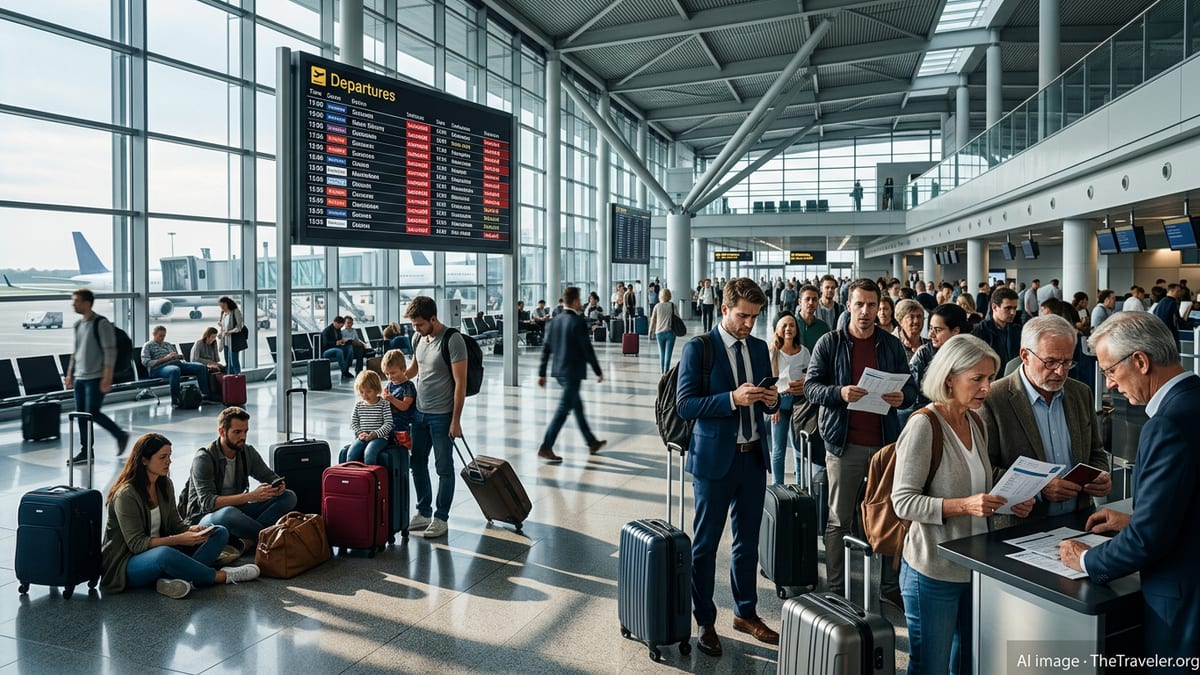
Travelers at Tampa International Airport are facing major disruption after a wave of delays and cancellations affecting 49 departures and arrivals, with Delta Air Lines, Southwest Airlines and British Airways services to London and Havana among the hardest hit according to multiple operational tracking platforms and airport data aggregators.
Get the latest news straight to your inbox!
Wave of Disruptions Hits Key International and Regional Routes
Operational data compiled from real time tracking services and airport performance dashboards indicates that Tampa International has entered a period of acute disruption, with 49 flights delayed or cancelled over a short window. While domestic links across the United States are bearing much of the numerical impact, the knock on effect has been most visible on a handful of high profile long haul and regional international services.
Publicly available schedules show Tampa as a growing gateway for international traffic, including nonstop links to London and Havana operating alongside a dense network of domestic services provided by Delta and Southwest. On the day of the disruption wave, patterns of rolling delays, aircraft reassignments and last minute cancellations led to extended holds at gates and long queues at rebooking counters throughout the afternoon and evening.
The imbalance between available aircraft and crew and the number of scheduled departures appears to have played a central role. Industry wide data for recent weeks shows that Delta and Southwest have both been managing elevated cancellation and delay rates during periods of adverse weather and system strain, and similar dynamics now appear to have converged on Tampa at a particularly busy travel moment.
Passengers connecting through Tampa to onward destinations in Europe and the Caribbean have been especially affected, with missed connections cascading into overnight stays and complex rebooking scenarios that stretch across multiple carriers and alliances.
London Bound Travelers Face Extended Uncertainty
Tampa’s transatlantic links have been under pressure as the disruption unfolded. Flight history databases confirm that British Airways and partner carriers operate regular services from Tampa to London, forming an important bridge for both leisure and business travelers. During the latest disruption cycle, schedule changes and rolling delays on feeder flights into Tampa made it significantly harder for passengers to secure same day connections onto London bound departures.
Tracking data for recent days shows that while some London flights have ultimately departed close to schedule, others have experienced substantial departure pushes or have been temporarily pulled from sale, complicating travel planning for passengers who were relying on tight connections through Tampa. Publicly available information indicates that a subset of travelers were left facing overnight stays in Florida, even when their long haul segments were still scheduled to operate later in the day.
Analysts note that London services are particularly vulnerable when U.S. domestic disruption intensifies. Many transatlantic passengers rely on inbound flights from other U.S. cities to reach Tampa in time for the evening departures. When those feeder flights are delayed or cancelled, airlines must decide whether to hold the long haul aircraft, rebook passengers via other hubs, or operate the service with significant numbers of no shows.
In this latest episode, the cumulative effect of late arriving aircraft, crew scheduling constraints and air traffic control flow programs appears to have produced a complex operational puzzle around Tampa’s London flights, leaving many travelers uncertain whether to wait at the gate or accept alternative routings through larger hubs such as Atlanta or Miami.
Southwest Routes to Havana Snagged by Knock On Effects
Tampa’s role as a key U.S. gateway to Cuba is also in the spotlight. Schedules and route maps list Havana among the international destinations served from Tampa, with Southwest Airlines operating regular services that connect Cuban travelers, families and tourists to the broader U.S. network. The latest data on disruptions suggests that these flights did not escape the wider operational issues affecting the airport.
Regional route structures mean that even modest schedule changes on busy domestic legs can quickly reverberate into international services. Southwest relies on aircraft and crews cycling through multiple short segments each day, and when one or two of those segments are delayed or cancelled, later flights to destinations such as Havana can be pushed back, consolidated or, in more severe cases, removed from the schedule at short notice.
Reports from passenger tracking communities and publicly accessible flight status tools show instances of Havana bound travelers from Tampa encountering gate holds, equipment swaps and tight turnaround times. In some cases, these issues led to missed connections for travelers who had flown in from other U.S. cities expecting a smooth same day link to Cuba.
The added complexity of international documentation and entry formalities also raises the stakes for travelers on these routes. When flights are cancelled or significantly delayed, rebooking often involves not just finding another seat, but also ensuring that visa or authorization windows remain valid and that return itineraries can be adjusted without incurring substantial additional costs.
Delta and Southwest Confront Broader Reliability Questions
The Tampa disruption comes against a backdrop of broader scrutiny of U.S. carrier reliability during peak travel periods. Publicly available performance summaries and recent news coverage highlight periods over the past two months when Delta and Southwest have both contended with elevated numbers of cancellations and delays, sometimes driven by weather, sometimes by technology issues, and at other points by crew availability.
Data collected from airline analytics platforms shows that, on certain days, Delta has reported hundreds of cancellations systemwide, with Florida airports among the hardest hit because of their exposure to thunderstorms and congested airspace. Southwest, with its point to point model and heavy presence across the Sun Belt and Caribbean gateways, has also experienced sharp spikes in disruption when storms, air traffic control programs or internal scheduling challenges coincided.
Within that larger national pattern, Tampa’s latest 49 flight disruption wave is being viewed by aviation observers as another indication of how fragile daily operations can become once a few weak points appear in the system. Even when the majority of flights eventually depart, multiple rolling delays can strain airport infrastructure, overwhelm customer service resources and undermine traveler confidence.
Stakeholders following on time performance metrics note that sustained episodes of irregular operations can influence traveler behavior for months afterward, as passengers reconsider connection choices and evaluate carriers based on perceived resilience during disruption.
What Travelers in and out of Tampa Can Expect Next
With the current wave of irregular operations still working its way through schedules, publicly accessible forecasting tools suggest that Tampa travelers should expect ongoing knock on effects over at least one to two further travel days. Crews and aircraft that were repositioned or held in place during the worst of the disruption need time to cycle back into their normal rotations, and that process can generate further minor delays even after headline cancellation numbers begin to fall.
For passengers booked on upcoming Delta, Southwest or British Airways flights connecting Tampa to London and Havana, operational trackers and schedule feeds point to a mixed picture. Some departures are showing as operating near schedule, while others appear more vulnerable to additional holds as airlines attempt to consolidate loads and rebalance their networks.
Travel experts reviewing current data recommend that passengers monitor their flight status frequently on the day of travel and build additional buffer time into connections, particularly when relying on Tampa as a bridge between U.S. domestic networks and international destinations. Given the scale of the latest 49 flight disruption wave, many itineraries will continue to be affected indirectly even after conditions begin to stabilize.
Airport activity patterns indicate that Tampa International is working through a backlog of rebooked travelers at ticket counters and service desks, suggesting that same day alternative options may be limited on the busiest routes. As the disruption ripples gradually subside, the experience of London and Havana bound travelers this week is likely to feed into larger discussions about capacity planning, system redundancy and passenger care standards across the U.S. aviation network.