

More news on this day
Florida’s Gulf Coast is bracing for an unprecedented wave of spring break cruise traffic in March 2026, as Tampa’s growing cruise hub prepares to set new records and ripple effects spread through airlines, highways, and tourism businesses across the United States.
Get the latest news straight to your inbox!
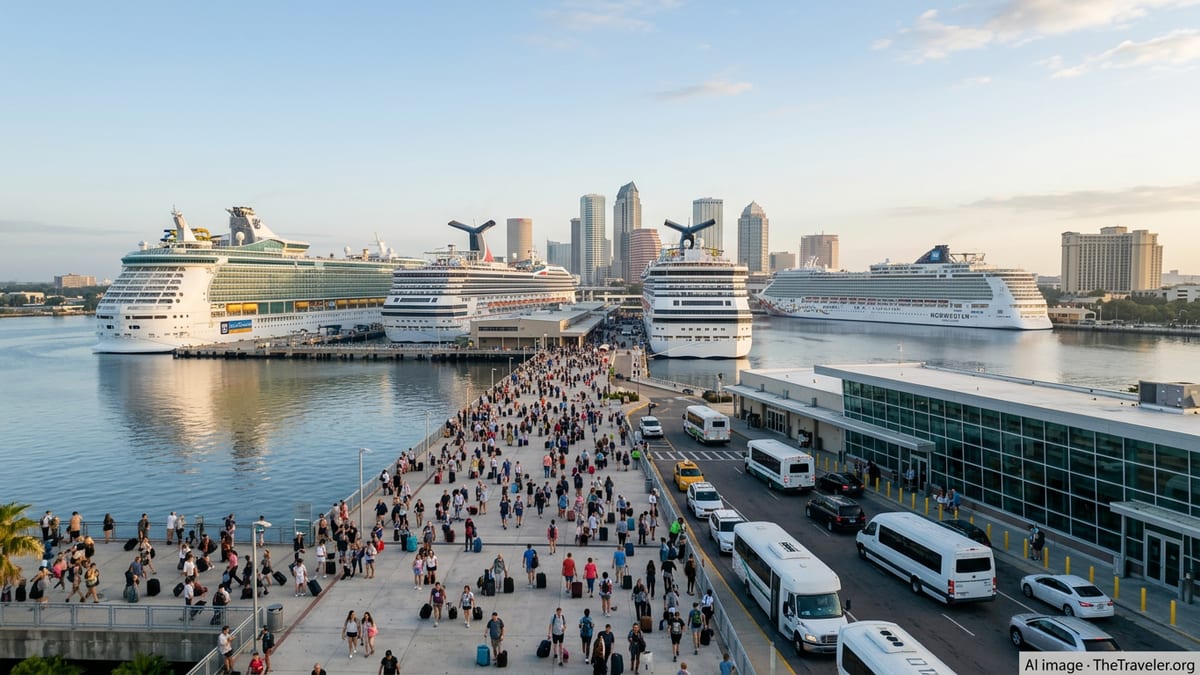
Record Cruise Traffic Puts Tampa in the National Spotlight
Port Tampa Bay is on track to break its all-time monthly record for cruise activity in March 2026, underscoring how spring break demand is reshaping Florida’s tourism landscape. Publicly available port information indicates that 51 cruise ship calls are scheduled during the month, the highest number Tampa has ever handled in a single month and a sharp increase compared with pre-pandemic patterns.
The port’s 2026 projections build on a strong rebound. Reports on recent performance show that Tampa welcomed about 1.66 million cruise passengers in 2025, the most in its history, and is now tracking toward approximately 1.8 million passengers for 2026. Industry analysts point to the city’s combination of drive-to convenience for much of the Southeast and a growing mix of short Caribbean and longer itinerary options as key factors behind the surge.
Cruise calendars for March list frequent turnarounds for major brands including Carnival Cruise Line, Royal Caribbean International, Norwegian Cruise Line, Margaritaville at Sea and Celebrity Cruises. The volume of short Western Caribbean and Bahamas sailings is especially pronounced during the first three weeks of March, when many school districts and universities across the United States schedule their spring recess.
In addition to the record ship count, Tampa is seeing a rise in what the industry describes as high-volume cruise days, when multiple ships are berthed simultaneously. Planning documents for 2026 reference more than 50 three-ship days for the year, more than double the level reported in prior years, signaling higher peaks in passenger movements on and off the waterfront.
Florida’s Tourism Network Faces Peak Spring Break Demand
The cruise rush in Tampa is unfolding alongside a broader spike in Florida travel demand during spring break 2026. Crowd forecasts for major theme parks in Central Florida indicate that mid-March, particularly the weeks of March 16 to March 29, aligns with the holidays of several large school districts and universities, including flagship state institutions. That overlap is expected to push hotel occupancy, rental car demand and highway traffic to some of the highest levels of the year.
Travel-planning sites and blog-based crowd calendars for Florida destinations have highlighted March 8 through March 22 as a core peak window for family travel. In that same period, cruise guides show dense clusters of Caribbean departures from not only Tampa but also Miami, Port Canaveral and Fort Lauderdale, intensifying competition for flights into the state’s main airports.
Tourism observers note that many visitors blend land and sea vacations, spending several nights in Orlando, Tampa Bay or South Florida before or after cruising. For Tampa, this pattern magnifies the impact of each ship call, as passengers add hotel nights, dining, entertainment and shopping to their itineraries. Economic impact estimates tied to Tampa’s cruise business already place annual activity at several hundred million dollars in spending across the West Central Florida region.
At the same time, local residents and long-time visitors are being advised by travel commentators to anticipate congestion on key corridors, including Interstate 4 between Tampa and Orlando and Interstate 75 along the Gulf Coast, particularly on busy weekend turnaround days when ships disembark thousands of guests in the morning and reboard new passengers by afternoon.
National Cruise Market Rebound Drives Capacity to Florida
Tampa’s record month is part of a broader expansion in U.S. cruise capacity that has accelerated into 2026. Industry data compiled by cruise reference sites show that as of March 2026 there are now dozens of large ships worldwide exceeding 140,000 gross tons, with a significant share homeporting in the United States and frequently calling at Florida ports. New ships and redeployments continue to concentrate capacity in the Caribbean, which remains the world’s most popular cruise region.
PortMiami and Port Everglades in Fort Lauderdale continue to rank among the busiest cruise ports globally by passenger volume, handling several million travelers per year. As those ports absorb much of the newest and largest vessels, second-tier homeports such as Tampa have been attracting a mix of mid-sized ships, niche itineraries and new brands seeking alternative gateways for drive-to markets in the Southeast and Midwest.
Trade publications and booking platforms report strong advance sales for spring break sailings in 2026, including themed group cruises, college-oriented itineraries and family-focused trips. Price-tracking discussions in consumer forums suggest that many March departures are running close to full capacity, with some travelers encouraged to lock in cabins more than a year in advance to secure preferred dates and room categories.
Analysts also point to the maturing of smaller cruise brands and concepts based in Florida, including short-break products and lifestyle-oriented ships homeported in Tampa. The recent introduction of Margaritaville at Sea Islander in Port Tampa Bay, for example, adds another option for casual, resort-style cruising aimed at regional drive markets and repeat visitors who may have already sailed from Miami or Port Canaveral.
Airports, Highways and Hotels Prepare for Cruise-Centric Crowds
The concentration of cruise departures in March 2026 has broader implications for transportation and lodging across Florida and beyond. Tampa International Airport and other major Florida airports anticipate heavier spring schedules because many cruise passengers arrive by air on the same days their voyages begin or end. Travel search tools already show higher-than-average fares and limited seat availability on peak Fridays, Saturdays and Sundays in March along some domestic routes feeding into Florida.
On the ground, rental car agencies and rideshare demand are expected to spike on weekend turnaround days, particularly at Tampa International Airport and in downtown Tampa near the cruise terminals. Hotel search engines and package operators are promoting pre-cruise and post-cruise stays, often bundling one-night accommodations with parking or shuttle services to the port, reflecting a growing emphasis on seamless door-to-dock travel.
Regional tourism bureaus and local businesses are positioning themselves to capture spillover spending from the cruise crowds. Restaurants and attractions in Tampa’s Channel District, Ybor City and waterfront areas near the port are highlighting extended hours and spring promotions geared toward short-stay visitors. Similar preparations are evident in popular Gulf Coast beach communities, which often host cruise passengers for extra nights before or after sailing.
Nationally, travel advisors are recommending that March 2026 cruise travelers build in additional time for connections and ground transfers, citing the combination of peak spring break travel, strong cruise load factors and the potential for weather or operational disruptions, even in what is traditionally considered a lower-risk, pre-hurricane season period.
Managing Growth While Protecting Local Quality of Life
As Tampa and other Florida ports lean into record cruise volumes, community discussions are focusing on how to balance economic gains with quality-of-life concerns. Public documents and local commentary highlight issues such as traffic congestion on port access roads, parking pressure in central districts and the environmental footprint of additional ship calls in a sensitive coastal region.
Port Tampa Bay’s planning materials indicate that future expansion is being evaluated to accommodate rising cruise demand, including terminal enhancements and improved passenger processing flows. Observers note that investments in shore-side infrastructure, digital wayfinding and transportation links to the airport and regional transit corridors could help reduce bottlenecks during the busiest spring break days.
Environmental organizations and policy analysts are also watching how the growth in cruise calls interacts with broader climate and sustainability goals. Industry-wide efforts such as the gradual adoption of cleaner fuels, shore power connections and waste-reduction initiatives are being tracked closely in Florida, where coastal ecosystems and air quality are central to the state’s tourism appeal.
For now, March 2026 stands as a milestone month that illustrates both the scale of the cruise industry’s rebound and the challenges of managing that success. With Tampa at the forefront of a record-breaking season, the city and the wider U.S. tourism network are testing how resilient their systems are when spring break, cruise demand and domestic travel trends all crest at once.