


More news on this day
Tanzania has moved ahead with the latest phase of its standard gauge railway, a flagship infrastructure project that aims to shift cargo from roads to rails and cement the country’s role as a regional trade gateway for East and Central Africa.
Get the latest news straight to your inbox!
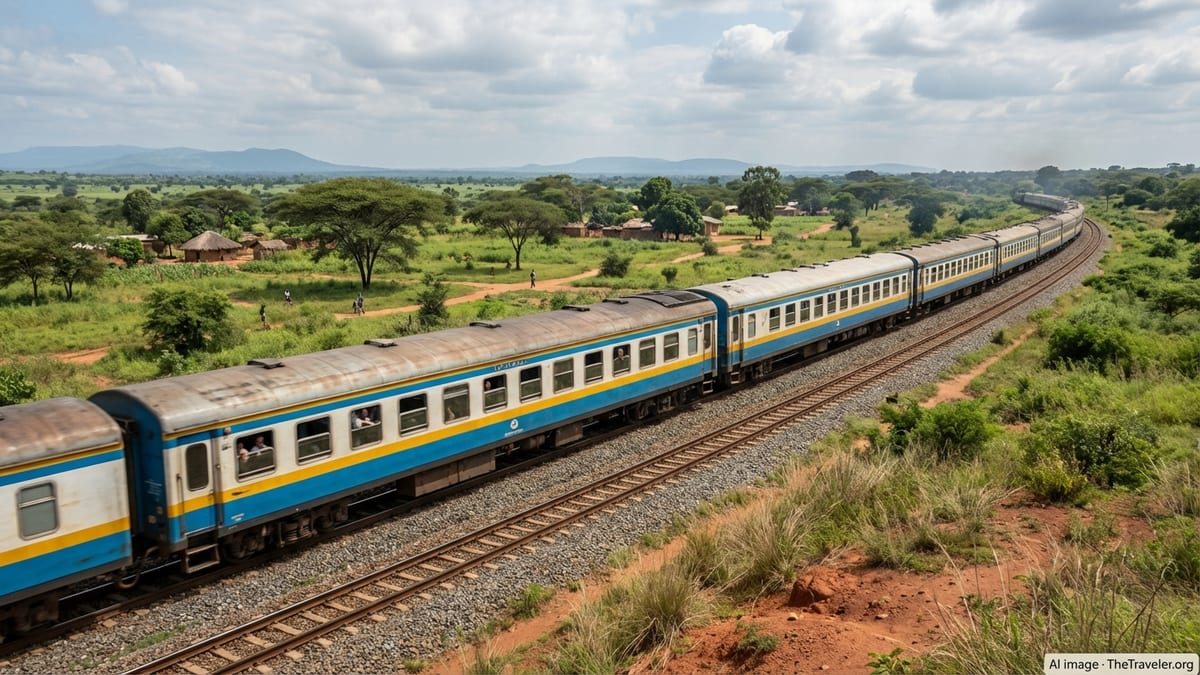
A new chapter in Tanzania’s rail revival
The standard gauge railway, known as the SGR, is being developed to replace sections of the aging metre-gauge Central Line that links the port city of Dar es Salaam with the country’s interior. Publicly available information shows that the overall SGR scheme is planned to stretch more than 2,000 kilometers, reaching as far as Mwanza on Lake Victoria and providing connections towards Rwanda, Burundi and the Democratic Republic of Congo.
Reports indicate that the latest work now under way focuses on inland sections that push the electrified line closer to Lake Tanganyika and the Burundian frontier. Earlier stages between Dar es Salaam and Morogoro and onward to Makutupora have already entered service for passengers, giving travelers a preview of the faster, high-capacity network the government hopes to roll out across the country.
The new construction phase is designed to close the remaining gaps between central hubs such as Tabora, Kigoma and Uvinza, tying together inland freight corridors with export infrastructure on the Indian Ocean. By sequencing the project in distinct lots and contracts, Tanzania is attempting to manage one of the largest rail programs in sub-Saharan Africa while keeping sections of the network coming on stream in stages.
Planning documents and budget statements describe the SGR as a backbone investment for the current national development plan, on a scale comparable with major power and port schemes. The latest contracts build on earlier financing commitments from a mix of domestic resources and international lenders, reflecting the long-term nature of the program and its anticipated economic impact.
A gateway for African trade and transit
Tanzania’s leaders have repeatedly framed the SGR as a strategic asset for landlocked neighbors that rely on regional ports for access to global markets. By linking Dar es Salaam to Burundi and, eventually, to eastern Congo and Rwanda, the railway is expected to carry containerized goods, fuel, agricultural products and minerals across borders more efficiently than current road-heavy logistics chains.
Analyses by regional bodies and economic agencies describe the country as a natural transit corridor between the Indian Ocean and the Great Lakes, with potential to divert cargo that might otherwise move through alternative routes in Kenya, Mozambique or South Africa. The new SGR is being built to international standard gauge, which facilitates future interoperability with emerging cross-border lines and could simplify the movement of rolling stock and freight.
Freight operators and transport specialists point to the high cost of trucking as a key constraint on regional trade. The SGR’s electric traction and higher axle loads are intended to reduce per-ton costs, while freeing up highways that are currently congested with long-haul trucks. Over time, the corridor could support dedicated logistics hubs, dry ports and industrial parks along the route, changing how goods move between hinterland markets and the sea.
The line is also expected to play a role in continental initiatives to strengthen intra-African trade and improve connectivity under frameworks such as the African Continental Free Trade Area. By lowering transit times and making it easier to move bulk commodities, the SGR corridor could support value-added processing in Tanzania and neighboring countries rather than the direct export of raw materials.
Shaping the travel experience across East Africa
Beyond freight, the standard gauge line is reshaping passenger travel for both domestic users and international visitors. Early services between Dar es Salaam and Morogoro have been promoted for their air-conditioned coaches, reserved seating and relatively short journey times compared with road travel, which can be hampered by congestion and weather-related delays.
As new sections open inland, tourism operators are watching how the line could change access to national parks and lake destinations. Rail links toward Mwanza, Tabora and Kigoma intersect with routes to wildlife reserves, cultural sites and lakeside towns, creating the possibility of multi-stop itineraries that combine city stays, safaris and lakeshore escapes using a mix of rail and road transfers.
Travelers have also highlighted the design of major SGR stations, which incorporate large concourses, elevated platforms and regionally inspired architecture. Social media posts and local coverage show that stations have become landmarks in their own right, reinforcing the perception of the railway as part of a broader modernization of Tanzania’s transport system.
For business travelers within East Africa, the maturing network offers an alternative to domestic flights on medium-distance routes. Once freight and passenger services are fully established across multiple segments, itineraries linking Dar es Salaam to inland commercial centers by rail could become a standard feature of corporate travel planning.
Economic ripple effects along the corridor
The construction and operation of the SGR are generating significant secondary activity along the route. Publicly available project assessments describe thousands of direct and indirect jobs associated with civil works, track laying, station construction and ancillary services such as materials supply, catering and accommodation near work sites.
Local businesses in towns along the line have reported increased demand for housing, retail services and small-scale logistics, as workers and support staff move in. Over the longer term, the presence of reliable rail connections can influence where companies choose to locate warehouses, processing plants and export facilities, potentially reshaping urban growth patterns in the country’s interior.
Environmental and social impact assessments emphasize the need to manage land acquisition, resettlement and ecosystem impacts as the line advances toward new regions. Authorities have outlined measures covering compensation, consultation and the protection of sensitive habitats, though implementation continues to be closely watched by civil society and affected communities.
Transport planners argue that the shift from heavy trucking to electric rail can help reduce greenhouse gas emissions and improve road safety, provided that the SGR attracts a substantial share of long-distance cargo. Integrating the line with renewable power projects and modern signaling systems is seen as key to maximizing these benefits.
Regional connectivity and the next phases
While the current focus is on completing domestic segments, attention is increasingly turning to cross-border connections. According to published coverage on regional infrastructure, Tanzania and Burundi have agreed on plans for an SGR link from Uvinza toward Gitega, creating one of East Africa’s first cross-border standard gauge corridors dedicated to both freight and passengers.
Farther north, the SGR is expected to tie into prospective lines toward Rwanda and, indirectly, to Uganda via regional rail plans. Coordinating technical standards, customs procedures and operating models will be critical if the broader network is to function as a seamless system rather than a series of disconnected national projects.
Financing remains a central challenge as the railway extends into more complex terrain and crosses international boundaries. Observers note that a combination of state budgets, multilateral lending and contractor-backed arrangements is likely to continue, with each new phase requiring detailed negotiations and cost-benefit assessments.
Despite these hurdles, the launch of work on the latest phase of Tanzania’s standard gauge line marks a significant milestone in a long-running effort to rebuild the country’s rail backbone. If schedules hold and regional links materialize, the Dar es Salaam corridor could emerge as one of the most important gateways for African trade, investment and travel over the coming decade.