


For many travelers, Tocumen International Airport in Panama City is their first glimpse of Central America. As the main hub for Copa Airlines and a busy crossroads between North and South America, Tocumen (airport code PTY) can feel intense on a first visit. With a little preparation, however, it is one of the easiest airports in the region for both quick connections and stress-free arrivals into Panama.
Get the latest updates straight to your inbox!
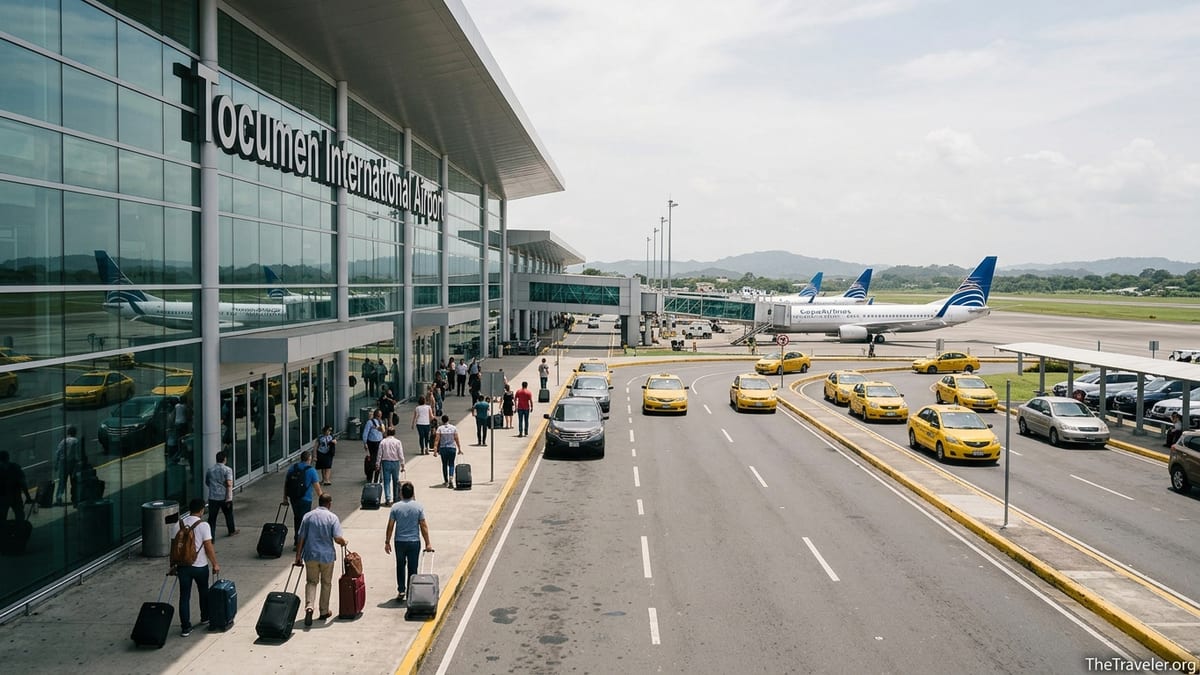
Understanding Tocumen’s Layout and Terminals
Tocumen International Airport sits about 20 to 30 minutes east of central Panama City by car, depending on traffic. It is Panama’s main international gateway and the home of Copa Airlines’ Hub of the Americas, which concentrates connections across North, Central and South America and the Caribbean. The airport has grown quickly in the last decade and now consists of Terminal 1, Terminal 2 and a newer domestic area, but for most first-time visitors the experience is still fairly straightforward.
Terminal 1 is the older, long linear building many travelers still associate with Tocumen. It handles a mix of Copa and other international airlines and contains immigration, baggage claim and customs for many arriving flights. Terminal 2 opened to international traffic in 2022 and is connected airside to Terminal 1 by a secure walkway. You may arrive into one terminal and depart from the other without passing through immigration, as long as you are just connecting and staying airside. Walking time between distant gates can reach 15 to 20 minutes at a relaxed pace, so tight connections are very walk-focused.
For a real-world example, a traveler arriving from Los Angeles on Copa might land at a gate in Terminal 2, then connect onward to Bogotá from a gate in Terminal 1. They would leave the aircraft, follow purple “Connections” signs, walk the airside corridor linking the terminals and emerge into the central gate area in Terminal 1, all without clearing immigration or re-screening. On the other hand, someone finishing their trip in Panama City, even if their flight arrived at a far gate in Terminal 2, would simply follow “Arrivals” signage toward immigration and baggage claim in the same terminal area.
Domestic flights, such as Copa’s routes to islands like David or Bocas del Toro, now operate from a dedicated domestic zone opened in 2024. Although it is part of the same airport complex, procedures differ slightly. Passengers arriving internationally and continuing domestically usually clear immigration, collect baggage and recheck in the domestic area. If you are planning a beach or highlands escape right after landing, allow extra time between your international arrival and your domestic departure.
Arrivals: Immigration, Customs and First Steps in Panama
On arrival in Panama, most passengers deplane directly into the terminal and follow clear bilingual signage for “Migración / Immigration.” Line lengths vary significantly by time of day. Early evenings, when multiple long haul flights arrive from North and South America, can be busy. Families with young children are sometimes directed to shorter lines, and citizens of certain countries may use automated kiosks, but first-time visitors should reasonably allow 30 to 60 minutes from leaving the aircraft to clearing immigration.
Pananian immigration officers typically ask straightforward questions: where you are staying, how long you plan to visit and your onward travel plans. Having your hotel name written down, plus a printout or screenshot of your return or onward ticket, speeds things up. Many nationalities receive a stay authorization stamped directly in the passport instead of a separate tourist card. Visa requirements change periodically, so it is wise to confirm entry rules with your airline or an official government source before flying, especially if you are connecting from countries that require yellow fever vaccination or special documentation.
After immigration, you proceed to baggage claim. Belt numbers are displayed on monitors and staff move luggage off to the side once a belt empties. Baggage delivery is often reasonably quick for Copa hub flights, but at peak times or with heavy checked luggage volumes it can still take 20 to 30 minutes. Carts are generally available and paid in local currency coins or free in some sections. Customs is usually a simple walk-through after placing larger luggage through an X-ray scanner if requested. Officers may ask about high-value electronics or goods that look commercial in volume.
Once you exit customs you will be in the public arrivals hall, which can feel busy and crowded, particularly during evening banks of arrivals. Here you will find currency exchange counters, ATMs from major Panamanian banks, car rental desks and several airport taxi stands. This is also where you meet pre-booked drivers holding printed signs. If you plan on using ride-hailing apps like Uber or inDrive, this is the point where you typically connect to the airport Wi-Fi and check your phone for signal while you decide how to reach the city.
Departures from Tocumen: Check-in, Security and Timing
Departing from Tocumen is generally efficient, but it is important to plan according to your destination. For international flights to North America or Europe, airlines typically recommend arriving at least three hours before departure. For regional flights within Central America or to northern South America, two hours can be enough if you are already checked in and traveling with only hand luggage. During holiday periods such as late December and Easter week, or at the height of the dry season from January to March, lines can be significantly longer and the three-hour rule is sensible for all international routes.
Check-in counters are clearly grouped by airline, with Copa occupying much of the central check-in hall. Self-service kiosks are increasingly common. As an example, a traveler flying Copa to Miami in economy might scan their passport at a kiosk, select their seat, print a boarding pass and luggage tag, then proceed to a bag drop lane watched by agents. Business class, Star Alliance Gold, and Copa’s elite members use dedicated check-in islands that are usually less crowded.
After check-in, you proceed upstairs to security and outgoing immigration. Security at Tocumen is similar to most international airports: laptops and large electronics out, liquids in small containers in a clear bag, belts and metal objects removed. Wait times fluctuate. Early morning departures between 6 and 8 a.m., when many flights to the United States leave, are often the busiest. Some travelers report clearing both security and immigration in under 20 minutes during quieter mid-afternoon periods. Past security, you enter a duty-free and shopping area before reaching the gate piers of Terminal 1 or Terminal 2.
Gate areas at Tocumen can get crowded when multiple flights board simultaneously. Seats near power outlets fill up quickly. Food choices range from international coffee chains and fast-food brands to local options serving Panamanian dishes like arroz con pollo or empanadas. Prices are similar to other major international airports; for instance, a cappuccino might cost around 4 to 5 US dollars and a fast-food combo meal roughly 10 to 12 dollars. Remember that Panama officially uses the US dollar alongside the local balboa coins, so prices are easy for American travelers to interpret.
Copa Airlines Hub Connections: What First-Timers Should Expect
Copa Airlines has built Tocumen into a highly coordinated connecting hub, often marketing it as the Hub of the Americas. Flights from dozens of cities in the United States, Canada and South America arrive into PTY in tightly timed waves, with onward flights departing less than two hours later. The result is that many tickets, especially between North and South America, include relatively short layovers of 50 to 90 minutes in Panama. For first-time visitors, these short connections can feel intimidating, but PTY is designed around this pattern.
If you are flying Copa to Copa on a single ticket and remaining in transit, you usually do not clear immigration or customs in Panama. You deplane, follow “Connections” signage and walk directly to your next gate. Your checked baggage is through-tagged to your final destination, so you do not see it in PTY. Minimum connection times filed for many Copa international to international connections hover around 60 minutes, and travelers often complete connections in less. For example, someone flying from New York to Lima might have a 1 hour 5 minute layover in Panama. As long as the inbound flight lands reasonably on time, they can walk briskly through Terminal 2 to a nearby gate and board the Lima flight without rushing excessively.
Challenges arise when flights are heavily delayed, terminals change or you switch between Copa and another airline on separate tickets. Moving between far gates in Terminal 1 and Terminal 2 can require 15 to 20 minutes of walking, which becomes tight if boarding is already underway. If your inbound flight is late and you are worried, alert the cabin crew before landing; Copa sometimes coordinates to hold connecting flights for clusters of passengers on the same delayed aircraft, especially for popular routes like São Paulo, Bogotá or Los Angeles.
For more comfortable first-time connections, many travelers aim for layovers of 90 minutes to 2 hours, especially when traveling with children or older relatives. This gives time for a restroom break, a quick snack, and a short walk between terminals. If you have an overnight connection or a planned stopover of more than 24 hours, your baggage will typically need to be collected and rechecked. In that case, you will go through immigration, enter Panama, and then check in again as if you were starting a new trip the next morning.
Reaching Panama City: Taxis, Uber, Metro and Metrobus
Once you step out of the protected arrivals area, your next big decision is how to reach Panama City. Historically, most visitors used official airport taxis charging flat rates to popular neighborhoods like El Cangrejo, Obarrio or Casco Viejo. Typical prices to central areas are often in the range of 25 to 35 US dollars per car, with slightly higher rates late at night or for larger vehicles. The great advantage of official taxis is that they are immediately available right outside arrivals, pay in cash is easy and drivers know hotel areas very well.
Ride-hailing apps such as Uber and inDrive now offer an alternative that many younger or budget-conscious travelers prefer. Fares can be noticeably lower, for example, 12 to 20 US dollars to central Panama City depending on time of day and demand. However, pick-up points and rules sometimes change. At busy times the app may direct you to a designated ride-share pick-up zone just outside the arrivals hall or on an upper-level departures curb. One common approach is to connect to the airport’s Wi-Fi, request an Uber to your hotel and then follow the driver’s message on where they will meet you. Local users often recommend checking the driver’s license plate closely, given that multiple cars can crowd similar pick-up spots.
For travelers comfortable with public transport, the Panama Metro network now reaches Tocumen via a branch of Line 2 that terminates at Aeropuerto station near the terminals. This extension, opened in 2023, provides the cheapest way to reach the city at roughly 0.50 US dollars for the ride, plus the cost of a rechargeable Metro card. The journey usually involves boarding at Aeropuerto, riding Line 2 to San Miguelito and then transferring to Line 1 toward central stations such as Iglesia del Carmen or Santo Tomás. At peak rush hours the trains can be crowded, especially closer to downtown, but they are frequent and air-conditioned.
Metrobus services also run along the main highway corridor between the airport area and the city. These large blue buses use the same Metro card system as the trains and offer an inexpensive ride, typically under a dollar, to key transit points such as the Albrook bus terminal. While locals rely heavily on these buses, first-time tourists with luggage may find the Metro more intuitive thanks to clearer signage and station announcements. In practice, many visitors choose a hybrid approach: taxi or ride-share when arriving late at night, and Metro or Metrobus during daylight hours when they feel more oriented and enjoy seeing a slice of daily Panamanian life.
Money, Wi-Fi, Safety and Practical Tips Inside the Airport
Tocumen is relatively user-friendly by regional standards, but a few practical details make a big difference to first-time visitors. Panama’s use of the US dollar simplifies payments. ATMs from major banks such as Banco General and Banco Nacional de Panamá are scattered around arrivals and departures. Withdrawing local currency on arrival is often cheaper than exchanging cash at airport currency booths, although your home bank’s fees matter. Many airport vendors accept international credit cards, but small local purchases in the city, such as at small corner stores or street vendors, may still be cash-focused.
Wi-Fi at Tocumen is widely available, often with an initial period of free access followed by paid upgrades for faster speeds or longer usage. In practice, most travelers report being able to check messages, call a ride-share, and download offline maps on the complimentary tier. It is wise to do basic tasks like confirming your hotel address or saving it in Spanish in your phone notes before leaving the airport. Local SIM cards are sold at kiosks in the arrivals area by major carriers such as +Móvil and Tigo, with tourist-friendly data packages that can be activated on the spot.
From a safety perspective, Tocumen’s terminal interior is well-patrolled and generally feels secure, even late at night. The more common risk is petty theft or distraction scams in the crowded arrivals curb area. Typical safe-travel habits apply: keep wallets and passports zipped away, avoid accepting unsolicited help with luggage and only enter marked taxis or cars you ordered via an app. If an unlicensed driver aggressively offers a ride at a “special price,” it is usually best to decline and walk toward the official taxi queue or your arranged pick-up.
Food, shops and services cover most basic needs. You can find pharmacies for last-minute toiletries, convenience stores selling snacks and bottled water, and duty-free outlets stocking international brands. Prices for simple items like bottled water are roughly 2 to 3 US dollars airside, slightly less landside. While Tocumen does not match the shopping or dining scale of mega-hubs like Miami or São Paulo, it is adequate for a light meal, a coffee or some souvenir shopping during a layover.
First-Time Panama City Tips After Leaving the Airport
Once you have navigated Tocumen, your attention shifts quickly to settling into Panama City. Neighborhood choice matters. Many first-time visitors opt for modern districts such as El Cangrejo, Obarrio or Punta Paitilla, which are filled with mid-range hotels, chain restaurants and malls, making orientation easy. Others head straight to the historic Casco Viejo district, a UNESCO-listed peninsula of restored colonial buildings, rooftop bars and boutique hotels. Travel time from Tocumen to Casco Viejo is typically around 30 to 40 minutes by taxi or Uber when traffic is light, but can stretch past an hour during evening rush hour.
Panama City’s climate is hot and humid year-round, with daytime highs commonly around the upper 80s Fahrenheit and frequent rain showers between May and November. After a long flight, it can feel like walking into a sauna as you step out of the air-conditioned terminal. Lightweight clothing, a hat and a refillable water bottle are practical essentials. Most travelers drink bottled or filtered water, but ice in reputable restaurants and hotels is widely considered safe. Tipping customs are similar to North America: rounding up taxi fares, leaving around 10 percent in casual eateries, and 10 to 15 percent in sit-down restaurants when service is not already included.
Language is another practical consideration. Spanish is the national language, but English is widely spoken in the tourism industry, at major hotels and by a good number of taxi and Uber drivers. Basic phrases such as “buenos días,” “gracias,” and “cuánto cuesta” are still appreciated. It is helpful to carry your hotel address in Spanish in case you need to show it to a driver. Popular attractions within easy reach of downtown hotels include the Miraflores or Cocolí visitor centers at the Panama Canal, the Amador Causeway with its views of ships and skyline, and the rainforest trails of Parque Metropolitano just above the city.
For those with a longer layover who decide to leave the airport for a few hours, realistic planning is crucial. A daytime layover of 8 to 10 hours may give enough time to clear immigration, take a taxi to Casco Viejo, enjoy lunch, stroll the plazas and head back to Tocumen two hours before your onward flight. Overnight layovers lend themselves to a hotel stay either near the airport, where business hotels offer quick shuttle rides, or in the city to experience its nightlife. In both cases, always factor in traffic and allow a generous buffer for your return to the airport.
FAQ
Q1. How long does it take to get from Tocumen Airport to downtown Panama City?
Typical car travel time between Tocumen and central neighborhoods like El Cangrejo or Obarrio is around 25 to 35 minutes in light traffic, but during rush hour it can easily stretch to 45 minutes or more, especially in the late afternoon and early evening.
Q2. Is one hour enough time to connect between international flights at Tocumen?
For Copa to Copa connections on a single ticket, around one hour can be workable because you usually remain airside and do not clear immigration, but first-time travelers often feel more comfortable with 90 minutes or longer, particularly if changing between distant gates in Terminals 1 and 2 or traveling with children.
Q3. Do I need to go through immigration if I am just connecting in Panama?
In most cases, if you remain in transit on a single ticket and your bags are checked through, you do not go through immigration or customs at Tocumen; you simply follow the “Connections” signs and proceed to your next gate, clearing immigration only at your final destination.
Q4. What is the cheapest way to get from Tocumen to the city?
The lowest-cost option is usually the Panama Metro via the Aeropuerto station on the Line 2 branch, with fares around 0.50 US dollars plus the cost of a reloadable Metro card, though it requires at least one transfer and some walking with luggage.
Q5. Are Uber and other ride-share services allowed at Tocumen Airport?
Ride-share services like Uber and inDrive operate at Tocumen and are commonly used by locals and visitors, though pick-up areas and procedures can change, so it is wise to check the app instructions on arrival and verify the driver’s license plate carefully.
Q6. How much should I expect to pay for an official taxi from Tocumen?
Official airport taxis typically charge flat rates that often fall in the range of 25 to 35 US dollars per car to popular central areas such as El Cangrejo, Obarrio or Casco Viejo, with possible surcharges late at night or for larger vehicles.
Q7. Is Tocumen International Airport safe for solo travelers at night?
Inside the terminal, Tocumen is generally considered safe and well-patrolled even late at night, though solo travelers should still follow standard precautions such as guarding valuables, avoiding unlicensed drivers and using official taxis or ride-shares from clearly marked areas.
Q8. Can I easily buy a local SIM card at Tocumen on arrival?
Yes, several telecom kiosks in the arrivals area sell prepaid SIM cards from major Panamanian operators, and staff can usually help activate a data package on your phone so you are connected before leaving the airport.
Q9. How early should I arrive at Tocumen for my departing international flight?
Most airlines recommend arriving about three hours before scheduled departure for international flights, and this is especially prudent during busy periods, early morning US-bound departures or when you need to check baggage and have not checked in online.
Q10. Is it realistic to visit Panama City during a long daytime layover?
With a layover of around 8 to 10 hours or more, many travelers can clear immigration, take a taxi into the city, explore areas like Casco Viejo or the canal visitor centers, and return to Tocumen at least two hours before their next flight, provided they monitor time carefully and allow extra margin for traffic.