


More news on this day
Asian travelers are confronting a sharp rise in United States visa refusals, as tougher screening, a backlog-driven surge in applications and uneven post-pandemic rules combine to leave many would-be visitors facing cancelled trips, lost tuition deposits and derailed family plans.
Get the latest news straight to your inbox!
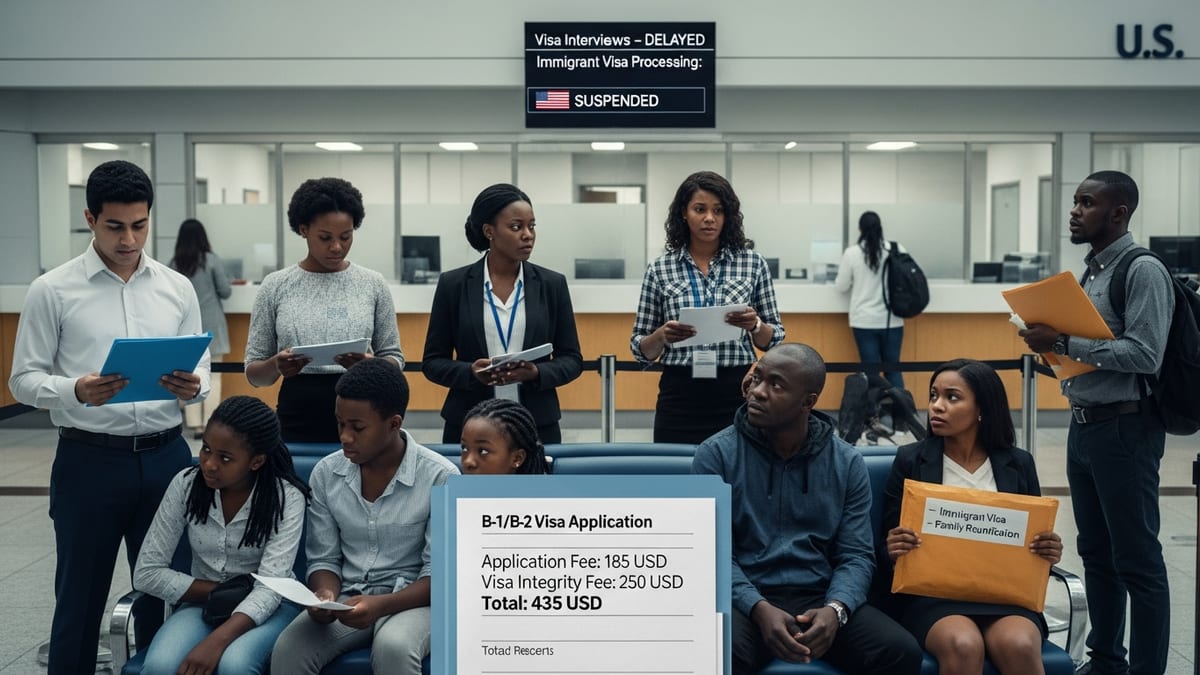
Data Show Rising Refusal Rates and Uneven Impact
Publicly available US government statistics indicate that while overall nonimmigrant visa issuance has rebounded to or above pre-pandemic levels, a growing share of applicants are leaving consulates without visas. Workload tables for fiscal year 2024 show consular sections handling more than 14 million nonimmigrant visa applications, yet refusal rates for key categories such as visitor and student visas have climbed in many markets compared with earlier years.
For business and tourist visitors in the B1 and B2 categories, State Department data on adjusted refusal rates by nationality show that several Asian countries now record rejection levels well above 40 percent, with some smaller markets breaching 60 percent for these short-term visas. These figures, which exclude cases later overturned, point to a significantly tougher environment for first-time travelers and applicants with limited travel history.
At the same time, the aggregate global picture can conceal regional stress points. Analysis by independent visa-tracking platforms that compile issuance and refusal data by consulate highlights steep rejection curves for certain Asian posts even as others, such as long-established hubs serving frequent business travelers, report relatively stable outcomes. This uneven geography of refusals fuels perceptions across social media that Asian applicants as a group are facing a systemic squeeze.
The result is a widening gap between demand and successful access. In major origin countries where outbound travel and overseas study have surged since pandemic restrictions eased, hundreds of thousands of people are now applying into a system that is scrutinizing ties, finances and past travel behavior more closely than at any time in the past decade.
Students and Families Hit by Stricter Scrutiny
The education sector has become one of the most visible flashpoints. Reports from student counselors and aggregated case data for F1 visas indicate that rejection rates for some Asian nationalities have climbed into the 30 to 40 percent range over the last two academic cycles. In India, unofficial tallies shared by consultancies and online applicant communities describe historically high refusal rates for certain states and education profiles, even as overall visa issuance volumes remain large.
Publicly accessible government tables on ineligibilities, which group refusals by section of US immigration law, show that section 214(b) — covering applicants who do not sufficiently demonstrate strong ties to their home country — remains the dominant ground for nonimmigrant denials. For Asian students, that has translated into a greater emphasis on credible academic intent, the financial capacity to pay for multi-year study and evidence they plan to return or maintain substantial links to their home market.
Family travel is also feeling the strain. Visitor visas used by parents visiting children in the US or by relatives attending graduations and weddings have long been a significant share of demand from countries such as India, China and the Philippines. In the current environment, first-time older applicants without prior international trips or formal employment are increasingly reporting refusals under the same 214(b) standard. Online forums devoted to US visa experiences in Asia are filled with accounts of parents denied visas after brief interviews focusing on family in the United States, income and property.
For many households, these rejections lead to immediate travel disruptions: non-refundable air tickets, forfeited accommodation bookings and missed milestone events. In the student segment, refusals can mean lost deposits to universities, a forced deferral to a later intake or an abrupt pivot to alternative destinations such as Canada, the United Kingdom or Australia.
Tourism and Business Travel Plans Disrupted
The tightening approval environment arrives just as Asia’s outbound travel demand is recovering strongly. Regional tourism analysts note that middle-class travelers from South and Southeast Asia are returning to long-haul trips, but visa-heavy destinations like the United States are proving more complicated to reach. For many would-be tourists, the combination of long wait times for interview slots and elevated refusal risk makes the US a less predictable choice than regional or visa-waiver alternatives.
Corporate travel planners across Asia are also adjusting. Business visitor visas, which allow short-term trips for meetings, conferences and training, are a critical tool for companies with global operations. Independent dashboards that track B1 and B2 outcomes by consulate show that refusal rates for some Asian posts have risen compared with the late 2010s, particularly for small-business owners, freelancers and early-career professionals without extensive travel history or long tenures with a single employer.
Travel agencies and visa facilitation firms in cities such as Mumbai, Manila and Ho Chi Minh City report higher volumes of re-application inquiries, as rejected travelers seek to understand whether changed circumstances or fresh documentation might improve their prospects. Each new attempt, however, requires fresh fees and time away from work, making repeat applications a costly strategy.
The net effect is a drag on trans-Pacific mobility at a moment when airlines are rebuilding capacity and tourism boards are courting long-haul visitors. While total US arrivals from some Asian markets remain solid thanks to frequent travelers and those benefiting from interview waivers, the pool of first-time leisure visitors appears increasingly constrained by perceived and actual visa hurdles.
Security, Screening and Policy Shifts in the Background
Underlying these trends is a decade-long evolution in US security vetting and visa policy. Government reports and oversight studies describe a landscape in which information-sharing between agencies has expanded, automated risk assessment tools have matured and consular officers have access to more data on travel history, social media identifiers and potential security flags than ever before.
In parallel, the pandemic period and subsequent recovery prompted a wave of operational changes, including expanded eligibility for interview waivers in some categories and tighter scrutiny in others. While interview waivers have helped reduce queues for frequent travelers renewing visas in the same category, first-time applicants in Asia remain largely subject to in-person interviews, where a short conversation can determine the outcome.
The State Department’s own communications emphasize that consular officers must apply the presumption of immigrant intent for most nonimmigrant visa types and that the burden lies with the applicant to show strong ties abroad. In high-demand Asian markets where long-term migration to the United States is a well-established aspiration, that legal framework translates into particularly probing assessments of an applicant’s reasons for travel, employment stability and long-term plans.
Border security debates in Washington, evolving geopolitical tensions and domestic political concerns about migration levels add further context. Analysts note that even without formal policy changes targeted at specific countries, a more risk-averse screening culture can emerge, especially at posts with large volumes of applicants from demographic groups perceived as higher overstay risks.
How Travelers Across Asia Are Responding
In response to the tougher landscape, Asian travelers are adapting strategies. Prospective students are being encouraged by counselors and education agents to apply earlier, diversify destination choices and prepare more thoroughly for visa interviews with detailed documentation of finances and academic plans. Some are increasingly opting for countries whose student-visa pathways are perceived as more predictable or explicitly tied to post-study work options.
Leisure travelers and families, meanwhile, are rebalancing itineraries toward destinations with streamlined electronic travel authorization systems or visa-on-arrival policies. Regional tourism within Asia, as well as trips to parts of Europe and the Middle East that offer comparatively straightforward visa processes, have benefited from this diversion of demand. Travel industry research across Southeast Asia points to strong regional tourism momentum even where long-haul segments remain below potential.
For those who still prioritize a US trip despite the headwinds, careful preparation has become critical. Publicly available guidance from government sites and experienced travelers underscores the importance of complete and consistent application forms, realistic itineraries aligned with income levels, and transparent explanations of ties to home countries such as family responsibilities, property ownership or long-term employment.
As peak travel seasons approach, the tension between high demand for US travel and stricter screening of Asian applicants shows little sign of easing. Unless refusal rates moderate or alternative facilitation measures expand, the current pattern of disrupted plans, repeated applications and a pivot to competing destinations is likely to remain a central feature of Asia–US travel in the near term.