


More news on this day
Rising airfares, mounting reports of flight delays and tighter household budgets are prompting more Americans to hit the highway instead of the skies, with Texas rapidly joining California and Florida as one of the country’s leading road trip destinations.
Get the latest news straight to your inbox!
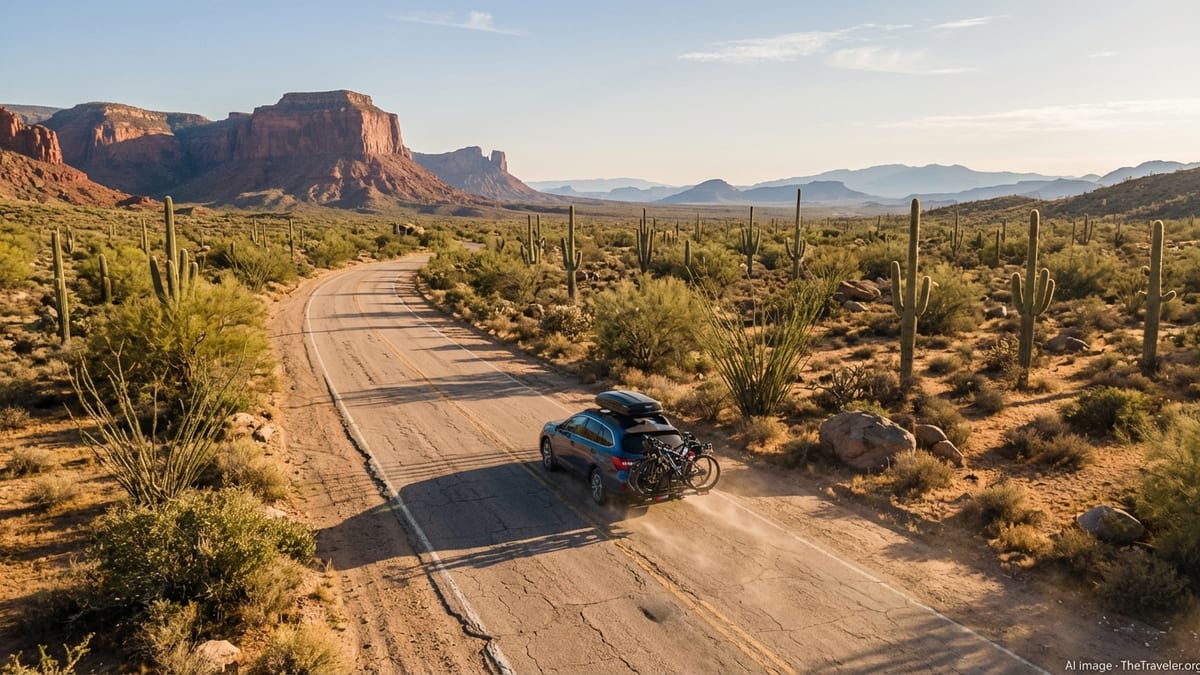
Record Road Traffic as Summer Travel Stays Resilient
Recent travel forecasts point to another record-setting summer on U.S. roads, even as many households report feeling squeezed by higher prices. National auto club projections for Memorial Day weekends in recent years show driving consistently accounting for close to nine in ten holiday trips, with tens of millions of travelers choosing car journeys over flights for getaways of 50 miles or more. More recent outlooks for 2026 indicate that overall travel demand remains strong, but that driving continues to dominate domestic leisure movement.
Survey research on summer 2024 and 2025 travel patterns found that nearly 60 percent of Americans planned leisure trips, and a growing share opted to drive rather than fly when distances allowed. A 2024 summer travel survey summarized by Deloitte reported that about seven in ten U.S. travelers expected to take at least one road trip during the year, up from well under two-thirds the previous year. Road trips have shifted from a budget fallback during the pandemic years to a core component of how many Americans build their vacation plans.
Financial analysts tracking consumer spending add that travel is proving “resilient but uneven,” with higher-income households maintaining or even expanding their vacation budgets while many middle-income families search aggressively for value. Bank of America research on summer 2026 travel spending notes that demand for domestic trips is strong, particularly in large states with wide networks of drivable attractions, including California, Florida and Texas. At the same time, more travelers are shortening trips, picking closer destinations and driving instead of booking expensive flights.
Airfare Inflation, Delays and Budget Pressures Push Travelers to the Highway
Behind the tilt toward road trips is a mix of cost pressures and logistical headaches that continue to weigh on U.S. air travel. Federal inflation data show that airfares have fluctuated after sharp jumps earlier in the decade, but industry and consumer reports indicate that travelers still perceive flying as expensive, especially on peak summer routes and short-notice bookings. Travel search engines tracking ticket prices for popular domestic destinations project mid-single-digit percentage increases in many markets compared with last year.
Beyond ticket prices, persistent flight delays are reinforcing traveler frustration. An analysis of U.S. flight performance published in 2025 by a major travel search platform highlighted several large hub airports, including Miami and New York’s JFK, where more than 40 percent of departures left late during the prior summer. Consumer travel outlets continue to warn that congestion, tight airline schedules and storm-prone summer weather are likely to keep disruption risks elevated at many major hubs, particularly in Florida and along the East Coast.
Budget stress is another critical factor. A nationwide survey released in May 2026 by LendingTree found that among Americans planning personal or leisure trips this summer, 35 percent cited gasoline as the largest cost pressure, followed by airfare at 20 percent and lodging at 17 percent. For many households, especially those managing credit card balances, the ability to control costs with a car trip, pack food, share fuel expenses and avoid additional airline fees is proving more attractive than the perceived convenience of flying.
Consumer behavior research suggests that instead of cancelling vacations outright, many travelers are trading down. They are driving instead of flying, traveling shorter distances, or substituting long weekends for weeklong stays. This behavior appears particularly visible in trips to large states where major cities, outdoor attractions and resort regions are separated by a day’s drive or less, reinforcing the appeal of road-based itineraries.
Texas Emerges Alongside California and Florida as a Drive Market Giant
California and Florida have long dominated U.S. leisure travel, supported by extensive highway networks, iconic coastal routes and dense clusters of theme parks and beach towns. In recent years, Texas has quietly joined that top tier. A 2026 analysis of payment data and travel spending by Bank of America’s Institute identified California, Florida, Texas and New York as the four leading destination states for domestic travelers, with Texas ranking near the top for road-accessible trips.
State-level tourism research underscores the scale of Texas’s drive market. A 2024 economic impact report prepared for the Texas Economic Development & Tourism Office by Dean Runyan Associates estimated that direct travel spending in the state continued to climb, supported heavily by visitors arriving by car. The report’s regional breakdown highlights strong growth in areas that are most easily reached via interstate and state highways, including the Hill Country, Gulf Coast and Big Bend regions.
In a proclamation for Travel and Tourism Week in 2025, Texas officials described the hospitality, tourism and culture sector as one of ten targeted industries expected to drive economic growth statewide. Publicly available information from that strategic plan and associated tourism promotion materials emphasizes road-friendly routes linking major metros such as Dallas–Fort Worth, Houston, San Antonio and Austin with smaller gateway communities and state and national parks.
California and Florida, meanwhile, continue to function as bookends of the national road trip map. California’s Pacific Coast Highway, Sierra Nevada national parks and wine regions remain classic drive itineraries, though drivers face some of the nation’s highest gasoline prices. Florida’s interstates funnel millions of visitors by car to Orlando’s theme parks and Gulf and Atlantic beaches, with many travelers from neighboring states opting to drive rather than fly, particularly for family trips where the cost of multiple airline tickets can quickly eclipse fuel and hotel expenses.
Gas Prices Complicate Road Trips but Do Not Derail Them
High fuel costs are not limited to air travel. Drivers in California and parts of the West have contended with gasoline prices well above the national average, influenced by state-specific taxes, environmental rules and refinery constraints. Official data and market updates from California regulators in late 2024 noted statewide average retail prices moving past 5 dollars per gallon in many areas, and consumer discussions in 2026 continue to highlight California as one of the most expensive states to fill up.
Texas and Florida have generally offered more moderate gasoline prices, providing a relative advantage for road trippers. Payment card and economic analyses of summer 2026 travel show that while higher oil prices have pushed up fuel costs nationwide, many travelers are responding by adjusting rather than abandoning plans. Survey charts from the Bank of America Institute indicate that the most common reactions to rising gas prices include reducing the length of trips, choosing destinations closer to home and changing primary transportation modes, often in favor of cars when flights look costly.
National surveys also reveal that gas prices factor into destination choice. In the LendingTree study, gas was identified as the single biggest cost concern among those still planning summer trips. Yet the same research and others suggest that for many drivers, the ability to control pace and routing, visit multiple stops in one journey and avoid airport hassles offsets fuel anxiety. Travelers are more likely to trim discretionary spending at their destination, such as dining or activities, than cancel a car trip outright.
Industry analysts note that automakers’ continued roll-out of more fuel-efficient vehicles and the gradual expansion of electric vehicle charging infrastructure may further reshape the economics of road travel over the coming years. For now, however, most summer road trips in Texas, California and Florida still depend heavily on gasoline, keeping pump prices a central variable in how far and how often Americans drive.
Tourism Hubs Adjust Marketing to the Road Trip Reality
Destination marketing organizations in major drive states are leaning into these trends by highlighting easily accessible road itineraries and promoting shoulder-season travel to spread out peak congestion. Visitor bureaus across Texas, California and Florida have been packaging multi-stop routes that connect city attractions with outdoor recreation, heritage sites and lesser-known small towns, appealing to travelers who want flexibility and value over fly-and-stay packages.
Travel advisors and consumer outlets increasingly frame road trips as a way to manage uncertainty in airline operations. Features in national travel magazines for the 2024 and 2025 summer seasons pointed readers toward “drive-to” vacations within a day’s radius of major metro areas, particularly emphasizing regions of the Southwest, Gulf Coast and Southeast that can be reached without a flight. These stories frequently cite traffic forecasts and safety tips from auto clubs and transportation analytics firms to help drivers avoid the most congested times.
Economists observing the sector expect that, barring a sharp downturn in consumer confidence or a sudden drop in airfares, the divergence between road and air travel could persist through at least the next few peak seasons. With Texas now firmly grouped alongside California and Florida as a top-tier drive market, highways across the Sun Belt are poised to remain some of the busiest corridors in American leisure travel.