


More news on this day
A high-speed TGV service traveling through northern France collided with a heavy truck at a level crossing near Lens in the Pas-de-Calais region, killing the train driver and injuring numerous passengers, according to early reports from French and international media.
Get the latest news straight to your inbox!
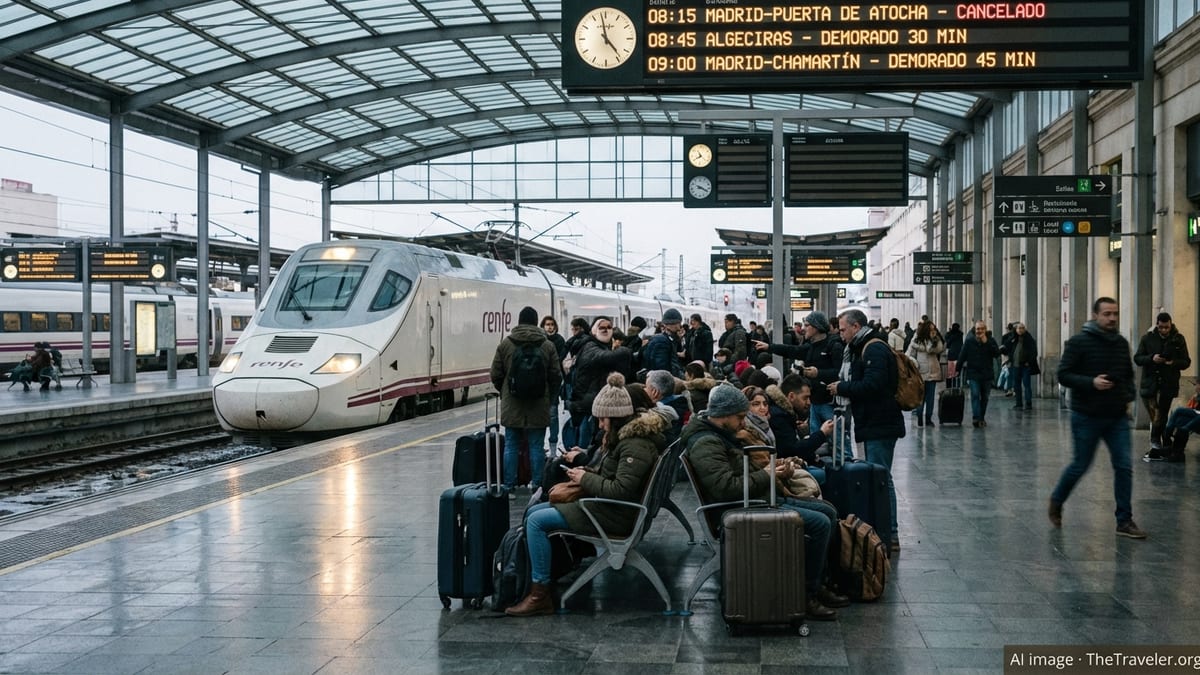
Fatal collision near Lens in early morning darkness
Published coverage indicates that the crash occurred shortly before 7 a.m. on Tuesday, April 7, 2026, at a level crossing between the towns of Béthune and Lens, close to the municipality of Bully-les-Mines in Pas-de-Calais. The TGV, running between Dunkirk and Paris, was carrying more than 240 passengers when it struck a truck reported to be hauling military equipment.
Initial accounts from French and European outlets describe a violent impact as the high-speed train, believed to be traveling at around 160 km/h, hit the heavy goods vehicle positioned on the crossing. The leading power car and at least the first two coaches sustained significant damage, and debris from the truck and its load was scattered along the tracks.
Reports state that the 56-year-old TGV driver, an experienced employee said to be nearing retirement, died in the collision. Passengers on board described a sudden, powerful jolt followed by darkness and smoke, as several carriages derailed and came to a halt at odd angles along the railway line.
French media note that this appears to be the first fatality of a passenger or crew member on a TGV in regular commercial service in several decades, underscoring the exceptional nature of the crash for a network widely considered one of Europe’s safest.
Dozens injured and large-scale emergency response
Regional newspapers and national broadcasters report that at least 16 to 27 people were injured in the collision, with figures varying slightly between outlets as assessments continued throughout the day. Most of the injured reportedly suffered minor trauma such as fractures, bruises, or shock, while a smaller number were described as being in more serious condition.
Images published in French and international coverage show a major emergency operation around the derailed train, with firefighters, medical teams, and police converging on the rural site. Passenger evacuation took place along the ballast and through emergency exits, with some travelers assisted down from elevated carriage doors using ladders and rescue equipment.
Local authorities activated emergency plans to manage the influx of injured people at nearby hospitals in the Lens and Béthune area. Buses were arranged to move uninjured passengers away from the scene, and railway officials began organizing alternative transport to continue journeys toward Paris or back toward the northern coast.
The collision forced the suspension of rail traffic along the affected section of track for much of the day, causing delays and cancellations on the busy northbound high-speed corridor that connects Paris with Dunkirk and other destinations in the region.
Truck carrying military equipment under scrutiny
According to French and European press reports, the truck involved in the crash was transporting a piece of military engineering equipment, frequently described as a mobile bridge or similar heavy army vehicle. The vehicle was reportedly traveling as part of what is classified in France as an “exceptional convoy,” a designation given to oversized or unusually heavy loads that require special routing and regulatory oversight.
Information made public so far suggests that the level crossing’s signals and barriers were functioning at the time of the accident, leading investigators to focus attention on how and why the truck came to be positioned across the tracks as the high-speed train approached. Several outlets note that the vehicle appeared to have become stuck or immobilized on the crossing, though full technical confirmation has not yet been presented.
The truck’s driver, described by some foreign-language reports as a non-French national, has been placed at the center of the early legal inquiry. Media accounts indicate that the driver was detained for questioning as part of an investigation that may include potential charges related to involuntary manslaughter and endangering the lives of others, depending on the conclusions of judicial authorities.
Military sources quoted in domestic coverage emphasize that the truck itself belonged to a civilian transport company contracted to move army equipment, with the overall responsibility for road compliance and positioning at crossings falling under civilian regulations.
Spotlight on level crossing safety and TGV record
The accident is renewing scrutiny of France’s remaining level crossings, particularly those still in service on routes used by high-speed trains operating off the dedicated high-speed lines. Publicly available data from rail infrastructure managers show that dozens of incidents at level crossings occur in France each year, although very few involve high-speed services.
Commentary in French and international coverage points out that the TGV network is largely grade-separated on its core high-speed corridors, but trains often share conventional lines to access regional cities or to approach and leave major stations. These mixed-traffic sections, where level crossings are still present, are now at the heart of the debate over whether additional closures or upgrades are needed.
Transport specialists quoted in recent analyses note that level crossing risk is often concentrated in a relatively small number of sites where heavy road traffic intersects busy rail lines, particularly when oversized or slow-moving loads are involved. The presence of an exceptional convoy at the Bully-les-Mines crossing at peak morning hours is likely to feature prominently in technical reviews of operating rules and signaling coordination.
The TGV system has generally enjoyed a strong safety reputation since entering service in the early 1980s, with fatal incidents involving passengers or crew extremely rare. The April 2026 crash is already being discussed in the context of long-term safety statistics, prompting calls for a fresh look at procedures surrounding special road convoys near rail lines used by high-speed trains.
Investigations and impact on travelers
A formal inquiry by France’s land transport accident investigation body, alongside a judicial investigation, is expected to examine data from the train’s onboard recorders, the functioning of the level crossing equipment, and the movement logs of the truck convoy. Technical teams will likely reconstruct the timing of barrier activation, warning lights, and the truck’s position in the minutes leading up to the collision.
Investigators are also expected to analyze the braking maneuvers of the TGV, the precise speed at impact, and any communication between the train crew and traffic control centers. Findings from these investigations typically lead to recommendations concerning infrastructure design, operational rules, or driver training on both the rail and road sides.
For travelers, services between Dunkirk and Paris and surrounding routes were heavily disrupted in the hours after the crash. Replacement buses and alternative itineraries were put in place, while some passengers experienced extended delays as the damaged train was stabilized and later removed from the site.
Rail operators are anticipated to review timetables and routing for exceptional convoys near key rail arteries in the coming weeks, as the April 7 collision remains a focus of national discussion about how to balance high-speed mobility with safety at the interface between rail lines and road traffic.