


More news on this day
With the slogan “The public transport sector meets here” increasingly associated with the UITP Summit, Dubai is preparing to host what many industry observers describe as the most important annual meeting point for the global public transport sector in April 2026.
Get the latest news straight to your inbox!
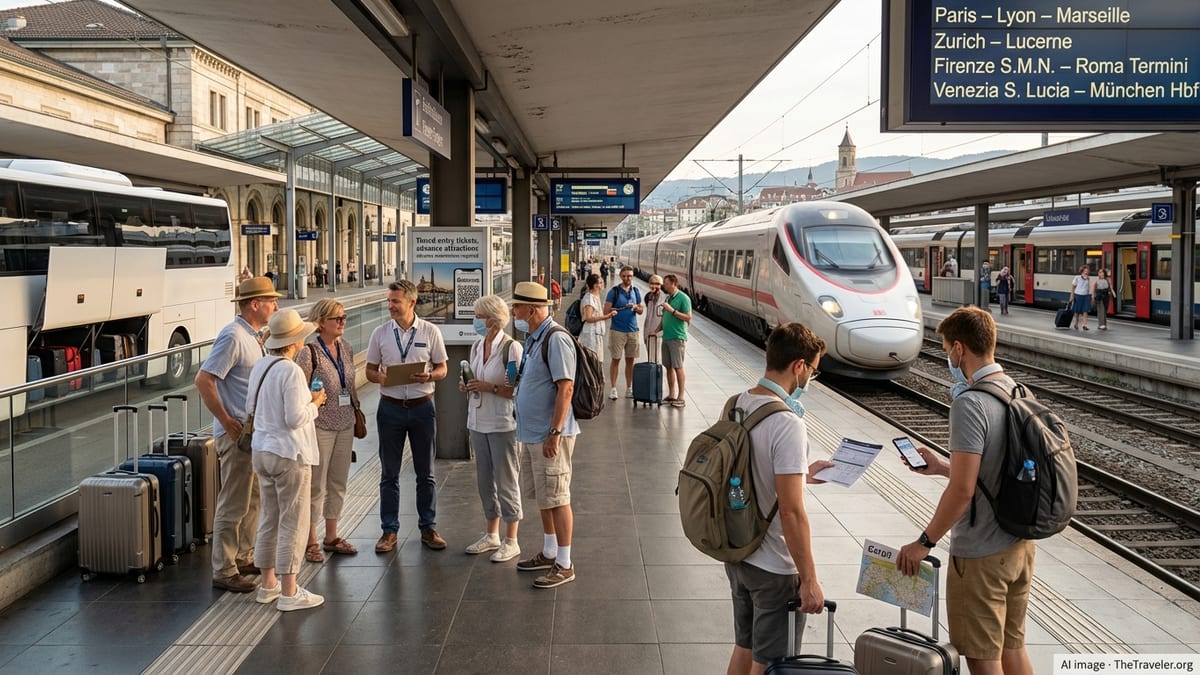
Dubai Takes Center Stage for UITP Summit 2026
Publicly available event information shows that the UITP Global Public Transport Summit will take place in Dubai from 21 to 23 April 2026, positioning the city as the next flagship hub for international urban mobility discussions. The gathering follows the 2025 edition in Hamburg and continues the association’s move to an annual summit format, designed to keep pace with rapid shifts in technology, policy and passenger expectations.
Brochures and summit materials describe the Dubai edition as an opportunity to “learn, network and prepare for the future,” reflecting how the event blends a high-level policy programme with a large-scale exhibition floor. The summit is expected to convene transport authorities, operators, vehicle manufacturers, technology suppliers and city representatives focused on reshaping mobility systems for dense and fast-growing urban regions.
Observers note that Dubai has been positioning itself for several years as a test bed for advanced public transport solutions, from expanded metro and bus networks to trials of autonomous and on-demand services. Against this backdrop, the city offers a high-profile stage for the sector to debate how investment, regulation and innovation can keep urban transport both efficient and inclusive.
For many professionals, the summit’s tagline signals more than just a slogan. It encapsulates the idea that a fragmented global industry has carved out a recurring physical and thematic home where new ideas are unveiled, partnerships are formed and long-term strategies are stress-tested against real-world constraints.
A Global Meeting Point Built Around People and Cities
Coverage in specialist transport publications indicates that the UITP Summit has evolved from a traditional trade congress into a broad-based platform that places people and cities at the centre of the agenda. Strategic planning documents highlight themes such as “putting people first” and “people-centricity,” pointing to a deliberate shift away from viewing mobility as a purely technical or infrastructure question.
In recent editions, programme tracks have focused on topics like net zero cities, sustainable lifestyles, workforce development and community engagement. For the Dubai 2026 summit, previews suggest that the core strands will address shared mobility, the human factor, bus and rail innovation, funding and finance, and smart technologies and data. These themes reflect the growing consensus that successful public transport systems must integrate governance, social outcomes and technology rather than treating them separately.
For host cities, the summit has also become a showcase moment. Hamburg’s 2025 edition highlighted its integrated public transport network and urban mobility plans, while Dubai’s turn in 2026 is drawing attention to large-scale public transport investments across the Middle East and North Africa region. Commentators point out that this geographic rotation not only broadens participation but also exposes delegates to contrasting urban forms, climate conditions and policy environments.
At the same time, organisers have sought to maintain a sense of continuity so that the summit feels like a recurring meeting point for long-running sector debates. Analysts describe a “red thread” across recent summits that links climate action, service quality, digital transformation and social equity as interdependent objectives for modern public transport systems.
Annual Format Signals Faster Pace of Change
Information released by the association behind the summit confirms that 2025 in Hamburg marked the start of a new annual format following previous editions held on a less frequent cycle. The decision is widely interpreted by industry observers as a response to the accelerating speed of change in mobility, from decarbonisation deadlines and funding pressures to the rapid emergence of artificial intelligence in operations.
Under the updated schedule, Hamburg hosted the summit from 15 to 18 June 2025, followed by Dubai in April 2026 and a return to Hamburg again in June 2027. Promotional brochures for these editions consistently use the phrase “The public transport sector meets here,” underlining the intention to establish a yearly focal point where developments from around the world can be compared and debated in quick succession.
Analysts note that this annual rhythm enables closer tracking of major trends. For example, the time between the 2025 and 2026 editions is expected to see new zero-emission bus deployments, expanded rail investments and further integration of on-demand mobility into public networks. Having a fixed global meeting space each year provides an opportunity to examine what has worked, what has stalled and which pilot projects are ready for wider rollout.
The more frequent format is also seen as a way to maintain momentum on complex topics such as funding reforms and workforce transformation. Instead of waiting several years to revisit policy discussions, decision-makers can return annually to refine approaches, benchmark progress and adjust course as economic and political conditions evolve.
Key Themes: Decarbonisation, Digitalisation and Passenger Experience
Programme outlines and media coverage suggest that decarbonisation will remain one of the dominant themes when the sector converges in Dubai. Many public transport authorities are working toward climate targets that require rapid fleet renewal, energy-efficient operations and closer integration with walking and cycling infrastructure. The summit has become a venue where operators share results from zero-emission bus and rail projects, including practical lessons on charging, grid capacity and lifecycle costs.
Digitalisation is another core strand, stretching from back-office planning tools to real-time passenger information and automated operations. Analysts highlight growing interest in how artificial intelligence can optimise timetables, improve asset management and personalise travel information, while also raising questions about data governance and cybersecurity. Exhibitors are expected to showcase platforms that integrate ticketing, demand-responsive services and multimodal journey planning.
Alongside technology and climate objectives, the passenger experience continues to climb the agenda. Reports from previous summits describe intense discussion around reliability, accessibility, safety perceptions and affordability, particularly as cities seek to shift more trips from private cars to public transport. The Dubai meeting is anticipated to focus on how design, staff training and service planning can create networks that are not only efficient but also welcoming and inclusive.
Observers emphasise that these themes are closely connected. Investments in clean fleets and smart systems only fully deliver when services are attractive enough for people to choose them over driving. By positioning itself as the place where the public transport sector meets, the summit is attempting to maintain a holistic view of the challenges facing urban mobility worldwide.
Implications for Travelers and Host Destinations
For travelers, the outcomes of the summit may not be immediately visible but can shape the medium-term evolution of everyday journeys. The policies, technologies and partnerships discussed in Dubai in 2026 are likely to influence everything from fare systems and timetable reliability to the roll-out of new metro lines and bus corridors in cities around the world.
Trade media note that previous summit editions have preceded waves of investment in integrated ticketing, high-capacity bus systems and network modernisation, as public transport agencies draw on ideas and case studies shared at the event. While each city must adapt these examples to local conditions, the summit serves as a reference point that accelerates the spread of successful models.
For Dubai as a destination, hosting the summit reinforces its image as a laboratory for advanced urban infrastructure and a connector between regions. The event is expected to attract delegates from Europe, Asia, Africa and the Americas, many of whom will experience the city’s metro, tram, bus and marine transport systems first-hand during their stay.
As the phrase “The public transport sector meets here” appears across brochures, trade press and event materials, it has come to symbolise a rotating global gathering that links technical innovation with real-world travel experiences. With Dubai preparing for the 2026 edition and Hamburg already confirmed for 2027, the summit is set to remain a central waypoint in the international calendar for public transport and urban mobility.