


More news on this day
After nearly two decades as the standard ticket for Dutch public transport, the familiar OV-chipkaart is entering its final chapter, with a nationwide transition under way to new account-based and contactless systems that will ultimately render the plastic card obsolete by the end of 2027.
Get the latest news straight to your inbox!
From Strippenkaart Successor to System Sunset
Introduced in the late 2000s as a unified smartcard for trains, trams, buses and metros, the OV-chipkaart was designed to replace a patchwork of strip tickets and local fare systems across the Netherlands. Its contactless technology and nationwide scope quickly turned the card into an everyday object in Dutch wallets, used by commuters, students and visitors alike.
Over time, however, the technical foundations of the OV-chipkaart have become increasingly dated. Publicly available information from transport operators describes the current card as based on older chip technology with limited on-card storage, which constrains how products, discounts and travel history can be managed. As mobility trends and digital expectations have shifted, the closed nature of the system has made upgrades more complex and expensive.
Behind the scenes, Dutch transport companies and Translink, the organisation that manages the OV-chipkaart system, have been preparing a generational shift. The new strategy centers on moving away from storing most travel data on the card itself and towards account-based ticketing and open-loop payments that use bank cards, smartphones and a new generation of dedicated public transport cards.
The result is a carefully staged phase-out: OV-chipkaarten remain valid for several more years, but operators are increasingly steering passengers toward alternatives, positioning the current card as a legacy product rather than the default way to travel.
OVpay and OV-pas: The New Backbone of Dutch Ticketing
At the heart of the transition is OVpay, a nationwide system that allows passengers to check in and out using contactless debit and credit cards, as well as compatible devices such as smartphones and smartwatches. According to public transport information portals, OVpay completed its national rollout in 2023, making the Netherlands one of the first countries to offer a fully contactless, open-loop public transport payment system on a national scale.
For travellers, OVpay is conceptually simple: instead of loading balance onto a separate card, they tap a bank card or device at the gates or validators. The fare is calculated after travel and debited from the bank account, while online portals provide access to travel history and receipts. This reduces the need for traditional ticket machines and separate top-up points, an operational shift that some local operators already highlight by explaining that their vending machines are seeing less use as OVpay adoption grows.
Running alongside OVpay is the OV-pas, a new dedicated public transport card that uses the same account-based infrastructure. Information from rail operator NS describes the OV-pas as the successor to the OV-chipkaart, aimed particularly at frequent travellers and business users who need subscriptions, discounts or invoicing. Instead of holding most data on the plastic itself, the OV-pas links to an online account where products, travel rights and history are managed.
The OV-pas is being introduced in stages. Business-focused versions linked to NS corporate products are appearing first, with broader consumer offerings to follow. Public documentation indicates that the OV-pas will eventually function across all Dutch public transport, mirroring the nationwide acceptance that made the OV-chipkaart so central to everyday mobility.
A Long Goodbye: Timelines and What Travellers Need to Know
Despite the headlines, the OV-chipkaart is not disappearing overnight. Information published by Dutch railway and urban transport operators consistently points to a multi-year transition period. Travelling on balance with an OV-chipkaart remains possible through at least the end of 2027, and cards that are still within their validity period can continue to be used for regular check-in and check-out.
However, several signals underline that the beginning of the end has arrived. The official OV-chipkaart website now clearly frames the card as a product that is stopping, and frequently asked question sections explain how to terminate cards, request refunds of remaining balance and switch to newer options. Some operators also specify that newly introduced products and promotions may only be available via OVpay, OV-pas or app-based tickets, narrowing the space in which the older card remains essential.
For residents, the practical advice emerging from public information is to check the expiry date printed on their OV-chipkaart and consider their travel habits. Those whose cards are nearing the end of their lifespan are being encouraged to explore OVpay or, if they rely on fixed subscriptions, to look ahead to OV-pas offerings. Refund procedures are spelled out for travellers who choose to cancel early, ensuring that unused balance is returned once the card is deactivated.
Visitors and occasional travellers face a simpler choice. As more ticket machines and sales points shift emphasis toward contactless payment and app tickets, carrying a separate Dutch transit card is becoming less necessary. OVpay allows most tourists with European or major international bank cards to tap in directly, although those without compatible cards may still need to rely on single-use tickets or local day passes during the transition period.
Impacts on Subscriptions, Commuters and the Travel Experience
One of the most sensitive aspects of the transition involves season tickets and discount products that have been tightly coupled to the OV-chipkaart system. Many Dutch commuters depend on arrangements such as regional passes, off-peak discounts or student travel products that are physically loaded onto their card. Publicly available information from NS and regional operators suggests that these will be migrated in phases to the OV-pas and, over time, to OVpay-compatible account structures.
During this migration, some passengers may find that particular subscriptions still require a personal OV-chipkaart, even as operators promote OVpay for simple pay-as-you-go travel. This creates a hybrid landscape in which multiple systems coexist. Reports from traveller communities show continuing questions about which products can be linked to OVpay or OV-pas, and when certain discounts will become available without the legacy card.
For daily commuters, the eventual promise is a more flexible system. Account-based ticketing is expected to allow products to be adjusted without a trip to a ticket machine, and to make it easier to combine rail, bus, tram and shared mobility services under one profile. The trade-off is a stronger dependence on digital accounts, online access and accurate back-office processing, shifting some complexity from the card in the wallet to the systems behind the scenes.
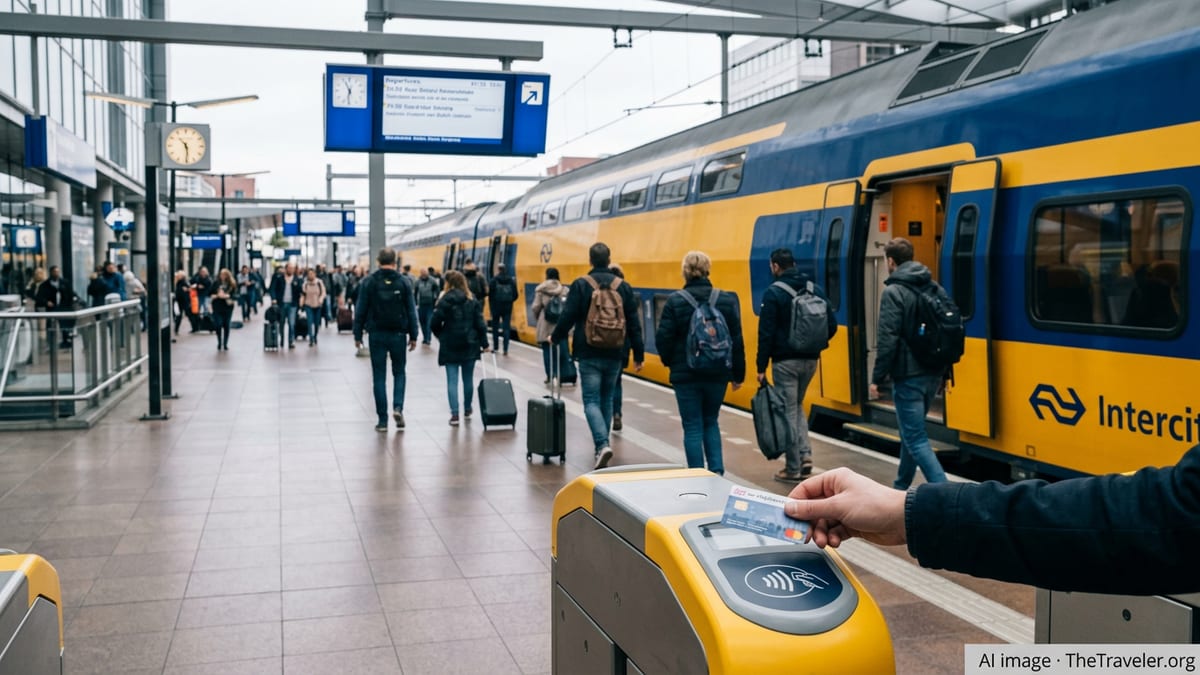
From a travel-experience perspective, the visible changes are already apparent in Dutch stations and vehicles. Validators and gates now carry OVpay branding, informational screens and posters encourage passengers to tap with their bank cards, and help pages increasingly highlight OVpay and OV-pas as the baseline. The OV-chipkaart still works at the same readers, but it is no longer the star of the show, signaling to passengers that a new era of tapping in and out has begun.
What the Phase-out Signals for Global Transit Trends
The gradual retirement of the OV-chipkaart offers a glimpse into broader shifts in public transport ticketing worldwide. The Netherlands once stood out for introducing a nationwide smartcard across modes and operators; now it is positioning itself at the forefront of open-loop, account-based fare collection, using bank cards and digital wallets as primary tokens.
For other countries and cities, the Dutch experience underscores both the strengths and limits of first-generation smartcards. Systems built around closed, card-centric technologies provided a major step forward compared with paper tickets, but they now face higher maintenance costs and lower flexibility than platforms that treat cards, phones and wearables as interchangeable identifiers linked to a central account.
As the OV-chipkaart moves towards its planned end-of-life, the key story for travellers is one of continuity amid change. Trains, trams, buses and metros will continue to run, gates will continue to beep and daily routines will largely carry on. What is shifting, quietly but decisively, is the infrastructure that turns those beeps into tickets and invoices, marking the beginning of the end for one plastic card and the consolidation of a new digital standard beneath the surface of Dutch public transport.