


More news on this day
Fresh travel guidance from the United Kingdom is drawing renewed attention to rising security risks and potential flight disruption across the Gulf, as Kuwait moves in closer alignment with Qatar, the United Arab Emirates, Oman, Saudi Arabia and other regional states following the rapid unravelling of a United States Iran memorandum of understanding on de escalation.
Get the latest news straight to your inbox!
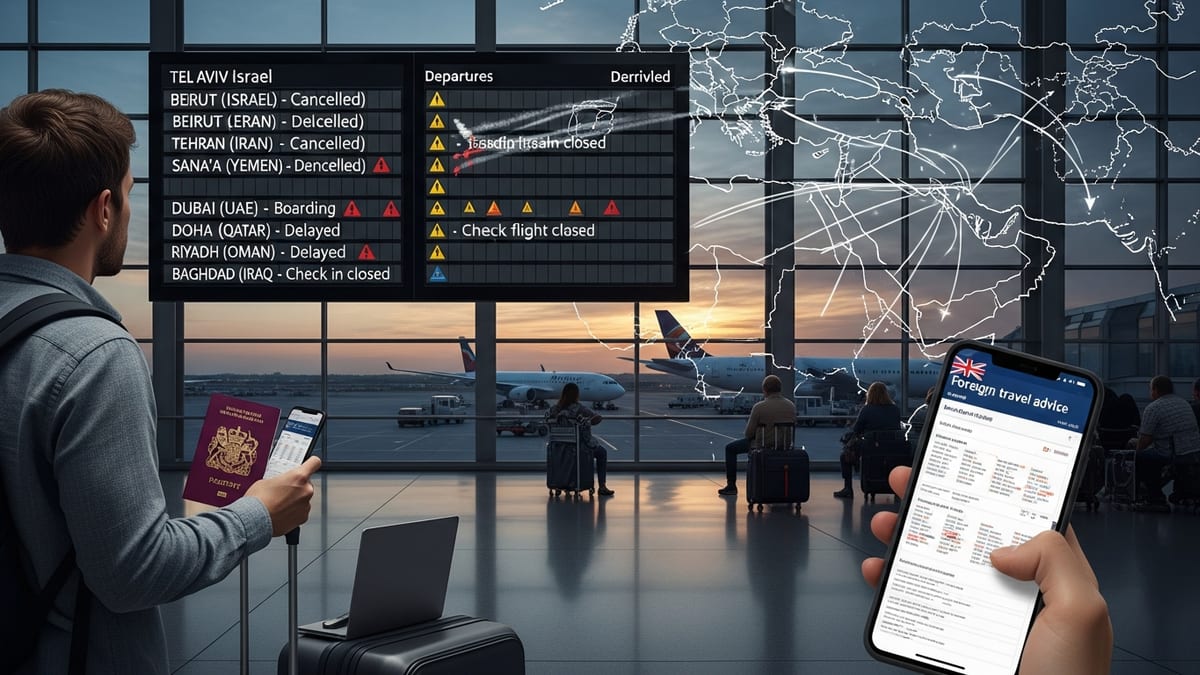
UK Tightens Language on Kuwait as Regional Tensions Rise
Updated foreign travel advice from the United Kingdom highlights a more volatile backdrop for trips to Kuwait, explicitly flagging the risk of further Iranian attacks and urging heightened awareness around sensitive sites. The latest changes, issued in mid July, underscore that regional tensions have increased again after a short lived easing that followed the US Iran understanding agreed in June.
The UK advisory notes that Iran has already carried out strikes on Kuwaiti territory since the memorandum was signed and cautions that similar incidents could occur at short notice. The language represents a shift from earlier, more cautiously optimistic wording that had reflected hopes the truce framework would stabilize the Strait of Hormuz and surrounding states.
Travelers are reminded that security conditions can deteriorate quickly and that areas around military, energy and diplomatic facilities face an elevated threat profile. Publicly available guidance stresses the importance of monitoring local media, being prepared for sudden movement restrictions and following any instructions issued locally in response to security incidents or air raid alerts.
Although the UK has not imposed a blanket ban on travel to Kuwait, the sharpened tone signals that government risk assessments now factor in a higher probability of spillover from the breakdown of the US Iran understanding, with particular concern about missile and drone activity targeting key infrastructure.
Gulf States Close Ranks After New Iranian Strikes
Across the wider region, recent days have seen a series of coordinated statements from Gulf capitals condemning renewed Iranian missile and drone attacks on multiple neighbors, including Kuwait, Qatar, the United Arab Emirates, Oman, Bahrain and Jordan. Public communiqués from foreign ministries in Doha, Abu Dhabi and Riyadh describe the strikes as serious violations of sovereignty and a dangerous escalation that undermines efforts to restore calm.
The United Arab Emirates has publicly expressed strong solidarity with Kuwait, Qatar, Oman, Bahrain and Jordan, voicing support for all measures those countries may take to safeguard their security. Similar language from Saudi Arabia denounces attacks on Kuwaiti border posts, offshore energy assets and commercial shipping linked to Gulf economies, framing the incidents as part of a broader pattern of destabilizing behavior.
Qatar, which initially welcomed the June memorandum as a step toward de escalation, has now issued multiple statements condemning what it describes as repeated Iranian attacks on its own territory and on fellow Arab states. Official messaging from Doha argues that the continuation of such strikes threatens to derail diplomatic efforts and risks drawing the region back into a cycle of confrontation.
Kuwait’s alignment with this collective Gulf position puts it firmly within a growing bloc that is presenting a unified diplomatic front in response to Iran’s actions. For travelers, the practical significance lies less in the rhetoric and more in the likelihood that heightened alert levels, joint air and maritime surveillance, and precautionary closures could be introduced at short notice across several countries at once.
Unravelling US Iran Understanding Fuels Aviation Uncertainty
The June memorandum of understanding between Washington and Tehran was framed as a pathway to cease hostilities and restore predictable commercial traffic through the Strait of Hormuz. Within weeks, however, reports from international and regional media outlets have documented renewed exchanges, maritime incidents and political disputes over compliance, leading observers to characterize the accord as effectively collapsed.
Analyses from policy institutes and financial sector research suggest that the breakdown of the understanding has removed a key psychological support for airlines, insurers and shipping companies that had begun to plan for a gradual normalization of routes and coverage. Instead, operators are once again factoring in the risk of sudden closures, higher war risk premiums and complex detours around sensitive airspace and sea lanes.
For air travelers, the most immediate impact is the potential for indirect disruption rather than outright bans. Carriers may reroute flights to avoid certain corridors over or near the Gulf, lengthening journey times, altering connection patterns and increasing the risk of knock on delays. In extreme cases, airlines can suspend specific routes if they assess that the security environment or insurance conditions have deteriorated beyond acceptable thresholds.
Industry trackers also note that states bordering the Strait of Hormuz and the Gulf of Oman have periodically issued temporary restrictions on overflights or naval movements during periods of heightened tension. With the memorandum no longer functioning as a stabilizing mechanism, such short notice measures may become more frequent, catching itinerant travelers unprepared if they do not closely monitor airline notifications and official travel advice.
Diverging Advisories but Common Message of Caution
While the UK’s latest adjustment to its Kuwait guidance is a prominent signal for British travelers, other governments have taken parallel steps across the region in response to the shifting risk environment. Travel advisories from several Western countries now group Kuwait with Qatar, the UAE, Bahrain and, in some cases, Saudi Arabia and Oman in categories that call for a high degree of caution or a reconsideration of non essential trips.
Public information from foreign ministries in Australia and North America reflects a consistent theme: the security situation across large parts of the Middle East remains fluid, with the potential for rapid deterioration. Many advisories highlight the same set of concerns, including the threat of missile and drone attacks, risks to civil aviation in and around the Gulf, and the possibility that embassies could temporarily limit services during periods of heightened tension.
Despite some differences in grading systems and wording, the underlying message converges on the need for travelers to adopt a more proactive approach to risk management. This includes registering with consular services where available, checking airline schedules frequently, and being prepared for sudden changes such as airport closures, curfews or diversions to alternate hubs.
For millions of travelers who transit through major Gulf gateways each year, the evolving patchwork of advisories is likely to influence route planning, insurance choices and even destination preferences in the coming months. The shift also underscores how quickly expectations can change when a diplomatic framework like the US Iran memorandum loses momentum.
What Travelers Should Watch in the Weeks Ahead
Looking ahead, several developments will shape the level of risk faced by visitors to Kuwait and neighboring states. Observers are watching closely for any further Iranian attacks on territory or infrastructure in Gulf countries, as well as for changes in the posture of regional air defense and maritime security arrangements. Any new incidents affecting commercial shipping or energy facilities near the Strait of Hormuz would be particularly significant for aviation and cruise travel.
Travelers should also pay attention to adjustments in airline operations, including announcements on route changes, revised overflight policies and potential reductions in capacity on certain city pairs. Even travelers whose final destination lies outside the Middle East can be affected if they are booked through hubs such as Doha, Dubai, Abu Dhabi, Riyadh or Kuwait City.
Finally, the diplomatic track remains a crucial variable. If renewed talks between the United States, Iran and regional actors take shape, this could ease insurance pressures and gradually lower the perceived risk to civil aviation and cross border travel. Conversely, further deterioration in relations or new sanctions disputes could encourage additional military posturing and sharpen the tone of official travel warnings.
Until the contours of a more durable security arrangement emerge, Kuwait’s decision to align its stance with partners such as Qatar, the UAE, Oman and Saudi Arabia reflects a wider regional message that the current situation is fragile. For visitors, that means treating itineraries through the Gulf with an extra measure of flexibility and preparedness.