


For frequent private fliers in the United States, Nicholas Air has become a familiar name in the crowded world of jet cards and membership programs. Based in Mississippi and focused heavily on the eastern half of the country, the company promotes a young, company-owned fleet and flexible card options as its main selling points. Yet like any private aviation provider, the experience comes with both clear advantages and notable tradeoffs. Understanding where Nicholas Air excels and where it may disappoint is essential before wiring a six-figure deposit or committing to a multi-year relationship.
Get the latest updates straight to your inbox!
How Nicholas Air’s Model Works in Practice
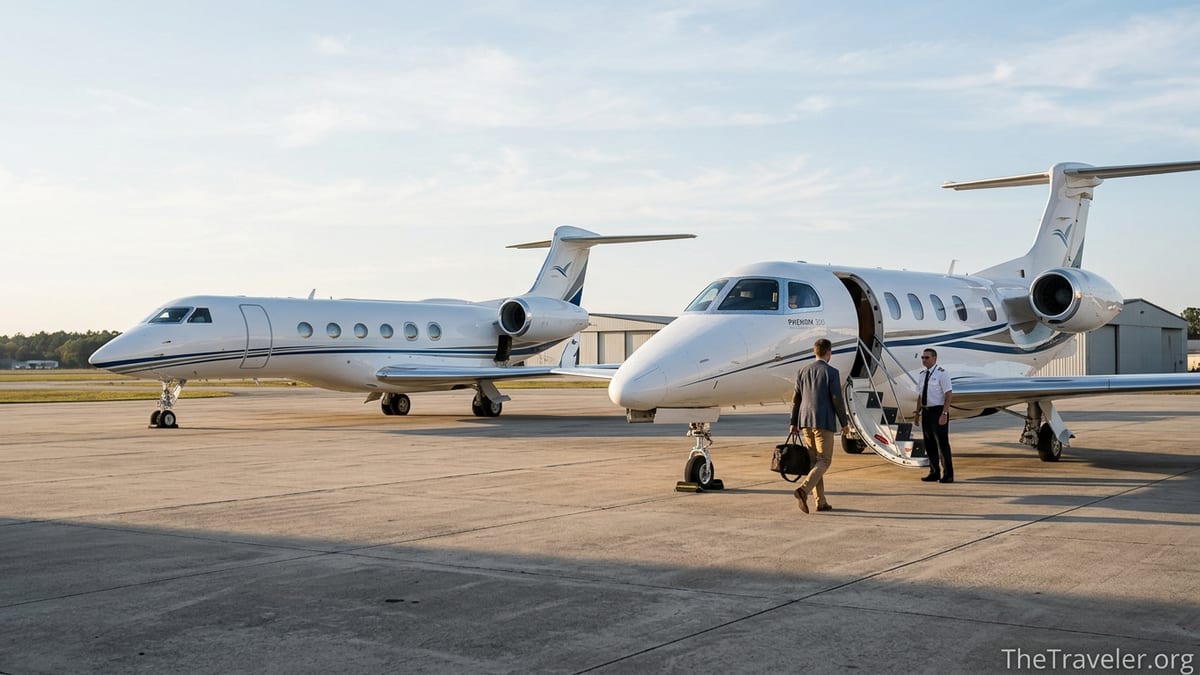
Nicholas Air is not a charter broker. It owns and operates its fleet, which sets it apart from membership brands that primarily source aircraft from third parties. In practice, this means that when you buy a Nicholas Air jet card, you are typically flying on aircraft with Nicholas Air livery, flown by pilots on the company payroll, maintained to its internal standards, and scheduled by its own operations team. For travelers who have been surprised by inconsistent aircraft quality when booking through brokers, this one-operator model can be a meaningful advantage.
The core of the Nicholas Air offering is its portfolio of jet cards rather than on-demand one-off charters. As of mid-2026, the company’s main products are the Blue Card, Rise Card, Lite Card, and Steel Jet Card. The Blue Card is an hours-based program where you pre-purchase 15, 30, 60, or 100 hours on a specific aircraft type, such as a Phenom 300 or Citation CJ3. The Rise and Lite cards are deposit-based, starting at roughly 200,000 dollars and going up to seven figures, with funds drawn down at fixed hourly rates. The Steel Jet Card is tailored specifically to the long-range Gulfstream G600 and carries a separate membership fee.
Compared with well-known competitors like NetJets jet cards or Wheels Up memberships, Nicholas Air’s programs are generally pitched at flyers who log somewhere between 25 and 150 hours per year. A family that charters a few holiday ski trips and business shuttle runs between New York and Florida might gravitate toward a 30- or 60-hour Blue Card, while a regional company that sends executives between Atlanta, Nashville, and Dallas every month might instead opt for a 350,000 dollar Rise deposit so they can mix turboprops and midsize jets as needed.
On a day-to-day basis, members book trips by calling or emailing Nicholas Air, typically with 24 to 72 hours’ notice. The company advertises guaranteed availability and fixed hourly rates without repositioning or membership fees for card holders. For a traveler planning a January weekend to Aspen from Dallas on a Phenom 300, this translates to a known all-in hourly price plus taxes and standard surcharges, rather than an unpredictable spot-market quote that might spike when ski demand peaks.
Fleet Quality and Cabin Experience
One of Nicholas Air’s strongest calling cards is its emphasis on a young fleet. Industry profiles and pilot recruiting materials highlight an average fleet age under five years and a mix of factory-new or late-model aircraft from manufacturers such as Embraer, Cessna, Pilatus, and Gulfstream. For travelers, this generally means cleaner cabins, modern avionics, and amenities like Wi‑Fi that you might not find consistently on older charter aircraft operated by small regional players.
The fleet spans several categories, from Pilatus PC-12 turboprops to very light jets such as the Phenom 100, light jets like the Citation CJ3, and popular light and midsize models such as the Phenom 300 and Citation Latitude. At the top end, Nicholas Air has invested in the Gulfstream G600, a large-cabin, long-range jet capable of nonstop legs such as New York to London or Los Angeles to Honolulu under favorable conditions. This diversity allows members to right-size aircraft to specific missions instead of flying an overkill jet on every trip.
Consider a real-world example. A couple living in Birmingham planning a quick hop to Seaside on Florida’s Emerald Coast might choose a Pilatus PC-12 on a Blue Card at a significantly lower hourly rate than a jet, while that same couple might upgrade to a Phenom 300 for a winter weekend in Vail to gain extra performance and comfort in mountain operations. For a board meeting that gathers executives from Atlanta and Chicago in Houston, a Citation Latitude booked through a Rise Card would offer stand-up cabin height and a quieter ride on a roughly two-and-a-half hour flight.
Cabin experience reviews are generally positive on passenger comfort and cleanliness, with brokers and long-time members noting well-maintained interiors and professional flight crews. However, because the fleet is highly standardized and branded, you are unlikely to see the ultra-bespoke, one-off interiors sometimes found in individually owned charter aircraft. If your priority is a consistent, businesslike cabin rather than a unique design, Nicholas Air’s approach will likely be appealing.
Pricing, Value, and When Nicholas Air Makes Sense
In the context of the broader market, Nicholas Air usually positions itself in the mid to upper pricing tier. Independent membership comparison sites that aggregate card providers list Nicholas Air’s Blue Card rates for very light and light jets noticeably above some regional charter-only operators, but broadly in line with or slightly below the most premium card programs on an apples-to-apples aircraft basis. That said, the minimum commitments are substantial: a 15-hour Blue Card on a small jet can quickly climb into the mid five-figure range, while a 350,000 dollar Rise deposit is not unusual for frequent flyers seeking flexibility across aircraft types.
Where Nicholas Air can deliver strong value is in high-utilization, repeatable flying patterns, especially on the East Coast and in the Southeast. Imagine a family based in Charlotte that flies to New York every other month, to Naples, Florida twice a winter, plus a few ad hoc trips to college campuses and family events. If they book all of those flights ad hoc through brokers, they might see large variations in hourly rates, plus extra repositioning charges when aircraft have to be flown in from distant airports. With a Nicholas Air Blue Card tied to a Phenom 300, they can lock in a fixed hourly cost, often with no repositioning fees within their primary service area, making annual budgeting far more predictable.
On the other hand, for a traveler who only needs one or two private flights a year, Nicholas Air’s structure is hard to justify. A single New York to Miami trip might be more economically served by a one-off charter booked through a marketplace where operators compete on price. Likewise, a West Coast entrepreneur who splits time between San Francisco and Los Angeles might find better geographic coverage and lower deadhead costs from operators whose fleets are based in California. Even Nicholas Air loyalists acknowledge in public forums that for some thin or far-flung routes, the company’s pricing can look expensive relative to local operators.
Another subtle but important cost factor is program design. The hours-based Blue Card is tightly aligned to actual flight time, which means that if a member’s flying profile shifts and they start taking many ultra-short legs, the effective per-leg cost can be high even though hourly pricing is fixed. Deposit-based cards like Rise and Lite offer more flexibility to bounce between aircraft types, but they still require significant upfront capital and a level of flying activity that will use the deposit efficiently within the program’s terms.
Operational Reliability and Service Culture
Any private aviation provider can showcase beautiful aircraft on its website; the real test is how it performs on the day of travel. On reliability, Nicholas Air presents a mixed but instructive picture. Industry partners and some long-time card holders speak positively about on-time performance and responsive operations, especially for routine trips booked with reasonable notice within Nicholas Air’s core geography. A corporate client that schedules a Phenom 300 shuttle between Atlanta and Nashville on a monthly basis, for example, may see years of largely uneventful flying.
However, feedback from some frequent users on private aviation forums paints a more nuanced story. One long-standing card holder who has booked dozens of flights over multiple years noted that while pilots were consistently professional and aircraft were in good condition, a meaningful share of trips experienced delays tied to maintenance or scheduling issues. From the traveler’s perspective, a two-hour departure delay on half a dozen flights may feel jarringly at odds with the premium pricing and promise of seamless travel, even if safety is never compromised.
Employee and pilot commentary also sheds light on the internal culture that ultimately shapes customer experience. Reviews on career sites rate Nicholas Air somewhere around the middle of the pack, with many employees praising the modern fleet and advancement opportunities but voicing concerns over scheduling, work–life balance, and management communication. Some pilots describe the company as exceptionally customer-centric, sometimes to a degree that leaves crews feeling stretched. For travelers, such a culture can manifest as great service in the cabin, but it may also contribute to burnout that can eventually show up as staffing challenges.
For prospective members, the most practical takeaway is that Nicholas Air appears to perform best when trips are planned with reasonable lead time, originate and terminate within its strongest service regions, and fall within standard operating patterns. Last-minute changes, multi-leg cross-country tours, or highly complex itineraries that push aircraft and crews to their limits may be more vulnerable to schedule adjustments or delays, regardless of the provider.
Geography, Availability, and Network Limitations
Nicholas Air’s network is heavily oriented toward the eastern half of the United States. Its base in Mississippi and concentration of aircraft at airports across the Southeast and East Coast make it a natural fit for travelers whose lives and businesses are anchored in markets such as Atlanta, Birmingham, Nashville, Charlotte, Miami, and the Northeast corridor. For example, a member living in Atlanta who frequently visits family in Charleston and hosts clients in New Orleans is likely to find plentiful aircraft availability and minimal repositioning within this footprint.
Conversely, several charter brokers and private flyers point out that Nicholas Air is less competitive on the West Coast and in sparsely served regions. A card member in Denver looking to fly to small fields in Montana or Wyoming may find that Nicholas Air either cannot guarantee the same level of efficiency or must reposition aircraft from hundreds of miles away, which increases total flight cost. In addition, some industry observers note that certain membership competitors with national scale or shared-fleet partnerships can offer more consistent economics for bicoastal travelers.
Internationally, Nicholas Air is capable of operating to the Caribbean, parts of Mexico, and with the G600, to select transatlantic and long-haul destinations. Still, it is not a global network in the same way that some larger fractional ownership brands are. A family planning multiple trips per year to London, Paris, or Dubai may find that programs purpose-built for global coverage, sometimes combining owned fleets with partner operators overseas, are better aligned to their needs than a primarily North American provider.
For many travelers, this geographic reality is not a dealbreaker but a filter. Nicholas Air makes the most sense for fliers whose trips are overwhelmingly domestic within the eastern United States, with occasional forays to popular leisure destinations like the Bahamas or Cabo. Those whose itineraries are more scattered across continents or who regularly need one-way West Coast legs may be better served by alternative memberships or a mix of jet cards and on-demand charters.
Safety, Transparency, and Reputation
Safety credentials are a non-negotiable consideration for any private aviation decision. Nicholas Air presents itself as a safety-focused operator, and third-party information suggests it holds widely recognized industry audits and ratings. While specifics can change over time, travelers should ask directly about current ARGUS, Wyvern, or IS-BAO status when evaluating any program and request written confirmation of safety audits, crew training standards, and duty-time policies before signing a contract.
In terms of transparency, Nicholas Air scores reasonably well on program structure but remains opaque on some key details, particularly exact hourly rates, which are typically provided only in direct sales conversations or through partner brokers. The company’s materials clearly outline the differences between Blue, Rise, Lite, and Steel cards, and emphasize “no repositioning fees” and fixed hourly pricing for members. However, prospective clients should scrutinize how peak day rules, minimum flight charges, fuel surcharges, and taxes are applied, as these can meaningfully affect the final per-hour cost.
Reputation-wise, Nicholas Air sits in an interesting middle ground. Luxury-focused yachting and travel publications have profiled the brand favorably, highlighting its modern fleet and high member renewal rates. At the same time, pilot and dispatcher discussions online can be sharply critical, especially around labor issues and specific management decisions. For a traveler, the most pragmatic approach is to treat online commentary as one data point among many: combine it with direct references from current card holders, conversations with independent aviation advisors, and a careful review of contract language.
One practical step is to ask Nicholas Air to arrange a demonstration flight on a likely aircraft type before committing to a large hour block or deposit. This allows you to sample the cabin, interact with crew, and test the booking and ground-handling experience on a relatively low-stakes trip, such as a regional hop from Atlanta to Savannah or from Dallas to Austin. The way any operator handles inevitable small hiccups on such a flight is often more revealing than the glossy photography on its website.
The Takeaway
Flying with Nicholas Air offers a compelling package for a specific type of private traveler: someone who flies regularly within the eastern United States, values a young, consistent fleet, prefers fixed hourly pricing over chasing spot deals, and is comfortable committing significant funds upfront to secure that stability. For this profile, the company’s Blue and Rise cards can deliver a convenient, predictable experience with aircraft that feel modern and crews that are generally well regarded by passengers.
Yet these advantages come with tradeoffs. Pricing is rarely the lowest available on any given day, especially in markets where local operators can undercut card rates on short-notice one-off trips. Operational reliability is good but not flawless, and some frequent users report more delays than they consider acceptable at this price point. Network strength is concentrated in the eastern United States, limiting value for those whose schedules oscillate between coasts or frequently cross oceans. And internal labor tensions, while not unique to Nicholas Air, are a reminder that service quality ultimately depends on how well an operator balances customer promises with sustainable working conditions for crews and staff.
For travelers weighing Nicholas Air against alternatives, the most important step is to map the company’s strengths and weaknesses directly onto their own flying profile. If most of your trips are straightforward regional hops between major eastern hubs and your priority is consistency and convenience over hunting for the lowest possible charter quote, Nicholas Air may be a good fit. If, on the other hand, your flying is sporadic, heavily West Coast–based, or highly international, it may be wiser to start with ad hoc charters or programs tailored explicitly to those patterns.
Ultimately, no private aviation solution is perfect. The question is not whether Nicholas Air is objectively “better” than NetJets, Flexjet, Wheels Up, or a trusted local operator, but whether its specific blend of owned fleet, membership structure, network focus, and service culture aligns well with how you actually travel. A candid conversation with the company, a review of competing offers, and, ideally, a test flight will provide a clearer answer than any marketing brochure.
FAQ
Q1. What types of aircraft does Nicholas Air operate?
Nicholas Air operates a company-owned fleet that typically includes Pilatus PC-12 turboprops, Embraer Phenom 100 and 300 jets, Cessna Citation CJ3 and Citation Latitude jets, and Gulfstream G600 large-cabin aircraft, though exact composition can change over time as aircraft are added or retired.
Q2. How much does a Nicholas Air jet card cost?
Pricing varies by aircraft type and program, but travelers can expect the smallest Blue Card jet options to run into the tens of thousands of dollars for a 15-hour block, while deposit-based Rise or Lite cards usually require at least a 200,000 dollar commitment and can scale up to seven figures for heavy users.
Q3. Is Nicholas Air cheaper than on-demand charter?
Not necessarily. For frequent flyers with predictable travel patterns in Nicholas Air’s core regions, fixed card rates and no repositioning fees can offer good value over time, but occasional travelers or those in markets far from the company’s bases may find one-off charters from local operators less expensive on a per-trip basis.
Q4. Where does Nicholas Air fly most often?
Nicholas Air is most active in the eastern half of the United States, with strong coverage across the Southeast, East Coast, and major business hubs such as Atlanta, Dallas, Nashville, Charlotte, and the Northeast corridor, along with popular leisure destinations in Florida and the Caribbean.
Q5. Can Nicholas Air fly internationally?
Yes, within limits. Nicholas Air can operate flights to nearby international destinations such as the Bahamas, parts of the Caribbean, and Mexico, and with the Gulfstream G600 it can serve selected long-range routes, though it is not a global network on the scale of the largest fractional ownership providers.
Q6. How far in advance do I need to book a flight with Nicholas Air?
Program terms can evolve, but members generally secure the best availability and experience when they book at least 24 to 72 hours in advance, especially during peak holiday periods or major events when demand across private aviation spikes.
Q7. What happens if my Nicholas Air flight is delayed?
If a flight is delayed due to maintenance, weather, or crew scheduling, Nicholas Air will typically attempt to resolve the issue by adjusting departure times, swapping aircraft if possible, or reworking crew assignments, but the specific remedies, compensation if any, and policies are governed by your membership agreement and should be reviewed before you sign.
Q8. How does Nicholas Air compare with NetJets or Flexjet?
NetJets and Flexjet focus heavily on fractional ownership alongside jet cards and generally have larger global networks and broader fleets, while Nicholas Air concentrates on jet card memberships with a company-owned fleet and a strong emphasis on the eastern United States, so the better choice depends on how often and where you fly and how much capital you want to commit upfront.
Q9. Does Nicholas Air charge repositioning or membership fees?
Nicholas Air markets its jet cards as having fixed hourly rates with no separate repositioning or initiation fees for normal operations within its program parameters, though travelers should still review contracts for possible minimums, fuel surcharges, peak day restrictions, and taxes that affect the total cost of each trip.
Q10. Who is Nicholas Air best suited for?
Nicholas Air tends to work best for individuals, families, and small to mid-sized companies that fly regularly within the eastern United States, prefer the predictability of fixed hourly rates on a young, standardized fleet, and are comfortable making a sizable upfront investment in hours or deposits rather than shopping each trip on the open charter market.