


For travelers who have outgrown commercial first class and want the flexibility of private aviation, Nicholas Air often appears on the shortlist alongside bigger names like NetJets, Flexjet, and Wheels Up. With its distinctive red tails and a fleet of relatively young aircraft, the Mississippi-based operator markets itself as a boutique, owner-operator alternative that delivers consistency and personalized service. But are the hourly rates and membership commitments Nicholas Air requires actually worth the money for real-world travelers, or are there better-value options elsewhere in the private skies?
Get the latest updates straight to your inbox!
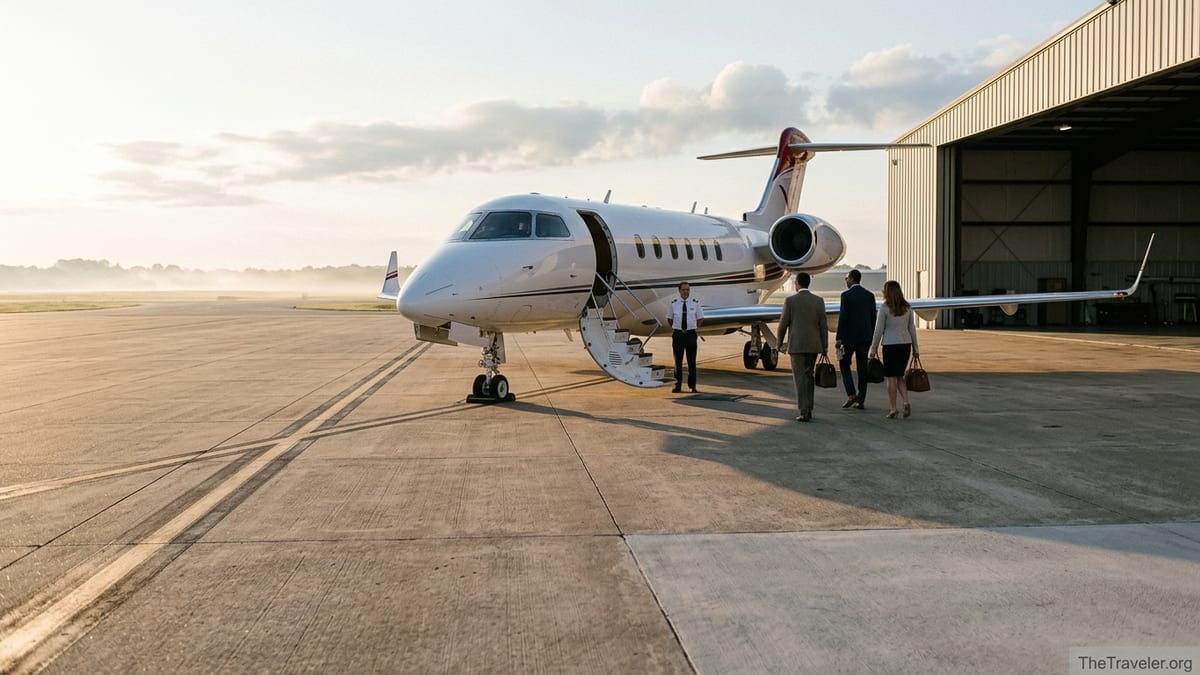
How Nicholas Air Fits Into the Private Aviation Landscape
Nicholas Air is a privately held U.S. operator that runs a fleet of turboprops and business jets it owns and operates itself. Unlike some membership brands that rely heavily on third-party charter partners, Nicholas Air positions this owner-operator model as a key differentiator, arguing that tighter control over aircraft, pilots, and maintenance yields a more predictable product. Its fleet focuses on modern, efficient types such as the Pilatus PC-12, Embraer Phenom 100 and 300E, Cessna Citation CJ3+, Citation Latitude, Challenger 350, and Gulfstream G600, with the company emphasizing that aircraft are typically only a few years old.
From a traveler’s standpoint, that places Nicholas Air squarely in the “upper mid-market” of private aviation: more boutique and high-touch than ad hoc charter marketplaces and many shared-shuttle models, but smaller and more regionally concentrated than giants like NetJets. It primarily serves travelers based in the United States who regularly move between business centers and leisure destinations such as New York, Miami, Dallas, Aspen, the Bahamas, and coastal Mexico. Members tend to be business owners, executives, high-net-worth families, and occasional celebrities who value privacy and schedule control.
What this means practically is that Nicholas Air is unlikely to be the cheapest way into private aviation. Instead, it aims to be competitive with other premium membership and fractional providers on hourly cost while differentiating on aircraft age, dispatch reliability, and service culture. The question for any traveler is whether those promised upgrades matter enough in everyday use to justify the spend.
Jet Card, Lease, and Fractional Options Explained
Nicholas Air structures its programs around four main products: jet cards, jet leases, fractional ownership, and aircraft management for owners. The flagship for many newcomers is the Blue Jet Card, which allows members to prepay for a block of flight hours on a specific aircraft type, typically in 15, 30, 60, or 100-hour increments. Exact pricing is not publicly listed and is usually quoted after a consultation, but travelers can expect all-in hourly rates that are broadly competitive with other owner-operator card providers on similar aircraft categories.
For travelers with higher annual usage, Nicholas Air offers lease and fractional programs that commit you to a particular tail or fleet type for a term, such as three or five years, in exchange for lower hourly costs and preferred access. In practice, a regional business owner flying 150 to 200 hours per year between cities like Atlanta, Houston, and Chicago might lean toward a Phenom 300E lease or fractional share instead of repeatedly topping up a jet card, since the longer-term structure can reduce the effective hourly rate and provide additional scheduling priority on peak days.
A key real-world implication is that Nicholas Air tends to work best for travelers who can estimate their annual flight hours with some precision. If a family knows they will take, for example, eight round-trips a year from New York to Florida on a light jet, plus a couple of ski trips to Colorado, the 30- or 60-hour Blue Jet Card on the Phenom 300E can align well with that pattern. Someone whose travel is highly irregular and ranges from short regional hops to occasional transcontinental flights may find it harder to optimize one fixed aircraft-type program and might be better served by more flexible category-based providers or pure on-demand charter.
What You Actually Get for the Money
At a premium price point, the fleet and onboard experience are central to whether Nicholas Air feels worth it. The company emphasizes that its aircraft are new or late-model and that it continues to add factory-fresh jets such as additional Phenom 300E aircraft and Citation Latitudes. For passengers, newer aircraft typically translate into quieter cabins, more reliable Wi-Fi, updated avionics, and modern interiors with larger windows, ergonomic seating, and refreshed materials. On a three-hour hop from Dallas to Telluride in a Phenom 300E, for instance, travelers can expect a stand-up cabin in the central aisle, club seating for four, and enough room for skis and luggage without feeling cramped.
The owned-fleet model can also matter during high-demand periods. When holiday traffic spikes around Christmas or major events like the Super Bowl, providers who rely heavily on third-party charter sometimes struggle to secure aircraft at contracted rates, leading to surcharges or off-fleet substitutions. Because Nicholas Air controls its own fleet scheduling, members often report more consistent access during busy periods, particularly on core routes east of the Mississippi. For a CEO who absolutely must be in New York for a Monday board meeting after a weekend in the Bahamas, that reliability can feel as valuable as the cabin itself.
Service culture is another part of what you are paying for. Nicholas Air leans into a more personal, relationship-driven approach: a small, in-house team that learns member preferences, from catering choices to ground transportation partners. Over multiple trips, that can translate into subtle but meaningful touches, such as arriving at a regional airport late at night to find your preferred snacks onboard and a specific car service waiting planeside. For some travelers, these details turn a functional flight into a frictionless door-to-door experience; for others who simply want a safe, comfortable ride, the soft touches may not justify the higher structural costs versus a solid but more transactional charter operator.
Real-World Cost Scenarios: When Nicholas Air Makes Sense
Because Nicholas Air does not publish official price charts, travelers evaluating value must think in relative rather than absolute terms. Suppose a family of four based in Nashville wants to fly privately to Naples, Florida, three times per year, plus two ski trips to Aspen and a couple of weekend getaways to Charleston. That might add up to roughly 35 to 45 flight hours annually on a light or midsize jet. In this scenario, a 30-hour Blue Jet Card on the Phenom 300E, topped up once during the year, may compare favorably to booking eight separate charters, particularly when factoring in guaranteed availability, consistent aircraft type, and the time saved not shopping each trip.
On the other hand, consider a West Coast tech founder in San Francisco with irregular travel: a few hops to Los Angeles, an annual New York run, occasional ski trips to Jackson Hole, and ad hoc flights to emerging startup hubs like Boise or Phoenix. For them, Nicholas Air’s southeastern operational center of gravity and more concentrated network may limit availability or increase repositioning charges on western routes. In practice, a West Coast-based traveler might find better value with a provider whose fleet and crew bases are more heavily concentrated in California and the Mountain West, even if Nicholas Air’s aircraft and service scores are strong on paper.
Another factor is trip length. Nicholas Air’s mix of Pilatus PC-12s and light to midsize jets is ideal for trips of roughly 300 to 1,500 nautical miles: think Atlanta to Key West, Dallas to Cabo, or Chicago to Vail. For frequent transcontinental missions, such as New York to Los Angeles or Miami to Seattle, travelers would need to book larger types like the Challenger 350 or Gulfstream G600 when available, which carry materially higher hourly costs. For a law firm that shuttles partners weekly between Houston and New York, those incremental costs on a larger jet might be worth it, but a smaller business with only occasional coast-to-coast needs might be better off using Nicholas Air regionally and buying ad hoc charter on long-haul routes, or consolidating with a competitor that offers more large-cabin aircraft at scale.
Comparing Nicholas Air to Other Private Jet Providers
When travelers ask whether Nicholas Air is worth the price, they are often implicitly comparing it to other names they have heard. NetJets and Flexjet, for instance, are larger fractional and card providers with global scale, deeper fleets, and more extensive international operations. A multinational executive who regularly flies between New York, London, and Paris may find that those giants, with their long-range fleets and FBO relationships abroad, serve their needs more comprehensively than a primarily North American-focused player like Nicholas Air, even if the hourly rates on similar aircraft are in the same ballpark.
At the other end of the spectrum, ad hoc charter brokers and marketplace apps will often quote lower headline prices, especially on off-peak days when operators are eager to fill empty legs. A family flexible on dates might snag a one-off deal on a light jet from Miami to New York that undercuts a member’s effective hourly rate with Nicholas Air. The trade-off is that those bargain flights tend to be opportunistic rather than guaranteed, come with more variability in aircraft age and interior quality, and often rely on a patchwork of third-party operators. Travelers who value safety, standardization, and predictability may regard Nicholas Air’s higher but more consistent pricing as the premium for peace of mind.
There are also membership brands such as Wheels Up that sit somewhere in the middle, combining owned or controlled fleets with large partner networks and dynamic pricing models. In recent years, some of these companies have faced well-publicized financial and operational turbulence. Travelers who have experienced cancellations, fluctuating peak-day rules, or inconsistent aircraft quality with such providers may gravitate to a more quietly run, owner-operator model like Nicholas Air even if posted card rates seem similar. In that sense, Nicholas Air’s value proposition is not just about the number of dollars per flight hour, but about the probability that a promised aircraft actually appears at the promised time and standard.
Service, Reliability, and Member Experience
For many private flyers, the true measure of “worth” is reliability over multiple years. Individual anecdotes vary, but those who are happy with Nicholas Air often point to consistent execution on everyday trips: early morning departures that push back on time, responsive trip planning teams that spot potential weather issues days in advance, and quick recovery solutions when maintenance disrupts the original aircraft. On a practical level, that can mean the difference between confidently scheduling a same-day out-and-back business trip or building in an overnight buffer because you do not fully trust your provider to get you home.
Cabin experience is similarly steady rather than flashy. Nicholas Air’s interiors tend toward modern but understated: leather club seats, neutral color palettes, and functional work surfaces rather than ultra-bespoke finishes. Passengers traveling with children frequently appreciate the balance; there is enough polish to impress clients, but not so much fragility that parents feel nervous about bringing toddlers on board. In-flight Wi-Fi on most jets enables remote work or streaming, and travelers on business routes often treat the cabin as an airborne conference room, using the uninterrupted time between cities to complete presentations or host small strategy sessions.
Ground arrangements also influence perceived value. Regular members often work with Nicholas Air’s team to coordinate on-the-ground details, from car transfers to catering that matches dietary needs. For example, an entrepreneur flying from Dallas to Bentonville for monthly meetings might always have a specific driver meet them planeside, with a tailored schedule to maximize time on the ground, while their preferred boxed salads and sparkling water are stocked onboard. For travelers who price their time in thousands of dollars per hour, these apparently small efficiencies can justify a significant premium over cheaper but less organized options.
Who Should Probably Look Elsewhere
Not every traveler will find Nicholas Air the best fit, regardless of its quality. Budget-conscious flyers who occasionally treat themselves to a private flight for a special occasion, such as a milestone birthday trip to Las Vegas or a once-a-year family reunion, will often be better served by one-off charter through a reputable broker. The administrative overhead of joining a structured membership, coupled with prepayment obligations, rarely makes sense when your annual flying does not reach at least the low double digits of hours.
Geography is another limitation. While Nicholas Air can and does operate nationwide, its fleet base and historical growth are weighted toward the eastern half of the United States. Someone based in Seattle, Portland, or San Diego who primarily flies up and down the West Coast may face either longer aircraft repositioning times or somewhat less optimized availability during peak periods compared with regional operators anchored in those markets. If your usage is heavily West Coast-centric and under 50 hours per year, comparison-shopping with local charter operators or membership providers that focus on California and the Rockies is prudent.
Travelers who demand a wide variety of cabin sizes, from very light jets to large-cabin, ultra-long-range aircraft, on short notice might also find Nicholas Air’s scale limiting compared to mega-fleets. A global family office that one week needs a PC-12 into a short Bahamian strip and the next week requires a large-cabin jet to Dubai may appreciate Nicholas Air’s quality ethos but still gravitate to providers whose fleets and partnerships are optimized for intercontinental operations. In these edge cases, Nicholas Air can still be part of a portfolio of solutions but is unlikely to be a one-stop shop.
The Takeaway
Is Nicholas Air worth the price for private air travel? For a particular slice of travelers, the answer is a measured yes. Owners and executives based primarily in the eastern and central United States who fly between 25 and 200 hours per year on missions well suited to turboprops, light jets, and midsize jets are likely to find that Nicholas Air’s combination of a young, owned fleet, consistent service, and relationship-driven culture delivers tangible value. The peace of mind that comes from predictable aircraft quality, on-time performance, and a team that knows your preferences can justify hourly rates that are broadly aligned with other premium providers.
At the same time, Nicholas Air is not the universal best-value option. Occasional leisure flyers, West Coast-centric travelers, and global families who routinely need long-range aircraft may find better alignment, and sometimes lower effective costs, with alternative providers or a mix of membership and on-demand charter. Because Nicholas Air does not publish standardized price lists, any serious evaluation should involve requesting a customized proposal based on your actual routes and hours, then comparing that against two or three competitors using realistic trip scenarios from your past year.
Ultimately, Nicholas Air is best understood as a high-quality, boutique operator rather than a discount gateway into private aviation. If what you most want from private flying is the lowest possible cost per hour, it may not be your brand. If, instead, you prioritize a modern, tightly controlled fleet, reliable execution on business and family missions in North America, and a more personal relationship with your provider, Nicholas Air is worth placing on your shortlist and exploring in detail before signing your next contract.
FAQ
Q1. How much does Nicholas Air actually cost compared to other private jet options?
The company does not publish fixed rates, but its jet card and fractional pricing generally align with other premium owner-operators on similar aircraft types. You should request a personalized quote based on your routes and hours, then compare that to quotes from at least two competitors to understand relative value.
Q2. Is a Nicholas Air jet card a good idea if I only fly a few times a year?
Probably not. If you are flying fewer than 15 to 20 hours annually, the upfront commitment of a jet card usually will not be justified. Infrequent flyers are often better served by reputable charter brokers who can book one-off trips without membership fees.
Q3. What types of aircraft are in the Nicholas Air fleet?
The fleet includes turboprops and jets such as the Pilatus PC-12, Embraer Phenom 100 and 300E, Cessna Citation CJ3+, Citation Latitude, Challenger 350, and Gulfstream G600. This mix is well suited to regional and medium-haul missions across North America.
Q4. How far in advance do I need to book with Nicholas Air?
Lead time expectations vary by program and peak-day rules, but many members aim to confirm trips at least several days to a couple of weeks in advance, especially around holidays. Short-notice trips are often possible, but guaranteed terms are typically more restrictive during high-demand periods.
Q5. Does Nicholas Air serve the West Coast and mountain destinations?
Yes, Nicholas Air can fly nationwide, including West Coast cities and mountain airports such as Aspen and Jackson Hole. However, its operational strength and fleet density are greater in the eastern and central United States, so availability and economics may be more favorable there.
Q6. How does Nicholas Air compare to booking through an online charter marketplace?
Online marketplaces can sometimes offer lower prices on specific routes, especially when filling empty legs or off-peak flights. Nicholas Air typically provides more consistent aircraft age, standardized service, and guaranteed availability for members, which some travelers consider worth the premium.
Q7. Is Nicholas Air a good option for international flights?
Nicholas Air is strongest on domestic U.S. and near-international routes such as the Caribbean, Mexico, and parts of Canada. For frequent transatlantic or intercontinental travel, larger global providers with extensive long-range fleets may offer broader options and infrastructure.
Q8. What kind of traveler gets the most value from Nicholas Air?
The sweet spot is usually business owners, executives, and affluent families based in the eastern half of the United States who fly between roughly 25 and 200 hours per year on routes of 300 to 1,500 nautical miles. These travelers tend to benefit most from the company’s fleet mix and service model.
Q9. Can Nicholas Air work as a supplement to other private aviation solutions?
Yes. Some travelers use Nicholas Air for regional missions where its fleet is strongest, while relying on other providers or ad hoc charter for long-haul or international trips. This portfolio approach can optimize both cost and flexibility for complex travel patterns.
Q10. How should I evaluate whether Nicholas Air is right for me?
Start by reviewing your last 12 to 24 months of travel: origin cities, destinations, trip lengths, and total hours. Then request detailed proposals from Nicholas Air and at least two competitors using that historical pattern. Comparing effective hourly costs, aircraft types, and service commitments across your actual missions is the most reliable way to decide if Nicholas Air is worth the price for your situation.