


From missed connections in Dallas to overnight delays in Frankfurt, disrupted flights are now part of modern travel. Services like AirClaim promise to turn those bad days into compensation, handling the legal headache so you do not have to. Yet many passengers who turn to AirClaim end up frustrated, confused about fees, or even paying commission on money the airline would have refunded anyway. Understanding how AirClaim really works, and the traps other travelers have fallen into, can save you hundreds of euros and months of stress.
Get the latest updates straight to your inbox!
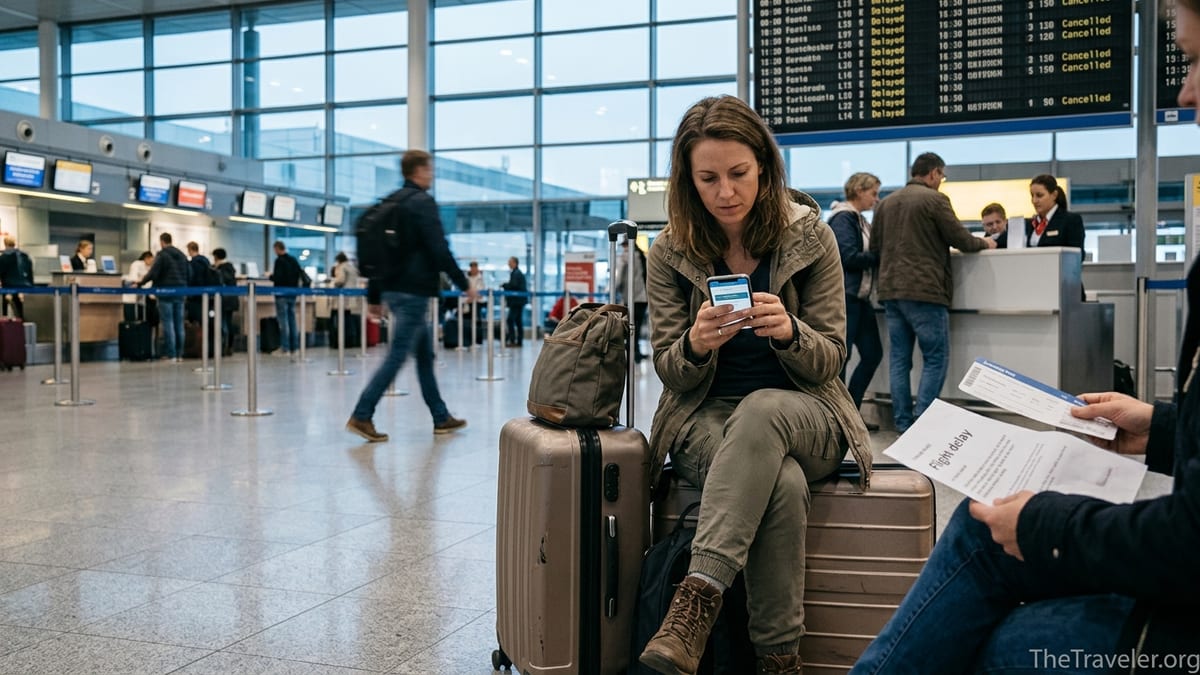
Misunderstanding What AirClaim Actually Does
One of the biggest mistakes is assuming AirClaim is some sort of independent refund fund or consumer watchdog that forces airlines to pay. In reality, AirClaim is a private company that acts as an intermediary: you assign your rights to them, and they pursue compensation on your behalf under rules such as EU Regulation 261/2004 and the Montreal Convention. Their own materials explain that they represent passengers in claims for delays, cancellations, denied boarding and overbooking, usually against European and UK carriers or flights touching that region.
This matters because AirClaim is not the regulator, not your airline, and not your travel insurer. If you booked a New York to London flight on a European carrier, AirClaim may rely on EU261 to claim up to 600 euros per person, but they do so as a commercial service that keeps a share of what they recover. If your case is really about a nonrefundable ticket under US domestic rules or a schedule tweak that does not meet legal thresholds, there may be nothing for AirClaim to win, no matter how angry you feel about the disruption.
Travelers sometimes discover this the hard way. A family flying Boston to Madrid, for instance, may expect compensation for a 90 minute delay that caused some stress but did not cross EU261’s three-hour arrival delay threshold. They submit their details to AirClaim, expect a payout, then hear nothing for months because legally the airline owes them little more than basic assistance at the airport. The complaint is with the law and the airline, not with AirClaim, but the misunderstanding leads to disappointment.
Before signing anything, it is worth checking whether your situation usually qualifies under EU261: long delays of three hours or more on arrival, cancellations within 14 days of departure, or involuntary denied boarding where the airline bumps you from a confirmed seat. If your case does not fit those patterns, using AirClaim may simply add a third party without increasing your odds of a payout.
Ignoring the Commission, Legal Fees and “No Win, No Fee” Details
Another common pitfall is focusing only on the promise of “no win, no fee” and skipping the parts that spell out how much of your money AirClaim will keep. AirClaim works on a success-fee basis: if they win, they take a percentage of your compensation as their commission, sometimes with a higher cut if lawyers have to get involved. Similar services in the same space advertise typical commissions in the range of roughly one third of the recovered amount, rising further if court action is necessary.
This sounds painless when you are standing in a crowded terminal after a 10-hour delay, but it can feel very different months later when a 600 euro EU261 payout arrives and a substantial slice disappears as fees. Travelers regularly report surprise when they discover that, after taxes and bank charges, their net share is far smaller than they expected. A couple on a Rome to Amsterdam flight, for example, might see 400 euros land in their account instead of the 600 euros per ticket they had seen referenced in news coverage.
A related mistake is not understanding that certain legal costs and “administrative” deductions may apply even when AirClaim reaches a settlement without a full court trial. The service fee typically applies to any kind of successful outcome: an amicable settlement, a judgment, or a collective agreement negotiated with the airline. Some passengers assume that if the airline quickly folds and pays up, the fee should be minimal; yet the contract usually treats all successful outcomes the same.
Before you upload your boarding passes, read the fee table carefully and run the numbers for your own case. If, for instance, you stand to receive 400 euros for a medium-haul delay and AirClaim’s total cut would be around a third of that, ask yourself whether you are comfortable paying more than 100 euros for convenience. In obvious cases with major carriers that respond well to complaints, you may prefer to file the claim yourself. For complex disputes or low-cost airlines that stonewall passengers, the commission might feel like money well spent.
Signing Away Your Rights Without Realizing It
One of the more serious mistakes people make is treating the digital paperwork as a simple “contact form” rather than a binding legal assignment. AirClaim typically asks you to sign an assignment form or mandate, which transfers your rights to claim compensation from the airline to the company. Buried in that text are commitments that can affect how you deal with your airline later.
In real cases discussed by travelers online, passengers have discovered that after signing with AirClaim they are no longer allowed to negotiate directly with the airline. Some assignment forms explicitly state that customers must refuse direct contact from the airline and must inform AirClaim if the carrier reaches out. If the passenger accepts a refund or voucher behind AirClaim’s back, they may still be contractually required to pay the company’s commission out of whatever they received.
Consider a traveler who missed a connection on a domestic leg of a longer trip and, in frustration, signed with AirClaim. Weeks later, the airline itself reviewed the case and agreed to a full ticket refund, emailing the passenger directly. Because of the contract they had already signed, they now risk owing AirClaim a percentage of that refund, even though the airline never responded to the company’s own approaches. This can be a painful lesson for someone who thought the form was merely “authorizing them to check my case.”
Always read the assignment or power-of-attorney language slowly. Look for phrases about refusing contact with the airline, directing all communication through AirClaim, or owing fees on “any form of compensation” related to the disrupted flight, regardless of who obtained it. If you are uncomfortable handing over that much control, hold off on signing until you have tried a direct claim or spoken to a consumer protection body such as a European national aviation authority or, in the United States, the Department of Transportation.
Submitting Weak or Incomplete Claims
Many passengers believe that AirClaim can work miracles even when documentation is scarce or the facts are hazy. In reality, AirClaim’s chances of success depend heavily on the quality of the evidence you provide. Submitting a bare-bones claim with no boarding passes, no booking confirmation, and only a vague memory of “some delay last summer” is one of the fastest ways to see your case stall for months.
Compensation services use your flight number, dates, routes, and the airline’s reported cause of disruption to decide whether your claim is likely to win. If you mistype the flight number, mix up the airport codes, or cannot remember whether the delay was two hours or five, AirClaim may file a claim that the airline can easily reject. Some travelers complain about “no result” after a year, when in reality the airline simply pointed out that the flight in question was delayed less than the required three hours or was diverted due to extreme weather.
Concrete examples show the difference that detail makes. A passenger on a London to Lisbon flight who keeps their boarding pass, email notifications, hotel receipts, and photos of departure boards can give AirClaim a strong case: the airline’s own records will likely confirm a long delay due to a mechanical fault, a classic EU261 scenario. Another passenger on the same route who only remembers that “it was a bad travel day around Easter” and cannot even confirm which airline they flew will leave AirClaim trying to reconstruct events from scratch and more likely to hit a dead end.
Before you click submit, gather your paperwork: booking confirmations, boarding passes, screenshots of delay notices, meal vouchers, hotel receipts, and any written explanations from staff. The more concrete your evidence, the more effectively AirClaim can argue that your case stems from a compensable problem such as a technical fault or crew shortage, rather than non-compensable “extraordinary circumstances” like severe storms or air traffic control strikes.
Overlooking Deadlines, Jurisdiction and Cheaper Alternatives
Many people turn to AirClaim long after the disruption, assuming that as long as they remember the flight, it is never too late. In practice, both legal limitation periods and AirClaim’s own policies limit how far back you can claim. Depending on where the airline is based and which law applies, you may have only a few years to bring a case. Some European jurisdictions give passengers up to three years from the date of travel; others allow more time, but the further back you go, the harder it becomes to obtain records and evidence.
Another mistake is not checking whether a simpler, cheaper route is available in the country where the airline is based. In the United Kingdom, for example, passengers can often file straightforward small-claims actions through online county court systems or ask the Civil Aviation Authority’s approved dispute resolution bodies to step in. In many EU states, national enforcement agencies allow direct complaints at no cost. If you are willing to fill in a few forms and wait, you might obtain the full statutory amount without sacrificing a third of it to commissions.
Real-world stories from travelers underline this point. Some passengers report that they claimed directly with carriers like Lufthansa or KLM using online EU261 forms and received full compensation within a couple of months. Others describe battling low-cost carriers for a year with no progress, then finally handing the case to a specialist firm to break the deadlock. AirClaim is often most valuable in the latter scenario, where the airline has already said no and you are facing court filings in a foreign language.
Before you commit, ask yourself three questions: how long ago was the flight, where is the airline based, and are there free or low-cost enforcement tools you can try first? If the answer suggests you are still well within legal deadlines and the airline has a clear, accessible complaints process, it might be worth attempting a direct claim. If, however, you are dealing with a notoriously resistant carrier or a complicated multi-leg itinerary, a service like AirClaim could be a strategic second step.
Failing to Manage Expectations on Timing and Communication
Another widespread mistake is expecting AirClaim to deliver instant results. Even in straightforward EU261 cases, airlines can take months to respond, and if court proceedings become necessary, the process can stretch well over a year. AirClaim’s own customers describe experiences at both ends of the spectrum: some receive compensation in a matter of weeks, while others hear almost nothing for long stretches and assume they have been forgotten.
In one example highlighted by dissatisfied reviewers, a passenger who submitted a claim after a canceled short-haul flight waited more than a year with only occasional template emails for updates. From their perspective, AirClaim had “done nothing.” Behind the scenes, however, the company may have been waiting on the airline’s legal department, exchanging correspondence with a foreign court, or grouping the claim with others from the same disrupted flight for a more efficient legal push. Unless this process is clearly explained, it is easy for customers to feel abandoned.
Part of the problem is that passengers tend to remember the dramatic day of disruption, not the dull reality of cross-border legal work. When you are stranded overnight at a Madrid hotel and see a headline about “easy EU261 cash,” it is tempting to imagine compensation in your account before your credit card bill is due. The truth is that even when AirClaim is effective, the timeline usually runs on the airline’s schedule and the local court’s calendar, not your own.
To avoid frustration, treat AirClaim as a medium- to long-term process. Ask at the outset what a realistic timeframe looks like for your route and airline. Keep your own notes about when you submitted your claim and what documents you provided. If you have urgent financial needs, do not rely on compensation to bail you out within weeks. Instead, think of any eventual payout as a future bonus that might offset the cost of an otherwise painful journey.
Confusing AirClaim With Lookalikes and Potential Scams
The name “AirClaim” sits in a crowded ecosystem of similarly branded services, from Aireclaim and Airclaim.io to a host of flight-claim sites that use nearly identical design and marketing language. Travelers often type whatever they remember into a search engine and click the first result that looks somewhat familiar, without checking whether they are dealing with the Romanian-founded AirClaim, a different company with a similar name, or something more dubious.
This confusion opens the door to real risk. Online discussions in travel and consumer forums are filled with warnings about copycat sites, aggressive legal letters demanding commissions, and even outright scams where callers pose as “airline support” or “claim handling” specialists. A traveler who believes they are signing up with AirClaim might actually be handing over passport copies and credit card details to a lookalike service with no intention of pursuing legitimate compensation.
Real-world incidents make the risk concrete. In one report, an elderly couple received threatening letters from a claim company they did not remember authorizing, demanding more than 40 percent of a payout they had obtained directly from the airline. In another widely shared cautionary tale, a passenger dialed what they thought was an airline’s customer service number found through an online search, only to discover later that they had been speaking with a third-party agency trying to capture their booking details for its own purposes.
To protect yourself, slow down at the start. Confirm the exact website and legal entity you intend to work with, read their terms, and check independent review platforms to see how real travelers describe their experience. Be deeply suspicious of unsolicited calls or emails claiming that “we see you were on Flight X and are owed money” if you never submitted your details to that company. While AirClaim itself positions its work within legitimate passenger-rights frameworks, the surrounding landscape is messy enough that caution is essential.
The Takeaway
Used carefully, AirClaim can be a helpful ally for travelers who lack the time, language skills, or legal confidence to push airlines for the compensation they are owed. The company has secured refunds and payments for many passengers who might otherwise have written their bad experiences off as bad luck. Yet the same service can create fresh frustrations when travelers do not understand what they are signing up for or hand over control of their case without considering the alternatives.
The biggest mistakes fall into clear patterns: assuming AirClaim is a regulator rather than a commercial claims handler, underestimating the impact of commission and legal fees, signing away rights without reading the fine print, submitting weak or outdated claims, and expecting instant results. Add to that the confusion created by similar-sounding brands and occasional aggressive tactics in the wider industry, and it is easy to see how disappointment arises.
Before you enlist AirClaim, take a quiet half hour to check whether you qualify under EU261 or other rules, decide whether you are comfortable with the commission on offer, and consider trying a direct claim with your airline or a free public enforcement channel first. If, after that, you still prefer to outsource the fight, go in with open eyes. Treat AirClaim as one tool among many for defending your rights when your journey goes wrong, not as a magic solution that can rewrite airline law or erase the realities of slow-moving bureaucracy.
FAQ
Q1. Is AirClaim the same as an airline or government regulator?
AirClaim is a private company that pursues compensation on your behalf; it is not an airline, regulator, or public watchdog, and it earns a fee from successful claims.
Q2. How much of my compensation will AirClaim keep if my claim is successful?
AirClaim works on a success-fee model, typically taking a percentage of whatever compensation it recovers, with higher fees possible if legal action is required.
Q3. Can I still talk directly to the airline after signing with AirClaim?
Often you cannot. Many mandates require you to direct all contact through AirClaim and may obligate you to pay a fee even if the airline pays you directly later.
Q4. How long does it usually take to get money when using AirClaim?
Timeframes vary widely. Simple cases may resolve in a few months, while complex claims involving legal proceedings can take a year or more before any payout arrives.
Q5. What documents should I prepare before submitting a claim to AirClaim?
You should gather booking confirmations, boarding passes, delay or cancellation notices, and receipts for hotels or meals, along with any written explanations from the airline.
Q6. Can AirClaim help with any flight problem, such as bad service or a small delay?
No. AirClaim generally focuses on legally defined disruptions like long delays, cancellations, and denied boarding, not issues such as rude staff or minor schedule changes.
Q7. Is it cheaper to claim directly with the airline instead of using AirClaim?
Yes, claiming directly is usually free, but it requires your time and persistence. AirClaim trades convenience for a share of any compensation you receive.
Q8. What happens if the airline offers me a voucher instead of cash while AirClaim is handling my case?
You should check your contract, as accepting vouchers or other offers without AirClaim’s consent may still trigger a commission on the value you receive.
Q9. How do I know I am dealing with the real AirClaim and not a copycat site?
Verify the company’s full legal name, read its terms and privacy policy, and check independent customer reviews rather than relying only on ads or search results.
Q10. Should I always use AirClaim, or only as a last resort?
Many travelers try a direct claim with the airline or a public complaints body first, then consider AirClaim if the airline refuses to pay or the process becomes too complex.