


When a long-awaited trip is derailed by a delayed or cancelled flight, most travelers know they may have rights under EU Regulation 261/2004 but few have the time or patience to fight an airline for compensation. That gap is exactly where claim-handling services such as AirClaim and Refund.me step in. Both promise to turn your disrupted flight into cash with minimal effort on your side, yet they differ in fees, speed, scope, and current reputation. Understanding those differences can help you decide which service, if any, makes sense for your next disrupted journey.
Get the latest updates straight to your inbox!
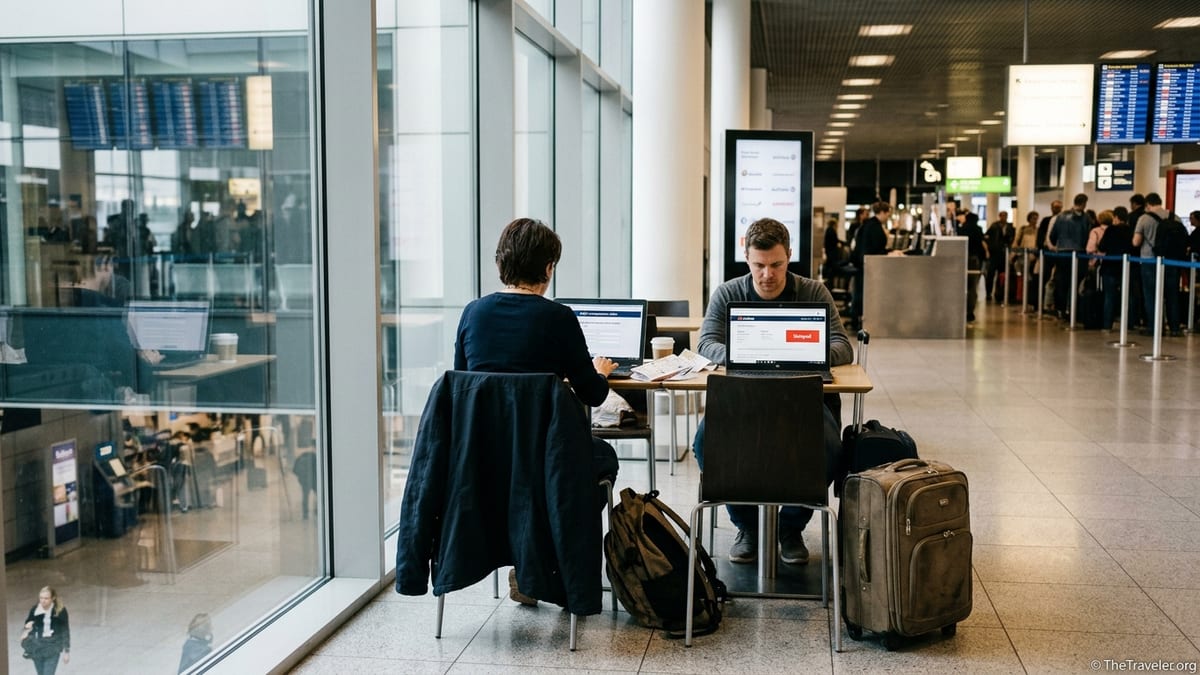
How AirClaim and Refund.me Work in Practice
At a basic level, both AirClaim and Refund.me are intermediaries between you and the airline. Instead of spending hours filling forms, quoting EU261 articles, and chasing customer service, you hand your case to one of these companies. They assess whether your delay, cancellation, overbooking, or denied boarding is eligible for compensation and, if so, pursue the claim on your behalf. If they win, they keep a cut of the payout and transfer the rest to you. If they lose, you typically pay nothing.
AirClaim is a Romania-based company that focuses heavily on European regulations such as EU261 and operates across a wide range of airlines and routes touching the European Union. In practical terms, this means if you are flying, for example, from Barcelona to Berlin with a European low-cost carrier, or from New York to Paris on a European airline, AirClaim may be able to pursue a claim if your arrival is delayed by at least about three hours or your flight is cancelled at short notice.
Refund.me, founded earlier in Germany, has a similar model and historically positioned itself as a technology-driven platform with a network of passenger rights lawyers across Europe. Travelers submit disrupted flights through a web form or app, Refund.me checks eligibility under EU261 and similar rules, and then either negotiates with the airline or brings in legal partners if the airline refuses.
For a traveler stranded at London Gatwick after a four-hour delay to Rome, these two services might look interchangeable. You upload your boarding pass and booking details, wait for an eligibility assessment, grant them a power of attorney to act in your name, and then monitor email updates. The crucial distinctions emerge when you look at fees, timelines, and the recent experiences other travelers report.
Fees, Commissions, and the Real Amount You Take Home
Neither AirClaim nor Refund.me is free. Both operate on a success-based commission. You do not pay an upfront fee, but if they win, the portion you actually receive can be significantly lower than the raw compensation amount set by EU261, which typically ranges from 250 to 600 euros per passenger depending on distance and delay.
According to AirClaim’s general model, travelers can expect a commission in the range of roughly one quarter to around one third of the compensation, sometimes plus VAT where applicable. Real-world reviews describe situations where a passenger entitled to 400 euros for a long-haul delay ultimately received around 260 euros in their bank account, while AirClaim kept about 140 euros as its fee. That is broadly in line with what many claim agencies charge, but it can feel steep if you only discover the exact percentage at payout stage.
Refund.me also works on a no-win, no-fee basis, historically taking a comparable share that often lands in the same general band as other European claim companies. The exact percentage can depend on whether legal action is required. For example, if your claim against a low-cost carrier in Spain has to be escalated to court, the commission might increase to reflect the extra legal work.
For a concrete scenario, imagine a family of four on a Paris to Lisbon flight that arrives more than three hours late without extraordinary circumstances. Under EU261, the total claim could be about 1,600 euros. Using an intermediary like AirClaim or Refund.me, the family might end up with something on the order of 1,000 to 1,200 euros after commissions. If they navigated the process themselves directly with the airline and succeeded, they could theoretically keep the full 1,600 euros, but at the cost of paperwork, follow-up emails, and potentially months of chasing.
Speed, Transparency, and What Recent Travelers Report
Speed is one of the biggest concerns for travelers who use claim services. Airlines themselves can take several months to respond, and intermediaries are at the mercy of those timelines. Nonetheless, how clearly a company communicates during that wait can heavily shape your experience.
Recent public reviews show AirClaim with generally positive ratings, with many travelers praising a straightforward online form and regular email updates. Several describe delayed or cancelled flights on carriers like Wizz Air or other European low-cost airlines where AirClaim handled all correspondence and secured compensation, sometimes within a few weeks to a couple of months. Some users, however, complain about long waits and only learning at the end how much of the payout AirClaim would keep, which led to frustration when the final amount felt smaller than expected.
Feedback about Refund.me is more mixed and has shifted over time. While the company was an early player in the space and often highlighted for using automated tools to handle claims at scale, more recent traveler comments are harder to come by and less uniformly positive. Some passengers mention long periods of silence and uncertainty about whether their case is still active, while others report that earlier cases in the mid-2010s were resolved efficiently. If you are dealing with a disruption today, this pattern suggests past performance alone may not be a reliable guide.
To illustrate the difference, consider two similar cases. A Greek traveler whose Athens to Amsterdam flight was delayed more than five hours recently reported submitting a claim to AirClaim and receiving several status updates, including confirmation that the airline had acknowledged liability and when the compensation was transferred. By contrast, historic Refund.me users with comparable EU routes sometimes describe waiting many months with minimal communication, then learning that the airline had disputed liability and the case was closed with no payout. The experiences are individual and anecdotal, but they highlight why current reviews and timelines matter when you choose a service.
Geographic Coverage and Types of Flights Each Handles Best
Both AirClaim and Refund.me are built on the backbone of EU261, which covers flights departing from an EU airport on any airline, and flights arriving in the EU on an EU-based carrier. That means a delayed London to Istanbul flight on a European airline, or a Rome to Madrid flight on a budget carrier, are classic cases for these services. However, there are nuances in how broadly each company has tried to expand beyond core EU routes.
AirClaim positions itself firmly in the European passenger rights space and works across a wide portfolio of airlines and routes that touch the EU. Travelers based in countries such as Romania, Spain, Germany, or Italy often report using the service for intra-European flights and long-haul connections starting or ending in Europe. Some also use it when transiting the EU on their way between non-European destinations, such as a Toronto to Athens routing with a European airline where the first leg is delayed and leads to a missed connection.
Refund.me has historically advertised coverage in Europe with some outreach into other jurisdictions where passenger rights regimes exist, such as parts of Canada and India. That said, most reported use cases still revolve around classic EU261 scenarios, for example a Frankfurt to Barcelona flight cancellation or overbooked flights within the Schengen area. If you are flying on routes governed by other frameworks, such as domestic flights within the United States, neither AirClaim nor Refund.me will typically be able to claim cash compensation, although they might advise on refunds or vouchers if local regulations allow.
In practice, a traveler from Chicago connecting in London to reach Athens would usually find that only the European segment falls under EU261, and that is the portion AirClaim or Refund.me would focus on. For a simple New York to Los Angeles domestic delay, you are better off working directly with the airline or exploring credit card protections, as these two services are primarily designed for Europe-related itineraries.
When It Makes Sense to DIY Instead of Using a Claims Company
Given that both AirClaim and Refund.me take a sizeable commission, one of the key questions for any traveler is whether to claim independently. EU261 is relatively clear on when compensation is due: broadly, long delays, last-minute cancellations, or denied boarding caused by the airline, and not by extraordinary circumstances like severe weather or air traffic control strikes. Many airlines provide online claim forms where you can submit your case directly.
For straightforward disruptions on major European carriers, such as a three-and-a-half-hour delay on a Paris to Madrid route with a flag carrier, filing yourself can be realistic. You would typically need your booking reference, boarding pass, and a short explanation of what happened. If the airline accepts liability, they might pay the standard EU261 amount via bank transfer within a few weeks or months, and you keep the full sum.
Claim companies become more attractive when the airline resists, denies that compensation is owed, or makes the process difficult. For instance, a traveler on a low-cost airline out of Eastern Europe might find that messages go unanswered or that the airline repeatedly cites vague operational reasons as extraordinary circumstances. In such cases, AirClaim or Refund.me may be able to escalate through legal channels that an individual traveler would struggle to access, especially across language barriers and different jurisdictions.
One useful middle-ground approach is to try a direct claim first. If the airline clearly refuses or ignores you after a reasonable period, you can then consider handing the case to AirClaim, Refund.me, or another intermediary, understanding that you are effectively trading part of your future payout for expertise and persistence. Some travelers also weigh the stress factor: if you are on a once-in-a-lifetime family holiday and do not want to spend weeks arguing with an airline after you get home, delegating the task can be worth the commission.
Head-to-Head: Which Service Suits Which Type of Traveler
Looking at recent information and traveler feedback, AirClaim currently appears more active and visible in the European market than Refund.me, with a higher volume of up-to-date reviews. This does not automatically make it the right choice for everyone, but it does provide more recent data points about how claims are handled in 2025 and 2026 rather than relying on older experiences.
AirClaim tends to appeal to travelers who value a relatively user-friendly interface and are comfortable giving up a notable portion of their compensation in exchange for having an expert take over. If you frequently fly with low-cost carriers around Europe, or you have complex multi-leg itineraries through hubs such as Bucharest, Barcelona, or Amsterdam, AirClaim may offer a pragmatic way to ensure you do not leave money on the table after disruptions.
Refund.me, on the other hand, may be more of a legacy option. It helped popularize the idea of tech-driven passenger rights enforcement in the early 2010s and has a track record of working with a wide legal network across Europe. For travelers who have used Refund.me successfully in the past and feel comfortable with its processes, staying with a familiar service can be reassuring, but newcomers may find it harder today to gauge performance and responsiveness compared with competitors that attract more current feedback.
For many travelers, the deciding factor will be how much they value transparency. Before using either service, it is worth reading their terms carefully, noting the exact commission, whether additional legal fees can be deducted, and how they handle cases where the airline pays you directly. Some contracts oblige you to pay the commission even if you later receive compensation straight from the airline, which can surprise travelers who start a claim and then negotiate with the airline on their own.
The Takeaway
If your main goal is to secure EU261 compensation with minimal effort after a disrupted flight involving Europe, both AirClaim and Refund.me offer a way to shift the burden from your inbox to a specialist. However, they are not interchangeable. AirClaim currently stands out for its stronger recent presence, generally positive contemporary reviews, and active focus on European passenger rights, though its commissions can significantly reduce your final payout. Refund.me, an earlier pioneer in the space, still operates on a familiar no-win, no-fee model but is harder to evaluate today based on fresh traveler experiences.
For simple, clear-cut cases on major European airlines, you may not need either service and can often claim directly with the airline, keeping the full compensation. For more complex or contested situations, particularly with low-cost carriers that are slow to respond, a claims company can be a practical ally. Between AirClaim and Refund.me, most current indicators favor AirClaim for travelers who want an active, well-reviewed intermediary, while Refund.me may be more suitable for those with prior positive history using its platform.
Whichever route you choose, remember that EU261 and similar regulations were designed to protect you. Keeping boarding passes, noting times, and filing claims promptly gives you options. From there, deciding between AirClaim, Refund.me, or a do-it-yourself claim is largely a question of how much time and energy you are willing to invest in reclaiming what you are owed.
FAQ
Q1. Do AirClaim and Refund.me charge any upfront fees?
Both AirClaim and Refund.me typically work on a success-fee basis, so you do not pay anything upfront. They take a commission only if they secure compensation from the airline.
Q2. How much of my compensation will a claim company keep?
Exact percentages vary, but it is common for services like AirClaim and Refund.me to keep roughly one quarter to around one third of the payout, sometimes plus VAT or legal surcharges if court action is needed.
Q3. Which service is faster at getting results, AirClaim or Refund.me?
Timelines depend heavily on the airline and complexity of the case. Recent traveler feedback suggests AirClaim often communicates more actively about progress, but in both cases a claim can still take several months.
Q4. Can I use these services for flights outside Europe?
Both companies focus primarily on routes covered by European-style passenger rights rules. For purely domestic flights in regions such as the United States, they usually cannot obtain EU261-style cash compensation.
Q5. What happens if I start a claim through AirClaim or Refund.me and then the airline pays me directly?
Many contracts state that if compensation is paid because of a claim they filed, you still owe the agreed commission, even if the airline pays you directly, so it is important to read the terms carefully.
Q6. Are these services worth it for short delays or small payouts?
For flights that only qualify for lower compensation amounts, the commission can significantly reduce what you receive. In those cases, some travelers prefer to try claiming directly with the airline first.
Q7. Do I lose my rights if the claim company fails to win my case?
If a company like AirClaim or Refund.me concludes that a case is not winnable or loses in court, it usually means further attempts are unlikely to succeed, but in principle your underlying passenger rights do not disappear.
Q8. Can I file on behalf of my whole family or group?
Yes, both services allow one person to submit a claim for multiple passengers on the same booking, as long as you can provide names, booking references, and the necessary authorizations.
Q9. How far back can I claim for old flight disruptions?
The time limit depends on the country where the claim is pursued and can range from about two to several years. Both companies typically check the date of travel when you enter your flight details and will reject very old claims.
Q10. Is my data safe when I upload boarding passes and IDs?
Reputable claim companies use secure platforms and data protection measures, but it is still wise to share only what is requested, enable two-factor authentication where possible, and avoid using public computers for sensitive uploads.