


The JetBlue Plus Card has long been marketed as a no-brainer for loyal JetBlue customers: free checked bags, bonus points, inflight discounts and even a path to Mosaic elite status. But with rising baggage fees and constant tweaks to airline loyalty programs, many travelers are asking a tougher question in 2026: does this card still deliver real value, or is it just another annual-fee trap? For frequent and semi-frequent JetBlue flyers, the answer depends heavily on how often you check bags, where you fly, and how strategically you use the card’s benefits.
Get the latest updates straight to your inbox!
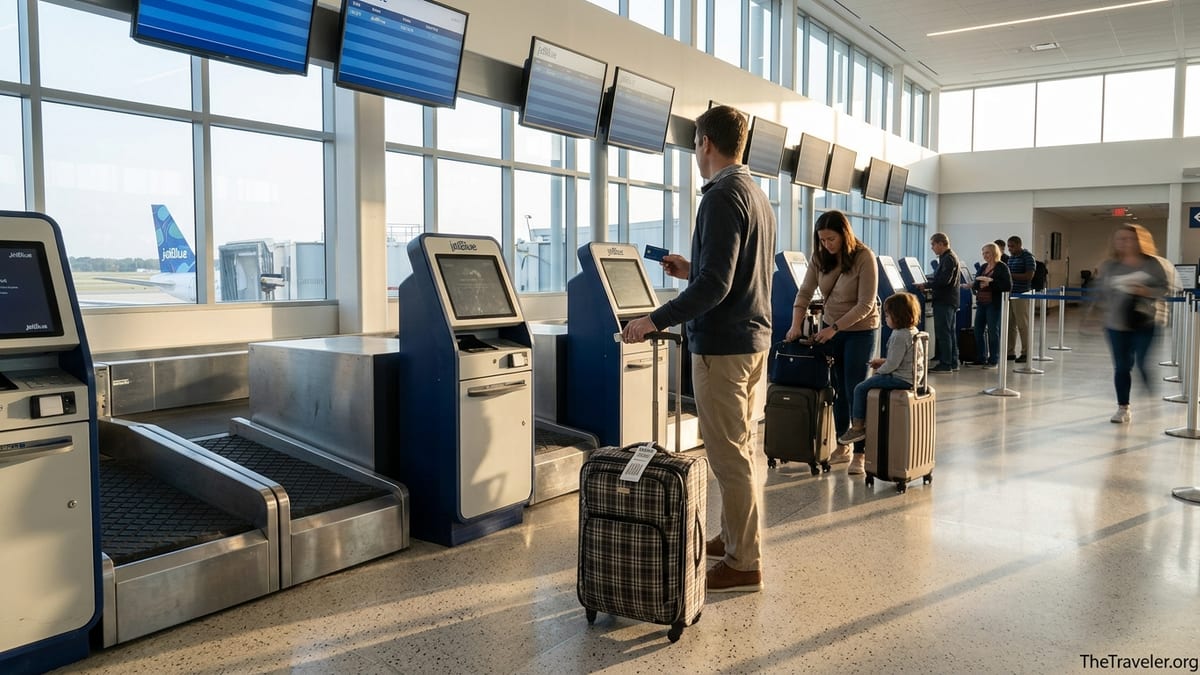
What the JetBlue Plus Card Actually Offers in 2026
The JetBlue Plus Card, issued by Barclays, is a co-branded airline credit card tied directly to JetBlue’s TrueBlue loyalty program. As of mid-2026, it charges a $99 annual fee and is designed primarily for travelers who either live near a JetBlue focus city such as New York-JFK, Boston, Fort Lauderdale or Orlando, or who choose JetBlue regularly for East Coast, Caribbean and transatlantic trips.
On the earning side, the card typically offers 6 TrueBlue points per dollar on eligible JetBlue and Paisly by JetBlue purchases, 2 points per dollar at restaurants and eligible grocery stores, and 1 point per dollar on everything else. In practical terms, a $400 round-trip ticket booked directly with JetBlue could earn around 2,400 TrueBlue points from the card alone, not counting the points you earn from flying. A $600 family grocery run would produce roughly 1,200 points.
Beyond points, the headline perks are where the perceived value lies. The card includes a free first checked bag for the primary cardholder and up to three companions on the same reservation, a 50 percent discount on eligible inflight food and drink purchases, an annual 5,000-point bonus after each account anniversary, and a $100 statement credit when you purchase a JetBlue Vacations package over a qualifying threshold. It also offers a path to Mosaic status through heavy annual card spending.
These features sound generous on paper, but their real value depends on how often you fly, which fares you book, and how often you check luggage. For some travelers, the card can pay for itself after just one or two trips. For others, especially very light packers or people who only occasionally pick JetBlue, the benefits can be surprisingly easy to overestimate.
The Free Checked Bag: Where Most of the Hard Value Lives
The most tangible benefit of the JetBlue Plus Card in 2026 is still the free first checked bag on JetBlue-operated flights for you and up to three travel companions on the same reservation. That perk has become more important as JetBlue has increased checked bag fees and introduced peak and off-peak pricing on many routes. Recent changes have pushed standard first-bag fees on many North American routes into the high 30 to high 40 dollar range each way, with higher prices during peak periods like summer and major holidays.
Consider a typical round-trip from Boston to Orlando for a family of four in August. Without the card, each traveler checking one bag might pay somewhere around 39 to 49 dollars per direction per bag, depending on peak pricing and when the bags are prepaid. That quickly approaches or exceeds 300 dollars in bag fees for the trip. With the JetBlue Plus Card properly linked to the primary traveler’s TrueBlue account, the first checked bag for the cardholder and up to three companions is free on eligible fares, effectively erasing that entire bill.
Even for a solo traveler, the math can be compelling. A New York to Denver flyer who checks a single bag on three round trips in a year at roughly 40 to 45 dollars per bag per direction would otherwise spend around 240 to 270 dollars in baggage fees. In that scenario, the 99 dollar annual fee is more than offset by avoided baggage charges. The card’s baggage benefit is also valid on lower-cost fare types such as Blue Basic in many situations, which can make choosing the cheapest base fare more attractive when you know your large suitcase will still fly free.
The catch is that you must have the card active and correctly associated with your TrueBlue profile when you travel, and JetBlue’s systems must recognize you as a cardholder. Many travelers who were approved after booking, or who canceled the card before a trip, have learned at the airport that the free-bag icon disappeared and standard fees apply. To avoid surprises, cardholders should ensure their TrueBlue number is on the reservation and that the JetBlue Plus Card remains open through the actual travel dates.
Point Earning, Redemption, and the Real-World Value of TrueBlue
The JetBlue Plus Card’s points-earning structure is competitive for an airline card focused on a single carrier. Earning 6x points on JetBlue fares amplifies the already solid base earning TrueBlue members get from flying. For instance, a traveler booking a 350 dollar Blue fare from New York to Los Angeles directly with JetBlue might earn a few thousand TrueBlue points for the flight itself, plus an additional 2,100 points from paying with the Plus Card. Over several long-haul trips a year, that incremental earning can be enough for at least one domestic one-way award.
TrueBlue is a revenue-based program, so the number of points required for a flight broadly tracks the cash fare. On a typical off-peak domestic route, it is common to see one-way redemptions in the 7,000 to 12,000 point range for cheaper fares, with higher amounts during holidays or for premium seats. That means a cardholder who earns roughly 20,000 to 30,000 points in a year through a mix of JetBlue tickets, groceries and dining can often cover one or two round-trip domestic flights if they book strategically in off-peak windows.
The card’s annual 5,000-point bonus after your account anniversary adds a predictable chunk of value. If you conservatively value TrueBlue points at around 1 to 1.4 cents each, that bonus is roughly equivalent to 50 to 70 dollars toward future travel. Added to a modest amount of regular spending, it can effectively subsidize most of the annual fee before you even factor in free checked bags or inflight discounts.
Because TrueBlue awards usually have no blackout dates and can be redeemed on any seat that is available for sale, cardholders have more flexibility than with some legacy airline programs. For example, a traveler planning a November trip from Fort Lauderdale to Nassau might wait for fares to drop under 140 dollars each way and then use 8,000 to 10,000 points for the outbound and pay cash for the return. The extra 6x points on the cash leg, plus the 10 percent redemption bonus some cardholders have historically enjoyed on award tickets during promotional periods, can turn this into a cycle where flights help earn the next flights.
Mosaic by Spend, Inflight Discounts, and Secondary Perks
For very frequent JetBlue flyers, the JetBlue Plus Card also offers a path to Mosaic status through card spending. As of 2026, spending 50,000 dollars in a calendar year on the JetBlue Plus Card can qualify you for at least a base level of Mosaic status. Mosaic unlocks benefits such as priority boarding, accelerated TrueBlue earning, and more flexible changes and cancellations, which can be extremely valuable for business travelers or anyone who regularly flies during busy periods.
In practice, hitting 50,000 dollars in spend on a single co-branded card is a high threshold for many households, especially when general travel or cash-back cards may offer more flexible rewards on non-JetBlue purchases. A business owner putting large monthly expenses on the card, however, might see Mosaic-by-spend as a realistic and lucrative target. For example, a small marketing agency that routes 5,000 dollars a month in ad charges, software subscriptions and travel bookings through the card would cross the 50,000 dollar mark each year, potentially securing Mosaic without needing to fly a specific number of segments.
The inflight discount is easier for casual travelers to use. The JetBlue Plus Card offers a 50 percent savings on eligible inflight food and drink purchases when you pay with the card. On a family of four flying from New York to San Diego, it is not unusual for snacks and beverages to total 60 to 80 dollars each way. With the card, that bill drops to roughly 30 to 40 dollars, which over multiple trips can cover a meaningful portion of the annual fee by itself.
The card also includes an annual statement credit for JetBlue Vacations packages after you make a qualifying purchase. If you routinely book air-and-hotel packages to places like Cancun, Montego Bay or Aruba through JetBlue Vacations, this credit can be close to “found money.” A couple booking a 1,200 dollar long weekend package from Boston to Aruba who triggers a 100 dollar credit effectively recoups that amount off the total price, again chipping away at the 99 dollar annual fee.
How Fast Does the Card Really Pay for Itself?
When analyzing the real value of the JetBlue Plus Card, it helps to break things into realistic traveler profiles. For a typical family who flies JetBlue once a year on a bag-heavy vacation, the card can easily justify its cost. Imagine a family of four flying from Newark to Cancún with one checked bag per person. Without the card and with 40 to 45 dollar bag fees each way, they might face 320 to 360 dollars in baggage charges alone. Holding the JetBlue Plus Card and booking the trip under the primary cardholder’s TrueBlue number would usually eliminate those fees, immediately putting them hundreds of dollars ahead, even before considering points or inflight discounts.
For a solo frequent flyer based in Boston who takes five or six domestic round trips a year with one checked bag, the math is similar. At roughly 40 dollars per checked bag per direction, six round trips equate to 480 dollars in bag fees. If that traveler has the JetBlue Plus Card, those fees disappear, and the card also generates thousands of additional TrueBlue points from ticket purchases, the 5,000-point anniversary bonus, and inflight savings when they buy meals on coast-to-coast flights.
Where the value proposition gets murkier is for true light packers who almost never check a bag. A traveler who flies from New York to Florida three times a year on JetBlue but uses only a backpack and carry-on rollaboard will not see much from the free checked bag perk. If they do not buy many inflight items, rarely book JetBlue Vacations packages, and prefer to spread their spending across flexible-points cards, they might effectively be paying 99 dollars a year for perks they seldom use. In those cases, a no-fee JetBlue card or a general travel rewards card could be a better fit.
There is also a gray area for people who fly JetBlue once or twice a year and check bags occasionally. For them, small details can tip the scales. If they tend to fly during peak holidays, when bag fees surge, or they have older kids who now check their own suitcases, fee savings can quickly climb. If they usually fly during quieter periods with minimal luggage, the card may feel less essential, though the 5,000 anniversary points and inflight discounts still provide some baseline value.
Risks, Limitations, and Common Misconceptions
One of the biggest misconceptions about the JetBlue Plus Card is that the free checked bag benefit applies automatically in all situations. In reality, the benefit typically applies only when the primary cardholder is on the reservation, their TrueBlue number is correctly attached, and the trip is flown on JetBlue-operated flights. Code-share flights or itineraries operated fully by partner airlines may not qualify. Travelers who booked through online travel agencies without logging into their TrueBlue account sometimes discover at check-in that their bag is not free because the system does not recognize them as a cardholder.
Another source of confusion is what happens when a cardholder books with points. In many cases, award tickets booked from a TrueBlue account that is associated with an active JetBlue Plus Card still receive the free checked bag benefit, as long as the taxes and fees are paid with the card or the account is clearly tagged as belonging to a cardholder. However, bank policies and card terms can evolve, so travelers should verify current rules with JetBlue or Barclays before assuming that every award ticket will include a free bag.
Credit risk is another consideration that is easy to overlook in the excitement of sign-up bonuses. The JetBlue Plus Card is a revolving credit line, and carrying a balance from month to month can lead to significant interest charges. A traveler who finances a 1,200 dollar family trip and then only makes minimum payments might quickly see interest costs swallow the value of free bags and bonuses. The card delivers its best value when you pay statement balances in full and treat the perks as genuine savings rather than a reason to overspend.
Finally, it is important to remember that JetBlue can change program rules, bag fees and card benefits. Recent years have already seen a shift toward dynamic and peak-season bag pricing. While co-branded cardholders have generally been protected from these increases so far, there is no absolute guarantee about future policy. Frequent flyers who build their entire travel strategy around one card and one airline should remain flexible and ready to reassess if the value equation shifts.
Who Should Get the JetBlue Plus Card, and Who Should Skip It?
For travelers based in cities where JetBlue has a strong presence, the JetBlue Plus Card often functions like a practical tool rather than a luxury. If you regularly fly from New York, Boston, Fort Lauderdale, Orlando or Los Angeles on JetBlue and check bags for work trips, college drop-offs or beach vacations, the card can quickly become a cost-saving staple. Families who take even one substantial bag-heavy trip a year to popular destinations like San Juan, Punta Cana or Cancún frequently find that the free checked bag benefit alone outweighs the annual fee.
The card is also appealing for small-business owners and independent professionals who favor JetBlue for client visits. A consultant who flies twice a month between Boston and Washington National with a checked bag and who buys onboard snacks to work through flights could save several hundred dollars annually in bag fees and inflight discounts, plus accumulate a healthy stockpile of TrueBlue points from both flights and everyday expenses.
On the other hand, travelers who only occasionally fly JetBlue or who typically fly on whichever airline is cheapest may be better served by a more flexible travel rewards card. For someone who splits their trips between JetBlue, Delta, United and Southwest, a general card that earns transferable points can provide broader value than a single-airline product. Unless that person has a very specific JetBlue-heavy year coming up, such as a semester abroad with multiple East Coast to London flights, the JetBlue Plus Card’s airline-specific perks may go underused.
The card is also less compelling for ultra-light packers. If you pride yourself on taking only a backpack for a week in Costa Rica or a long weekend in Las Vegas and rarely or never check luggage, the Plus Card’s primary advantage disappears. In that scenario, a no-annual-fee JetBlue card can still let you earn TrueBlue points on occasional flights without locking you into a 99 dollar yearly commitment.
The Takeaway
The truth about the JetBlue Plus Card in 2026 is that it remains a highly practical tool for a specific type of traveler rather than a universally great deal. Its free checked bag benefit has grown more valuable as JetBlue’s dynamic bag fees have crept higher, and for families or frequent flyers who regularly check luggage, that single perk can more than pay for the 99 dollar annual fee after just a trip or two. Layer on the annual 5,000-point bonus, inflight discounts and occasional JetBlue Vacations statement credit, and many JetBlue loyalists will find themselves comfortably ahead each year.
At the same time, the card is not a one-size-fits-all solution. Light packers, occasional JetBlue customers, and travelers who prefer flexible, bank-issued points may find that the Plus Card’s benefits are too narrow for their habits. For them, a no-fee airline card or a general travel rewards product could offer better long-term value.
For frequent JetBlue flyers willing to pay balances in full and to pay attention to how they book and travel, the JetBlue Plus Card can still be a smart, grounded choice in a time of rising travel costs. The key is to treat it like any good travel tool: understand how it works, run the numbers based on your real-world habits, and be ready to move on if the airline or the program changes in ways that no longer fit your style of travel.
FAQ
Q1. Does the JetBlue Plus Card’s free checked bag work on every JetBlue fare?
The free first checked bag benefit usually applies when the primary cardholder is on a JetBlue-operated flight, their TrueBlue number is on the reservation and the account is recognized as tied to an active JetBlue Plus Card. It can often apply even to lower-cost fares like Blue Basic, but travelers should confirm current rules with JetBlue, as fare structures and policies can change.
Q2. How many trips do I need to take for the JetBlue Plus Card to pay for itself?
For a typical traveler who checks one bag on round-trip flights, the card can pay for itself in as little as one or two trips. For example, if checked bag fees run around 40 to 50 dollars each way, a single round trip with a checked bag can easily save 80 to 100 dollars, roughly offsetting the 99 dollar annual fee before counting points or inflight discounts.
Q3. Do I have to use the JetBlue Plus Card to pay for my ticket to get the free bag?
In many cases, the free bag benefit is linked to your TrueBlue account and cardholder status rather than the payment method used for the fare, but issuers and airlines can adjust this requirement. To be safe, it is wise to keep the card active, ensure it is linked to your profile, and review JetBlue’s current terms, especially if you are paying with points or a different credit card.
Q4. Is the JetBlue Plus Card worth it if I almost never check a bag?
If you rarely check luggage, the card’s main cash-saving perk does not help much. In that case, you would mainly be relying on the 5,000-point anniversary bonus, inflight discounts and accelerated earning on JetBlue tickets, groceries and dining. Light packers who only fly JetBlue once or twice a year may find that a no-fee card or a flexible travel rewards card offers better overall value.
Q5. Can I earn Mosaic status just by spending on the JetBlue Plus Card?
Yes, very high annual spending on the JetBlue Plus Card can qualify you for at least a base level of Mosaic status, without needing to fly a specific number of segments. The spending threshold is substantial, so this path is most realistic for small-business owners or households with large recurring expenses that they can responsibly put on the card and pay off in full each month.
Q6. How valuable are TrueBlue points earned with the JetBlue Plus Card?
TrueBlue points are tied to ticket prices, so their value varies, but many travelers see roughly 1 to 1.4 cents per point on typical redemptions. That means 10,000 points might cover around 100 to 140 dollars of flight value on certain routes. The 5,000-point anniversary bonus, combined with regular spending, can contribute meaningfully toward one or more domestic trips each year.
Q7. Does the JetBlue Plus Card help with flight changes or cancellations?
The card itself does not automatically waive change or cancellation fees, but spending on the card can help you reach Mosaic status, which offers more flexibility and fee relief. Without Mosaic, you still follow JetBlue’s standard rules for the fare you purchased. Some higher fare types include more generous change policies that can pair well with the card’s other perks.
Q8. Can I use the JetBlue Plus Card’s perks on partner or code-share flights?
The free checked bag benefit and many other perks are intended for JetBlue-operated flights. If your itinerary is on a partner airline or is a code-share where another carrier operates the flight, the card’s benefits may not apply. It is important to check who operates each flight segment when booking and not to assume that partner flights will honor JetBlue-specific credit card perks.
Q9. What happens to my benefits if I cancel the JetBlue Plus Card?
If you cancel the card, your account typically loses card-linked perks such as the free checked bag, inflight discount and future anniversary point bonuses. You keep any TrueBlue points already earned in your loyalty account as long as you remain active under JetBlue’s program rules, but you will no longer have the added earning power or cardholder-specific benefits for new trips.
Q10. Is the JetBlue Plus Card a good first travel credit card?
It can be a solid first travel card for someone who lives near a JetBlue hub, flies the airline several times a year and often checks luggage, especially for family travel. However, newcomers who want maximum flexibility across multiple airlines may be better served by starting with a general travel rewards card and adding the JetBlue Plus Card later if their flying patterns become more JetBlue-focused.