


I arrived in Florence expecting my days to revolve around the Duomo, the Uffizi and long evenings of Negroni-sipping along the Arno. What I did not expect was how often I would leave the city. Florence’s central position and dense web of regional trains and buses turn it into a launchpad for wildly different day trips: medieval hill towns, walled cities, vineyard-draped valleys and even Ligurian fishing villages perched above the sea. The biggest surprise was not that these places existed, but how easily and affordably I could reach such variety without ever renting a car.
Get the latest updates straight to your inbox!
The Moment I Realized Florence Is a Hub, Not Just a Destination
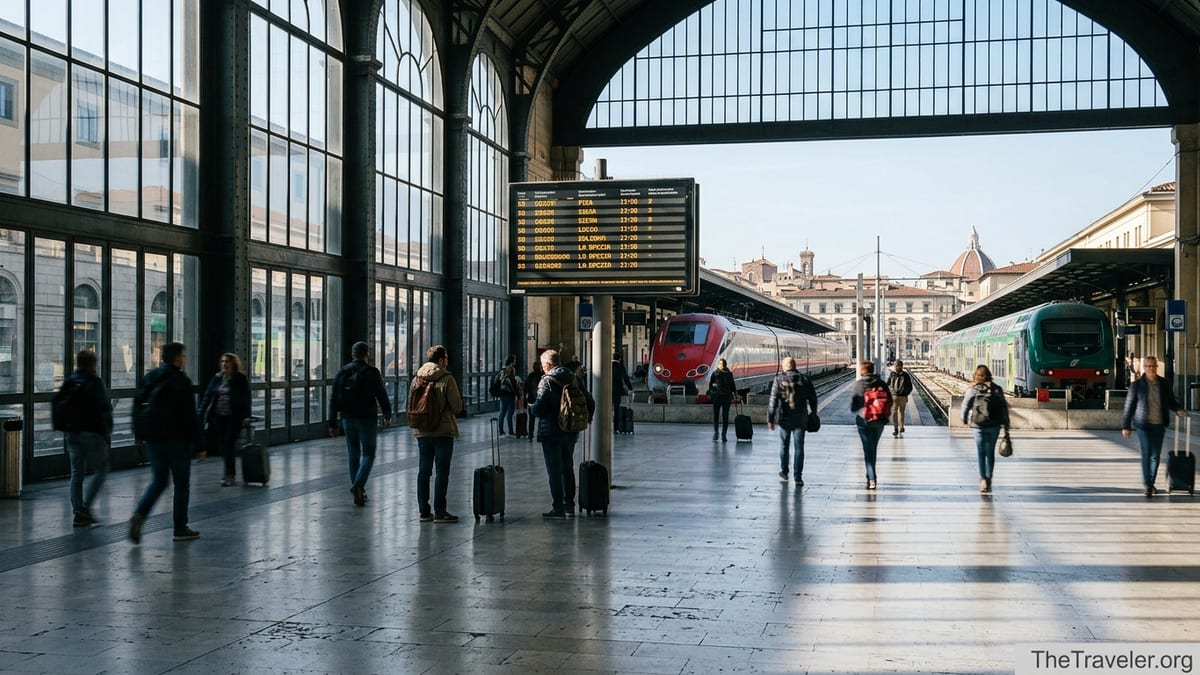
The realization hit on my second morning, standing under the departures board at Santa Maria Novella station. On one screen, a regional train to Pisa with a journey time of about an hour and tickets starting from roughly 10 to 15 euros return. On another, a regional headed to Siena in about an hour and a half, plus high-speed services to Bologna in under 40 minutes. Florence was not just my base. It was the center of a wheel, and the spokes radiated across Tuscany and beyond.
Once I understood that regional trains in Italy generally do not require advance seat reservations and that prices stay relatively stable even close to departure, I stopped treating day trips as complicated excursions and started treating them like extended commutes. I could wake up, check the Trenitalia app, see that a mid-morning train to Lucca cost under 10 euros each way, and decide on the spot to spend the day cycling along Renaissance walls rather than queuing for another museum.
What surprised me most was how different each destination felt. Pisa, with its leaning tower and coach tours, was a quick, almost theatrical outing. Siena felt slow and solemn, all brick and shadow. Lucca was quietly elegant and lived-in. Within 90 minutes of Florence, I could step into completely different visions of Italian life.
Medieval Drama in Siena: A Different Pace of Tuscan Life
Like many visitors, I had seen photos of Siena’s fan-shaped Piazza del Campo long before I saw Florence. What the photos do not convey is how easy it is to get there for the day. From Florence, travelers can reach Siena in roughly 1 hour 30 minutes. Buses from near the Santa Maria Novella area drop you close to the historic center, while regional trains take a similar time but arrive slightly farther out, requiring a short local bus ride or uphill walk.
The contrast with Florence is immediate. While Florence’s centro can feel crowded and commercial in peak season, Siena’s mostly pedestrian historic core quickly narrows into stone alleys where laundry hangs from high windows. Within minutes of stepping off the bus, I was standing in the vast bowl of Piazza del Campo with a takeaway espresso, watching a garbage truck ease past a group of art students sketching palazzi facades.
What surprised me here was not the medieval architecture, but the rhythm of the day. In Florence, mornings often start early with museum time slots. In Siena, I lingered over a late lunch of pici al ragù at a family-run trattoria just off Via di Città, the sort of place offering a set lunch for around 15 euros that includes pasta, house wine and coffee. In the afternoon, instead of racing between attractions, I climbed the Torre del Mangia, browsed a tiny ceramics shop, and still found myself with unstructured time to simply sit on warm brick and watch the light change.
By the time I caught the early evening bus back to Florence, spending less than 20 euros on transport, it felt like I had stepped into a different century for the day. The ease of that transition, without dealing with rental cars or complex routes, was the first hint that the variety of Florence day trips is not just geographical but emotional. Each one offers a different tempo.
Leaning Towers and Quiet Walls: Pisa and Lucca in One Day
If Siena is about mood, Pisa and Lucca are about logistics and how much you can fit into a single day. From Florence, regional trains to Pisa typically take about 50 to 60 minutes. Many departures cost around 9 to 12 euros one way, and they run frequently enough that you rarely need to commit to a specific time far in advance. For many travelers, that alone makes Pisa the simplest day trip from Florence.
The surprise here is how differently the day can unfold if you add Lucca. Pisa Centrale station is about a 20-minute walk from the Field of Miracles, where the Leaning Tower, cathedral and baptistery stand on an improbably green lawn. If you book a timed ticket in advance, you can climb the tower, photograph the tilt from every possible angle, visit the cathedral, and still be back at the station in a few hours. From there, a regional train whisks you to Lucca in about 30 minutes, often for under 5 euros.
In Lucca, the atmosphere changes again. Instead of a single world-famous landmark, you get an entire walled city wrapped in leafy ramparts. I rented a simple upright bicycle from a shop a short walk from the station, paying around 6 to 8 euros for a couple of hours, and pedaled along the top of the Renaissance walls past families pushing strollers and teenagers sharing takeaway pizza slices. Below, church towers rose above terracotta roofs, and on one corner a small café on the ramparts served espresso for about 1.50 euros to a mix of tourists and locals taking their midday break.
By early evening I was back in Florence in time for an aperitivo in Oltrarno. What struck me was not just that I had ticked off Pisa’s iconic tower, but that I had also cycled an entire loop around Lucca’s walls, visited a Romanesque church and browsed an antique bookstore, all on a day that started and ended with a cappuccino within sight of the Duomo. The combination of these two very different places in one straightforward loop would be hard to match from many other European cities.
From Renaissance Domes to Seaside Cliffs: The Cinque Terre Surprise
The day trip that most defied my expectations, however, was the one that left Florence’s terracotta skyline behind for the Ligurian Sea. On paper, a day trip from Florence to Cinque Terre looks ambitious. Trains from Santa Maria Novella typically route through Pisa or La Spezia, with a total travel time often between about 2 hours 15 minutes and 3 hours each way, depending on connections. Return fares can start in the 25 to 40 euro range if you combine regional and occasional faster services.
What surprised me was how many people were doing exactly this. On an early regional train from Florence, I met a group of Australian travelers using a guided tour that left around 7:30 in the morning, stopped briefly in Pisa for a quick tower photo, then continued to the Cinque Terre villages. They expected to be back in Florence around 8 or 9 in the evening. Independent travelers did something similar on their own: Florence to La Spezia, then the local Cinque Terre Express that hops between Monterosso, Vernazza, Corniglia, Manarola and Riomaggiore every few minutes in season.
The contrast with Florence was startling. By late morning I was standing on the harbor wall in Vernazza, watching fishing boats bob below pastel houses stacked seemingly at random up the cliffs. Paths led out of town along terraced vineyards, and the air smelled of sea salt and fried anchovies from takeaway stands selling paper cones of fritto misto for under 10 euros. That evening, back in Florence, I walked along the Arno past Palazzo Vecchio, still faintly sunburned and salt-streaked, wondering how it was possible that I had spent the middle of the day on the sea.
This is not a relaxed outing. Between train changes, busy platforms and the temptation to visit multiple villages, a Cinque Terre day trip from Florence can involve 5 to 6 hours of total travel and a lot of walking. Some local residents even argue it is better to stay overnight in La Spezia or one of the villages to ease the pace. Yet for travelers with limited time in Italy, it is precisely this extreme contrast that makes the day so compelling: Renaissance city at breakfast, cliffside fishing village by lunch, back under Brunelleschi’s dome by night.
Wine Country Within Reach: Chianti and the Tuscan Hills
Before arriving in Florence, I assumed that to see classic Tuscan vineyard scenery I would need to rent a car and navigate narrow white roads on my own. In reality, guided small-group tours and local buses make Chianti surprisingly accessible as a day trip, especially between late spring and early autumn when services run frequently. Typical half or full-day tours depart from central Florence and wind through hill towns like Greve in Chianti, Castellina or Radda, stopping at wineries for tastings.
On one such afternoon, I joined a small bus leaving from near the main station. For a fee roughly in the 70 to 100 euro range per person, we visited two wineries, sampled several Chianti Classico reds, walked through cool barrel rooms and learned how local producers decide which grapes become riserva bottles and which go into everyday table wine. The surprise for me was how informal the day felt. At the second stop, we stood under a pergola overlooking rows of vines and passed around plates of pecorino, salami and bruschetta with olive oil made on the property. It felt more like a rural lunch with friends than an organized tour.
For those on tighter budgets, public buses from Florence’s bus station can reach towns like Greve in about an hour. The fare is typically under 10 euros each way, and once in town you can wander the arcaded main square, visit enotecas that offer tastings by the glass, or walk short stretches into the surrounding hills. Returning to Florence in the evening, with red Tuscan dust still on your shoes, the city’s stone palaces and shop windows look different when you have spent the afternoon among vineyards and olive groves.
What this variety means in practice is that from Florence you can choose whether your day trip feels like an organized wine immersion or a casual rural escape built around a bus timetable and long walks. Both are valid ways to experience the Tuscan countryside, and both start within a few blocks of the same Renaissance basilicas.
Beyond Tuscany: Bologna and the Food-Lover’s Escape
Just when I thought I had a handle on Florence’s day-trip possibilities, I boarded a high-speed train to Bologna and felt the ground rules shift again. On the main high-speed line, trains can cover the distance between Florence and Bologna in roughly 35 to 40 minutes. Advance fares on slower or promotional trains may dip under 15 to 20 euros one way, especially at off-peak times. Suddenly, a city in another region, with a distinct culinary and architectural identity, was as accessible as some Tuscan hill towns.
Stepping out of Bologna Centrale, you feel the difference immediately. Porticoed streets stretch for kilometers, arcades shading shoppers and office workers. Instead of Florentine steak houses and riverside bars, you find delicatessens stacked with mortadella, tortellini shops advertising hand-made pasta by the kilo, and casual wine bars pouring local Lambrusco. Even the skyline changes: red-brick towers and long colonnades rather than Renaissance domes.
I spent my Bologna day trip wandering from the medieval Two Towers to the food-filled quadrilatero market district. For lunch, a plate of tagliatelle al ragù and a glass of house wine at a simple trattoria cost under 20 euros. In mid-afternoon, a quick espresso at a historic café in one of the main piazzas cost only slightly more than in Florence, but came with the bonus of watching a different pattern of city life swirl around me: more bicycles than scooters, more students than tour groups.
By early evening I was back in Florence, stepping out of the train into the familiar chaos of Santa Maria Novella. The surprise was not just that I could day-trip from Tuscany into Emilia-Romagna, but how easy it felt. High-speed rail shrinks regional borders, and when you are based in Florence, that opens up an entirely new layer of variety, from culinary pilgrimages to architectural contrasts, all within a fraction of the travel time required for longer intercity journeys.
How to Choose the Right Day Trip for You
After a week of leaving Florence almost as often as I stayed, I realized the real challenge is not whether a particular day trip is possible, but which one best matches your energy, budget and interests. For travelers who want something simple and iconic, Pisa is hard to beat: one hour on a regional train, a short walk or bus to the Field of Miracles, a timed tower climb if you book ahead, and you can be back in Florence for a late afternoon museum slot.
If your priority is atmosphere and history, Siena usually wins. The journey takes a bit longer, but the reward is a cohesive medieval center and a day that naturally encourages strolling rather than box-ticking. For a more relaxed, lived-in feel, Lucca offers tree-lined walls, manageable streets and the option to combine it with a quick Pisa stop if you start early. Wine lovers might sacrifice grand monuments for vineyard time in Chianti or the Val d’Orcia, especially if they join a small-group tour that handles the logistics.
Cinque Terre is best for travelers who value contrast and do not mind long travel days. If your time in Italy is short and you may not reach the coast otherwise, trading a bit of comfort for seaside cliffs and colorful harbors can be worthwhile. For food-focused travelers, a fast train to Bologna delivers an almost entirely different culinary world without requiring a hotel change. The variety is not just about where you go, but how those places make you feel when you return to Florence at night.
What ties all of this together is the reliability of Italy’s regional and high-speed trains. Even with occasional delays, the combination of frequent departures, reasonable prices and straightforward stations means that day trips feel accessible to first-time visitors. Once you grasp that a ticket purchased the previous evening or even the morning of travel can put an entirely new landscape within reach, Florence stops being a city you visit and starts being a base you live from, at least for a few days.
The Takeaway
When I booked my stay in Florence, I imagined tracing the outlines of its churches and courtyards, not the rail lines radiating out from Santa Maria Novella. Yet what surprised me most about day trips from Florence was the sheer variety they offer and how easily that variety slots into a normal travel day. One morning might start with a cappuccino near the Duomo and end with sunset over Siena’s terracotta rooftops. Another might sandwich a climb up the Leaning Tower of Pisa and a bicycle ride on Lucca’s walls between two simple dinners in Oltrarno.
With a little planning and realistic expectations about travel times, you can use Florence as a springboard to experience medieval hill towns, walled cities, vineyard country, seaside cliffs and even an entirely different region, all on separate days and all without renting a car. The journeys are not always effortless. Trains can be busy, connections require attention and popular places like Cinque Terre can feel crowded in peak season. But the pay-off is a trip to Italy that feels layered rather than linear, where each evening in Florence carries the memory of somewhere entirely different just a few hours away.
If anything, the surprise is that Florence’s greatest secret is not hidden in a side chapel or a lesser-known museum. It is printed in the small type of the regional train timetable and the departure boards that roll through place names at Santa Maria Novella. Learn to read those, and the city opens outward in every direction.
FAQ
Q1. Are day trips from Florence worth it if I only have three full days in the city?
Yes, but choose carefully. With three full days, many travelers spend two exploring Florence and use one for an easy day trip such as Pisa and Lucca or Siena, focusing on simple routes with direct regional trains.
Q2. Do I need to book train tickets for day trips from Florence in advance?
For regional trains to places like Pisa, Lucca and Siena, advance booking is usually not essential because tickets are not tied to specific seats. For high-speed trains to cities like Bologna, booking a few days ahead can secure better prices and preferred departure times.
Q3. Which day trip from Florence is the easiest for first-time visitors to Italy?
Pisa is often the easiest because trains are frequent, the journey is around an hour and the main sights are concentrated in one area. Lucca is similarly straightforward and can be combined with Pisa if you start early.
Q4. Is a Cinque Terre day trip from Florence too rushed?
It is a long and busy day, typically involving 5 to 6 hours of total train travel plus moving between villages. Many travelers still find it rewarding, but if you prefer a slower pace, consider staying overnight in La Spezia or one of the villages instead.
Q5. Can I visit both Pisa and Lucca in one day from Florence?
Yes. A common itinerary is Florence to Pisa in the morning to see the Leaning Tower, then Pisa to Lucca for an afternoon on the city walls, returning directly from Lucca to Florence in the evening, using regional trains for each leg.
Q6. Do I need a car to visit the Tuscan countryside from Florence?
No. Many travelers rely on buses and organized small-group tours to reach Chianti villages and countryside wineries. A car offers more flexibility, but it is not essential for a satisfying day in the hills.
Q7. How much should I budget for a typical day trip from Florence?
For destinations reachable by regional train such as Pisa, Lucca or Siena, many travelers spend roughly 30 to 60 euros on transport, entrance fees and simple meals. Guided wine or Cinque Terre tours can cost more, often between 70 and 150 euros per person.
Q8. Are day trips from Florence suitable for families with children?
Yes, though some are more family-friendly than others. Pisa and Lucca work well because walking distances are manageable and children often enjoy climbing towers or cycling on Lucca’s walls. Longer days like Cinque Terre may be more tiring for younger kids.
Q9. What is the best season for taking day trips from Florence?
Spring and early autumn are ideal, with milder temperatures and generally lighter crowds than peak summer. Winter day trips are also possible, though some coastal or outdoor-focused destinations may feel quieter and cooler.
Q10. Can I base myself in Florence for a week and explore a different place every day?
Yes, Florence works well as a week-long base. Many visitors alternate between city days and day trips to places like Siena, Pisa, Lucca, Chianti, Bologna and Cinque Terre, adjusting the schedule to match their energy levels and interests.