


More news on this day
Summer air travel across Europe has been hit by a fresh wave of disruption, with more than 200 flights cancelled and at least 3,200 delayed in a single day at major hubs from Frankfurt and Paris to Rome, Vienna and Dublin, affecting passengers on Lufthansa, Air France, Austrian Airlines, ITA Airways and other carriers.
Get the latest news straight to your inbox!
Weather, Congestion And Staffing Strain Major European Hubs
Publicly available operational data and aviation tracking services indicate that a combination of adverse weather, air traffic control bottlenecks and staffing constraints has created a new flashpoint for disruption at Europe’s largest airports. Recent network summaries point to France, Germany, Italy and Austria among the states generating some of the highest levels of en route delay, with pressure concentrating around the Reims, Marseille and Paris control centres and their neighboring regions.
On a recent midweek travel day in June, disruption reports compiled by passenger rights platforms show more than 2,000 flights across Europe either cancelled or heavily delayed, with around 200 cancellations and over 3,200 delays at key hubs alone. These figures span flights into and out of airports including Paris Charles de Gaulle, Frankfurt, Rome Fiumicino, Vienna, Dublin, Munich and Barcelona, illustrating how local weather or airspace constraints can quickly ripple through the wider network.
Frankfurt and Paris, in particular, have emerged as recurrent pressure points as peak summer schedules ramp up. Frankfurt’s role as a primary hub for Lufthansa and its partner airlines means that any schedule thinning, late-running arrivals or missed connections can propagate across short haul and long haul routes. Paris Charles de Gaulle, meanwhile, remains one of Europe’s busiest airports by daily movements, with even modest capacity reductions at its air traffic control centers translating into significant queuing both in the air and on the ground.
The knock-on effects of this congestion are not confined to the largest cities. Smaller markets in Croatia and Ireland, as well as regional airports in Germany, Italy and Austria, have reported clusters of late arrivals and missed rotations as aircraft and crews struggle to get back on schedule. This pattern mirrors recent monthly network reports showing that while overall European traffic is slightly higher than in 2025, the system remains highly sensitive to any localized disruption.
Lufthansa, Air France, Austrian And ITA At The Center Of The Turbulence
The latest wave of cancellations and delays has most visibly affected the major European network carriers whose operations are tightly concentrated at key hubs. Lufthansa, Air France, Austrian Airlines and ITA Airways have all seen a run of disrupted flights in June, with passenger forums and aviation data providers documenting scrapped departures, missed connections and last minute rebookings.
Lufthansa in particular has been navigating a difficult summer. In addition to strategic capacity cuts announced earlier in the season to cope with higher fuel costs and staffing constraints, the airline has experienced several days of concentrated disruption at Frankfurt and Munich, where clusters of cancellations and hundreds of delays were recorded on single days. These schedule shocks have translated into onward problems at destination airports such as Rome, Vienna and Dublin when aircraft and crews are out of position.
For Air France, the challenge has centered on Paris Charles de Gaulle, where congestion in French airspace and capacity limits at regional control centers have contributed to longer average delays. Austrian Airlines and ITA Airways, both closely linked to Lufthansa through group or alliance ties, have felt the impact through Vienna and Rome Fiumicino respectively, where shared fleets and codeshare itineraries mean that disruption at one hub can quickly spill over into another.
Low cost and leisure carriers are not immune, but their point to point networks often give them slightly more operational flexibility compared with hub dependent airlines. For the large network carriers now facing cancellations in the low hundreds and delays in the low thousands on peak days, the operational challenge lies in recovering schedules fast enough to avoid multi day cascades of missed rotations and crew duty time exceedances.
Airports From Frankfurt To Dublin Report Rising Delay Burdens
Network performance publications for late spring and early summer show that European air traffic has grown modestly compared with last year, but delay metrics have not improved at the same pace. Some of Europe’s busiest hubs, including Frankfurt, Paris Charles de Gaulle, Rome Fiumicino, Vienna and London Heathrow, continue to handle well over a thousand flights per day at peak times, leaving limited slack when storms, strikes or system issues occur.
In this environment, even localized weather cells over the Alps or thunderstorms moving across France can trigger holding patterns, diversions and lengthy turnaround times. Data on airport punctuality in recent weeks has highlighted Vienna and Frankfurt among the airports with particularly noticeable increases in delay ratios on certain days, while Rome and Paris have seen frequent instances of outbound departures pushed back by 30 minutes or more.
Airports in Ireland and Croatia have frequently appeared in delay statistics as recipients of late arriving aircraft from these hubs rather than as primary sources of disruption. Dublin, for example, has reported heavy evening arrival waves running significantly behind schedule when earlier operations at continental hubs encounter weather or airspace restrictions. Coastal holiday destinations in Croatia have seen similar patterns, with late night arrivals compressing ground handling resources.
Aviation analysts note that these issues are occurring against a backdrop of strong leisure demand and a network already reconfigured by earlier cost saving measures. This combination makes it harder for airports and airlines to deploy spare aircraft, crews and gates at short notice, extending the time it takes for schedules to recover after a difficult operating day.
Passengers Face Missed Connections, Long Queues And Complex Rebookings
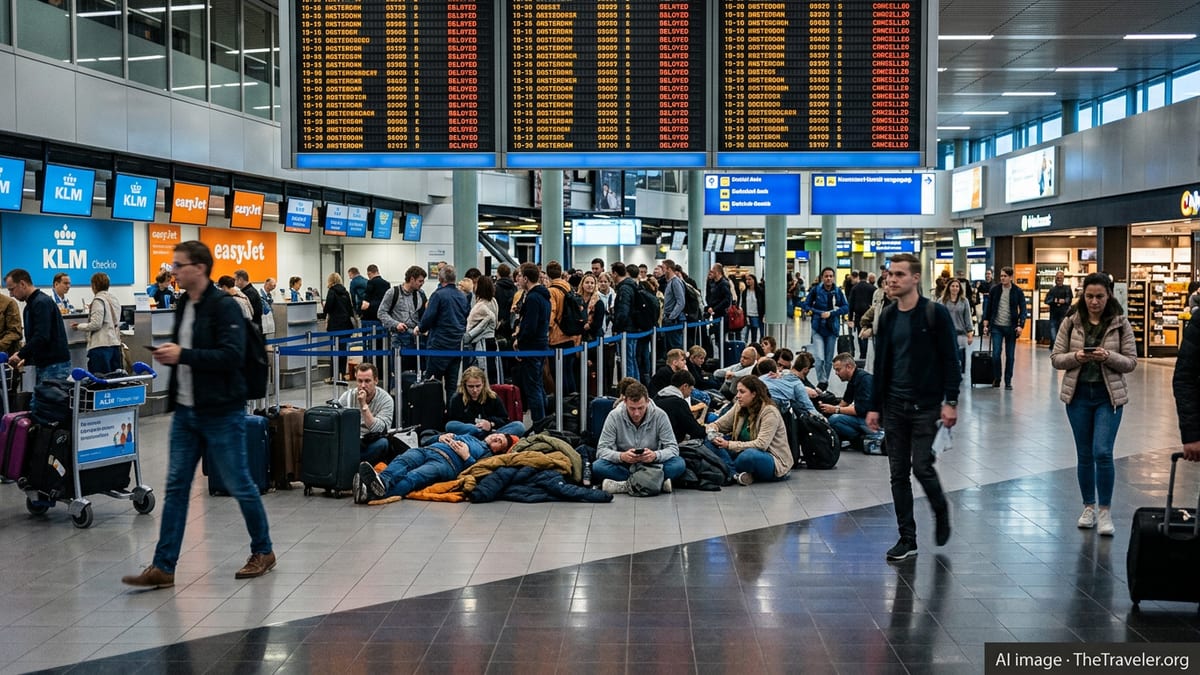
For travelers, the headline figures of 200 cancellations and more than 3,200 delays translate into very tangible problems on the ground. At major hubs like Frankfurt, Paris, Rome and Vienna, photos shared across social platforms in June show long queues at check in counters and transfer desks, crowded departure halls and passengers sleeping in terminal seating areas as they wait for rebooked flights.
Hub and spoke carriers such as Lufthansa, Air France, Austrian and ITA rely on tight banks of connecting flights to move passengers between short haul feeders and long haul services. When an inbound flight arrives late from a regional city in Ireland, Croatia or southern Germany, onward connections to destinations in North America, Asia or the Middle East can easily be missed. This forces airlines into a complex juggling act of reassigning passengers to later departures or routing them through alternative hubs.
Passenger accounts collected by consumer advocates describe itineraries that have stretched into 24 or even 48 hour journeys, with multiple rebookings across different airlines in the same group. Some travelers have reported overnight stays in Frankfurt or Vienna after late cancellations in the evening period, while others have been rerouted from Lufthansa or ITA flights onto partners such as Austrian or Swiss with extended layovers.
The operational strain has also tested customer service channels. Call centers, airport help desks and airline chatbots have all seen surges in demand when large numbers of flights change status in a short period. While some travelers have praised proactive rebooking and meal vouchers, others report difficulty obtaining clear information on the reasons for disruption or their remaining options, especially when traveling on complex multi airline tickets.
Rights And Options Under EU Rules As Disruption Continues
With disruption affecting multiple European countries, many passengers are turning to consumer information sites to understand their rights. Under European Union flight compensation regulations, travelers departing from an EU or European Economic Area airport, or flying to the region with an EU carrier, may be entitled to compensation when flights are cancelled at short notice or arrive more than three hours late, provided the disruption is not caused by extraordinary circumstances such as severe weather or air traffic control strikes.
In practice, this means that travelers on affected Lufthansa, Air France, Austrian, ITA and other European carriers may have different entitlements depending on what triggered a particular cancellation or delay. If an airline cancels a flight for commercial or operational reasons, or if technical issues with an aircraft are involved, passengers often have stronger grounds for financial compensation. When widespread thunderstorms or mandatory air traffic control restrictions are at the root of the problem, the focus shifts more toward care and assistance rather than cash payments.
Across recent incidents, passenger rights specialists have advised travelers to keep boarding passes, booking confirmations, and any written notices from airlines regarding the cause of disruption. These documents can be important if a claim is later disputed. Travelers are also encouraged to document expenses such as meals, local transport and accommodation booked during an unexpected overnight stay, as these may be recoverable in situations where the airline has not provided direct assistance.
With the core summer holiday season still ahead, network forecasts suggest that Europe’s skies will remain busy and that pressure on major hubs is unlikely to ease in the short term. Travelers planning to connect through Frankfurt, Paris, Rome, Vienna, Dublin or other busy airports are being urged by consumer outlets to allow longer connection times where possible, monitor flight status closely in the days before departure, and consider flexible booking options that make it easier to adjust plans if disruption strikes again.