


More news on this day
Air travelers across the United States faced another day of widespread disruption as more than 3,300 flights were delayed and over 500 were cancelled, affecting major airports from Texas and Illinois to New York, Arizona, California and Maine and snarling operations for Southwest, American, United, PSA Airlines, Republic Airways and several other carriers, according to multiple tracking and aviation data services.
Get the latest news straight to your inbox!
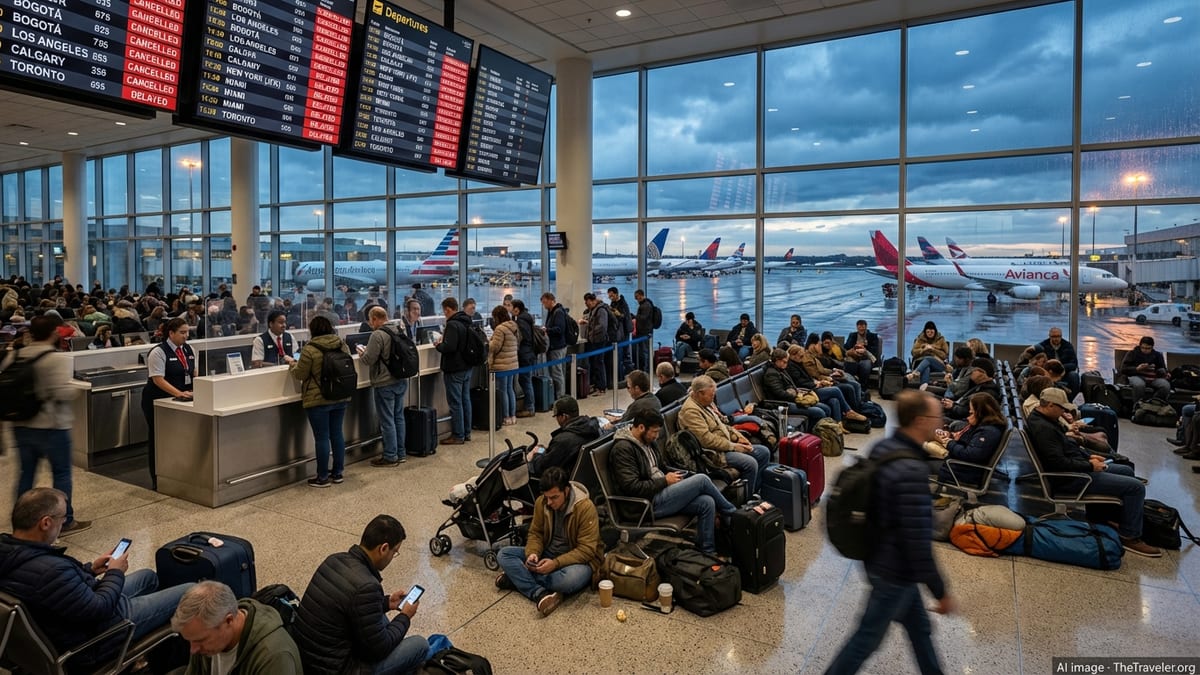
Major Hubs From Texas to New York Struggle With Congestion
Tracking services show that the latest wave of disruptions is concentrated at some of the country’s busiest hubs, including airports serving Dallas and Houston in Texas, New York City, Chicago, Phoenix, San Francisco and key gateways in the Northeast. A combination of congestion in the national airspace system, localized weather and staffing constraints is contributing to long departure queues and rolling ground delays.
Publicly available Federal Aviation Administration data indicates periodic ground delay programs and traffic management initiatives affecting major hubs, forcing airlines to hold departures and slow the rate of arrivals during peak periods. These measures help maintain safety and spacing in crowded airspace but can quickly ripple through already tight schedules, especially on routes linking large coastal and Sun Belt cities.
New York area airports and Chicago O’Hare remain particularly sensitive to even modest weather and volume changes, given their role as connecting points for nationwide networks. When operations tighten at those hubs, flights to and from smaller markets, including destinations in Maine and the Mountain West, are often among the first to face delays or cancellations as airlines re-balance fleets and crews.
In Texas and Arizona, where summer heat is building, high temperatures can also play a role by requiring payload restrictions or operational adjustments on certain aircraft types during the hottest hours of the day. While such measures are routine, they can reduce scheduling flexibility when combined with national traffic constraints.
Southwest, American and United Among Most Affected Carriers
The disruption has been widely felt across the largest U.S. carriers, with Southwest Airlines, American Airlines and United Airlines among the most heavily impacted due to their extensive domestic networks and reliance on the affected hubs. Regional affiliates such as PSA Airlines and Republic Airways, which operate many of the shorter routes feeding these hubs, are also experiencing elevated levels of schedule changes.
Operations data and historical on time statistics show that even on a typical day, a relatively small percentage of flights can account for a large share of passenger disruptions. When daily cancellations climb into the hundreds and delays into the thousands, the impact is magnified for airlines that turn aircraft frequently and depend on tight connection windows at central hubs.
Published industry analysis notes that carriers like Southwest, which operate point to point networks with numerous short segments, can see delays cascade rapidly across their systems when early flights are held or cancelled. Network airlines such as American and United face similar compounding effects when connections misalign at key nodes including Dallas Fort Worth, Chicago O’Hare, Newark and San Francisco.
Regional operators PSA and Republic, which fly under the brand names of larger carriers, often have less spare aircraft available to absorb disruption. When one regional jet goes out of service or crew limits are reached due to extended duty days, it can result in a string of cancellations on thinner routes that have fewer backup options for travelers.
Weather, Airspace Constraints and Staffing Challenges Intersect
While no single cause accounts for the 3,375 delays and 526 cancellations, analysts point to an intersection of factors that frequently affect U.S. air travel in the peak travel months. Summer weather patterns introduce thunderstorms, low clouds and strong winds that slow operations at large airports and along crowded corridors in the Northeast, Midwest and South.
At the same time, the national airspace system continues to operate under capacity constraints in several key sectors, including areas controlling traffic into and out of major metropolitan regions. When demand exceeds what controllers can safely handle, the FAA often imposes flow restrictions, spacing requirements or ground delay programs that slow the rate at which flights can depart or land.
Reports also highlight ongoing staffing and scheduling challenges across the aviation ecosystem, from air traffic control facilities to airline crews, ground handlers and maintenance teams. Even when airlines anticipate heavy demand, shortages in any part of the chain can make it harder to recover from early morning disruptions, leaving passengers facing rolling delays late into the day.
Historical data from the U.S. Department of Transportation’s Air Travel Consumer Reports shows that carrier controllable issues, such as maintenance or crew logistics, combine with weather and national aviation system constraints to produce the majority of long delays and cancellations in a typical month. The latest outage fits into that broader pattern, with each element amplifying the others as the day progresses.
Passengers Confront Missed Connections and Overnight Disruptions
The operational strain is translating directly into missed connections, rebookings and overnight stays for many travelers. With hundreds of cancellations and thousands of late arrivals, passengers on multi leg itineraries are particularly vulnerable, as a single delayed first segment can cause them to miss onward flights from congested hubs like Chicago, Dallas or New York.
When disruptions spike, airlines often run out of available same day alternatives on popular routes, especially in the late afternoon and evening. Travelers may then be rebooked onto flights departing the following day or routed through less direct connections. This can extend trips by many hours and, in some cases, require unexpected hotel stays near major airports.
Consumer advocates note that compensation or reimbursement options vary depending on the cause of the disruption and individual carrier policies. U.S. regulations draw distinctions between delays and cancellations within an airline’s control and those attributed to weather or broader airspace constraints. Passengers are encouraged to review airline customer service plans and Department of Transportation guidance when determining what assistance may be available.
With summer travel demand running high, seats on alternative flights can be scarce, particularly for larger families or groups wishing to stay together. As a result, some travelers are turning to nearby airports, splitting parties across multiple flights or postponing trips when suitable alternatives cannot be arranged on short notice.
What Travelers Can Do on High Disruption Days
Travel experts recommend that passengers flying through major hubs on disruption heavy days monitor their flight status frequently via airline channels, and allow extra time at the airport for check in, security and boarding. Early morning departures often have a better chance of operating close to schedule before delays compound across the network, though they are not immune to weather or operational issues.
When significant delays appear likely, some travelers may find it advantageous to proactively seek rebooking onto later flights or different routings before options narrow. Airlines sometimes expand flexible rebooking policies during periods of widespread disruption, permitting changes to travel plans without additional fees, subject to availability and fare rules.
Passengers with time sensitive commitments, such as international connections or events, can also consider building in longer layovers or selecting itineraries with multiple daily frequency on key segments, offering more alternatives if a particular flight is cancelled. While such choices may add modest inconvenience up front, they can provide valuable resilience when the system experiences stress.
The current wave of delays and cancellations underscores the ongoing fragility of the U.S. air travel network during peak periods. With more unsettled summer weather ahead and demand remaining robust, travelers are likely to face additional days of disruption, making preparation, flexibility and close attention to schedule changes increasingly important parts of flying.