


More news on this day
A fresh wave of air travel disruption has swept across Europe, with 2,114 flights delayed and 100 cancelled in a single day across multiple countries, snarling operations for carriers including Iberia, ITA Airways, KLM and Ryanair and causing widespread knock-on chaos at major hubs from Rome and Madrid to Vienna and Dublin.
Get the latest news straight to your inbox!
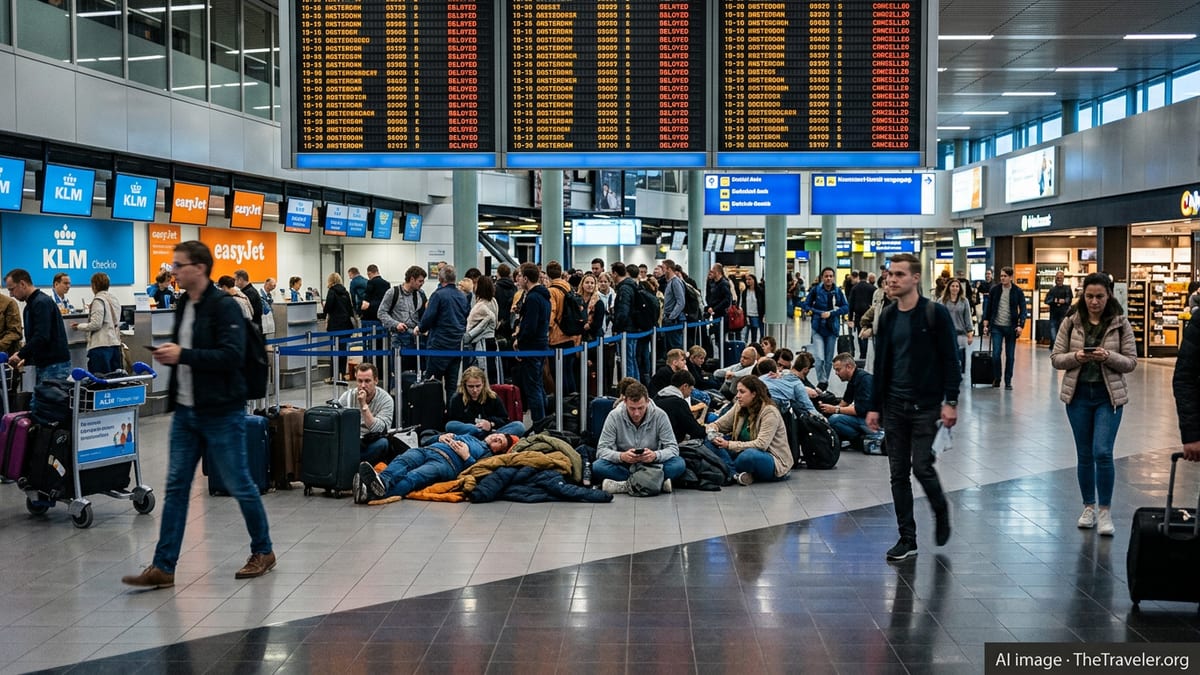
Widespread Disruption From Spain To Ireland
Flight tracking and passenger rights platforms report that the latest bout of disruption has affected services across Spain, Austria, Italy, Switzerland, Ireland and several other European countries. In total, 2,114 flights were delayed and 100 cancelled over the course of the day, highlighting how fragile the continent’s aviation network remains as the busy summer season ramps up.
Major airports in Spain, including Madrid and Barcelona, registered some of the highest numbers of delayed departures and arrivals. The disruption coincided with already heavy holiday traffic, creating long queues at check in and security, as well as congestion around departure gates. Publicly available data indicates that delays frequently stretched well beyond the 30 minute mark, with some departures pushed back by several hours.
Further north, airports in Ireland, notably Dublin, also reported schedule disruption as conditions and congestion elsewhere in Europe rippled through the network. Even where local operations were described as normal, cancellations and late arrivals from partner hubs resulted in missed connections and aircraft being out of position for later rotations.
In central Europe, Austria and Switzerland experienced similar patterns, with Vienna and Zurich reporting elevated levels of late operations. Although the absolute number of cancellations remained limited compared with delays, the imbalance created considerable complexity for airlines attempting to reassign aircraft and crews across tightly timed schedules.
Flag Carriers And Low Cost Airlines Equally Affected
The disruption cut across business models, affecting both full service and low cost airlines. Iberia saw a series of delays on services in and out of Spain, compounding the attention it has already received after a technical problem grounded a high profile charter in the Canary Islands in recent days. Flight status boards across the Iberia network showed a mix of rolling delays and selected cancellations as the day went on.
In Italy, ITA Airways experienced knock on effects at Rome Fiumicino and Milan as late inbound aircraft cascaded into later departures. According to published coverage, Italian hubs have been prone to congestion this month, meaning that relatively small schedule shocks can quickly turn into wider disarray when turnaround times lengthen and departure slots are missed.
KLM services were also caught up in the turbulence, particularly on routes connecting Amsterdam with Southern and Central Europe. The carrier has been issuing regular travel alerts for passengers across its European network, advising that delays of several hours or more may entitle travellers to refunds or rebooking options under existing policies.
Low cost giant Ryanair, which remains one of Europe’s busiest airlines by daily movements, also featured prominently on disrupted departure boards. With a dense point to point network, even a handful of delayed early morning rotations can rapidly spread through the system, affecting flights well into the evening as aircraft and crews struggle to return to planned patterns.
Rome, Madrid, Vienna And Other Hubs Under Strain
Rome, Madrid and Vienna stood out among the most affected hubs during the latest wave of disruption. At Madrid Barajas, a high volume of delays on both domestic and international services created crowded terminals as passengers waited for updated departure information. Operational data suggests that outbound flights to other European capitals frequently left late, in turn exporting delays to connecting airports.
Rome Fiumicino, a key base for ITA Airways and a major gateway for leisure travel to Italy, saw a succession of late departures that squeezed already tight turnaround windows. Reports from aviation monitoring services describe a pattern of aircraft arriving behind schedule, forcing airlines to shorten ground times where possible while still complying with safety and maintenance requirements.
Vienna International Airport recorded more than one hundred delayed movements and a cluster of cancellations around a recent disruption event, and the latest figures show that pressure has remained elevated. Passengers passing through Vienna reported long waits at boarding gates and customer service desks as airlines attempted to reroute travellers onto later services or alternative itineraries.
Secondary hubs and tourist gateways were not spared. Airports serving the Canary Islands, the Balearics and popular Alpine destinations in Austria and Switzerland all registered late operations as the day progressed. Because many of these routes depend on tight daily rotations, a delayed aircraft arriving at a leisure destination often cannot depart on time for its return leg, perpetuating the knock on effects.
Causes Range From Capacity Constraints To Weather
Analysis from Eurocontrol and other operational data providers indicates that air traffic control capacity and staffing remain significant contributors to delays across the European network. En route and airport control centers in Spain and other states have periodically struggled to accommodate peak traffic levels, leading to flow restrictions and ground holds that push back departure times even when aircraft and crews are ready.
Weather has also played a role, with recent storms and unsettled conditions over parts of Western and Central Europe reducing available runway capacity at times and forcing aircraft to reroute. While not every delay in the current episode has been directly traceable to adverse weather, earlier weather related disruptions often create residual effects by leaving aircraft and crews out of their planned locations.
Operational knock ons add a further layer of complexity. When an early flight arrives late, the same aircraft may be unable to depart on its next scheduled service without violating crew duty limits or missing allocated time slots. As a result, airlines may choose to cancel selected flights entirely to protect the integrity of the wider schedule, contributing to the 100 cancellations recorded alongside the much larger volume of delays.
Industry observers note that Europe’s aviation system continues to operate with relatively slim buffers following the post pandemic recovery, leaving little margin to absorb shocks. With passenger numbers climbing toward or above pre crisis levels at many airports, even routine operational challenges can now trigger disproportionate disruption across multiple countries.
What Passengers Can Expect And How To Respond
For travellers caught up in the latest disruption, options depend heavily on the cause of the delay and the specific airline involved. Under European air passenger rules, significant delays or cancellations on flights departing from the European Union or operated by EU and UK carriers can entitle passengers to care, rerouting and sometimes financial compensation, provided the disruption was within the airline’s control.
Consumer advocacy organisations advise passengers to keep boarding passes, booking confirmations and any written notifications from airlines, as documentation is often required when submitting claims. Travellers are also encouraged to check their flight status frequently on official airline channels, as schedules can change rapidly during widespread disruption and automatic rebooking may not always align with individual preferences.
With the summer travel peak approaching, regular flyers are increasingly building in additional connection time and considering earlier departures where possible to reduce the risk of missed onward flights. Travel experts point out that routes involving congested hubs such as Madrid, Rome, Amsterdam and Vienna may be particularly vulnerable when broader network strains emerge.
For now, the 2,114 delays and 100 cancellations recorded across Europe serve as a warning that passengers heading to or from Spain, Austria, Italy, Switzerland, Ireland and neighboring countries should be prepared for potential last minute changes, even on days without headline making weather or industrial action. As airlines and infrastructure providers work to stabilise operations, travellers are likely to face an environment in which flexibility and up to date information remain essential.