

More news on this day
Thousands of travellers were left stranded in Jordan on Friday as airlines scrubbed dozens of services to and from Amman, with 52 flight cancellations and 33 delays reported in a single day amid widening airspace disruptions across the Middle East.
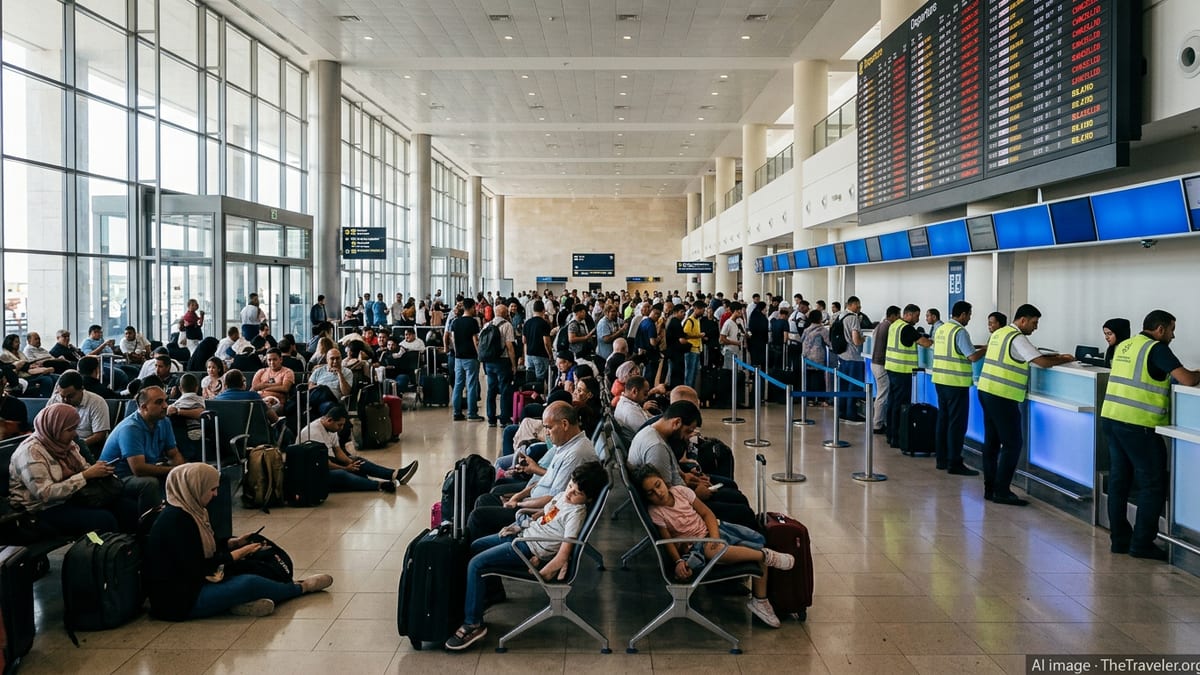
Amman Becomes a Bottleneck in Middle East Airspace Crisis
Queen Alia International Airport, normally a reliable regional hub, has been thrust into the centre of the Middle East’s aviation upheaval. Airlines including Royal Jordanian, Ryanair, Saudia and Qatar Airways were among the carriers cancelling and delaying flights on Friday, as operators grappled with fast-changing airspace restrictions and rerouted corridors around the wider conflict.
Multiple services linking Amman with Gulf hubs, European gateways and nearby capitals were scrubbed or heavily delayed, leaving departure boards dominated by red “cancelled” and “delayed” notices. Airport staff said the knock-on effects of regional airspace closures and overnight restrictions in Jordan had turned routine travel days into an exercise in crisis management.
While some flights have continued to operate, particularly on daytime departures using southern routing via Egypt and Saudi Arabia, the available capacity has not been enough to absorb demand. Seats on remaining services sold out quickly, leaving many travellers camped out in terminal halls or pushed into last-minute hotel stays in Amman.
The disruption has hit both outbound and inbound traffic. Transit passengers who had counted on smooth same-day connections via Amman are now facing missed onward flights, forced layovers and complex rebooking processes as airlines attempt to rebuild schedules on the fly.
Nightly Airspace Restrictions Compound Regional Flight Chaos
The latest wave of cancellations follows Jordan’s temporary nightly closure of its airspace, introduced this week in response to escalating regional security concerns. Under the measures, most inbound, outbound and overflying traffic is barred during overnight hours, compressing operations into a narrower daytime window and limiting flexibility when delays cascade.
Jordan’s Civil Aviation authorities have stressed that the restrictions are precautionary and subject to regular review, but the practical effect for passengers has been severe. Flights that would previously depart late evening or early morning have either been cancelled outright or shifted into already crowded daytime slots, where limited gate and runway capacity quickly becomes a bottleneck.
The situation is further complicated by neighbouring states’ airspace closures and restrictions, which are forcing airlines to adopt longer detours around conflict-affected zones. For flights serving Amman, that can mean extended journey times, additional fuel requirements and last-minute flight-plan changes that ripple through daily schedules.
Industry analysts say the region-wide picture remains fluid, with airlines adjusting routes day by day. For passengers in Jordan, that uncertainty is reflected in rapidly changing departure times, rolling cancellations and limited visibility beyond the next 24 to 48 hours.
Travellers Face Long Waits, Limited Alternatives and Rising Costs
Inside Queen Alia’s main terminal, scenes on Friday ranged from long queues at airline desks to families asleep across rows of seats as they waited for updates. Many travellers reported being notified of cancellations only hours before scheduled departure, while others discovered their flights were missing from departure screens on arrival at the airport.
With 52 cancellations and 33 delays recorded in one day alone, accommodation near the airport and in central Amman has tightened, and last-minute room rates have climbed. Taxi queues into the city grew through the afternoon as stranded passengers gave up on flying and sought a bed for the night, unsure when they would be able to leave.
Alternative routes out of Jordan are limited. Overland options into neighbouring countries are constrained by the same security situation that has affected the skies, and many of the region’s major hubs are either operating on reduced schedules or focusing on evacuation and relief flights. Some travellers have managed to secure onward seats via Saudi Arabia, Oman or Turkey, but often only after lengthy waits and at significantly higher prices.
Travel agents in Amman reported a surge in requests from passengers trying to rebook onto any available route, regardless of the airline or destination, simply to get closer to home. Others have opted to remain in Jordan and wait out the disruption, wary of getting stuck at another transit point with fewer support services.
Airlines Juggle Safety, Scheduling and Passenger Care
Royal Jordanian, the country’s flag carrier, has been under intense pressure as it works to maintain a skeleton network while complying with new operational constraints. The airline has prioritised core routes and daytime frequencies, while advising passengers to monitor official channels for updates and avoid travelling to the airport without confirmed rebookings.
Foreign carriers including Ryanair, Saudia, Qatar Airways and several regional operators have also adjusted their Amman schedules, either consolidating services, downgrading aircraft size or suspending certain rotations altogether. Airline operations teams are working with civil aviation authorities on revised flight paths that avoid closed or high-risk airspace, placing safety and regulatory compliance ahead of schedule reliability.
For stranded passengers, the experience varies widely by carrier. Some airlines have provided hotel vouchers, meal coupons and automatic rebooking on the next available flight, while others have directed customers to manage changes online, citing limited on-the-ground staff and the volume of affected travellers. Long waits at help desks and on customer-service phone lines have become common.
Consumer advocates in the region have urged airlines to clearly communicate passengers’ rights to refunds or alternative transport, particularly where lengthy cancellations make rebooking impractical. They note that while safety considerations are paramount, transparency on compensation and options is essential for maintaining public trust.
What Passengers in Jordan Should Do Now
Travel experts are advising anyone with upcoming travel through Amman to treat their booking as tentative until they have reconfirmed their flight within 24 hours of departure. With schedules still in flux, same-day checks via airline apps or direct contact centres are proving more reliable than printed itineraries or earlier confirmations.
Passengers already stranded in Jordan are being encouraged to prioritise communication with their airline or travel provider before heading back to the airport. Screenshots of cancellation notices, boarding passes and any written promises of assistance can help support claims for refunds, hotel costs or alternative transport once operations stabilise.
Those with flexible plans are being told to consider postponing non-essential travel until there is greater clarity on regional airspace access and route stability. For essential journeys, experts recommend packing for potential overnight stays, keeping medications and valuables in hand luggage, and budgeting for unexpected accommodation or surface transport.
While there are tentative signs of gradual recovery on some Middle Eastern routes, aviation officials warn that further cancellations and delays remain possible in the coming days. For thousands of travellers in Jordan, the priority now is simply finding a way home as airlines and regulators navigate one of the most complex airspace crises the region has seen in years.