


More news on this day
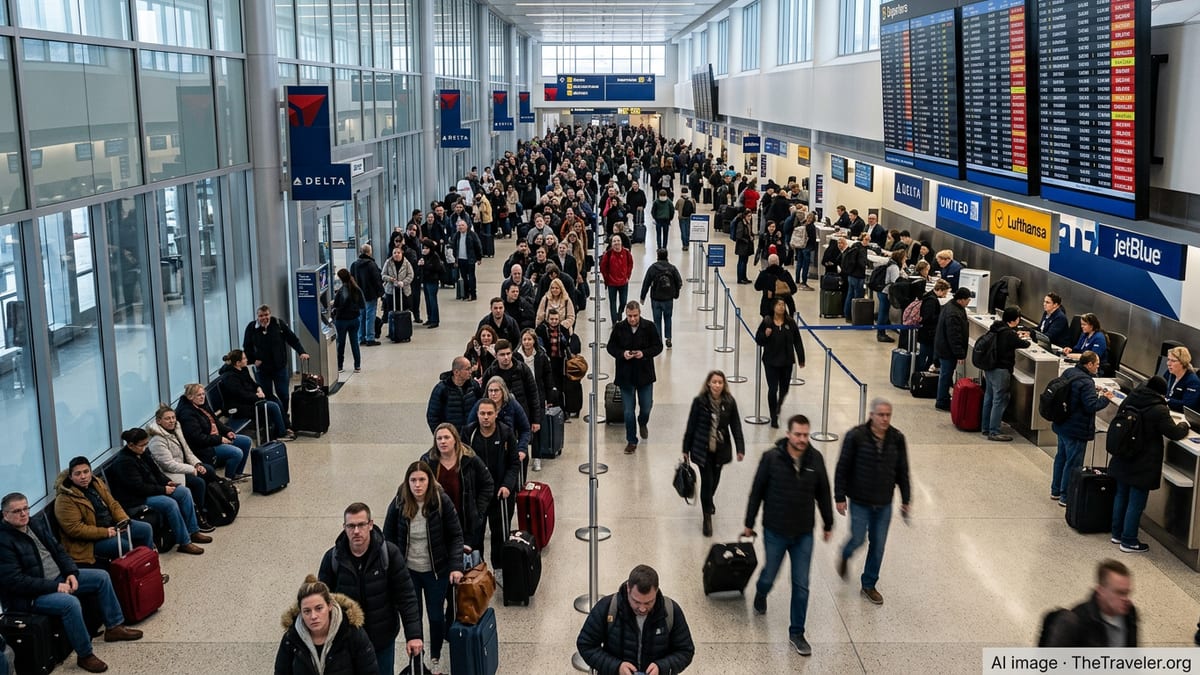
Thousands of air travelers across the United States faced hours of disruption today as airlines reported 5,874 delays and 339 cancellations, snarling traffic through major hubs including Chicago, Las Vegas, Atlanta, Detroit, Pittsburgh, St. Louis, and Kansas City and affecting operations at carriers such as SkyWest, United, Envoy Air, Delta, and American.
Get the latest news straight to your inbox!
Major Hubs Log Heavy Delays and Cancellations
Publicly available tracking data for May 18 shows a broad wave of disruption across the U.S. air network, with flight delays piling up from early morning departures through the afternoon push. Chicago’s airports, long a bellwether for national operations, saw cascading schedule issues that rippled out to connecting cities across the Midwest and both coasts.
Las Vegas and Atlanta, two key connecting points for both leisure and business travel, also reported significant numbers of late departures and arrivals. In Las Vegas, a busy slate of westbound and transcontinental departures experienced rolling holds, while Atlanta’s role as a primary connection point magnified the impact of even modest operational hiccups.
Secondary hubs, including Detroit, Pittsburgh, St. Louis, and Kansas City, registered notable disruption as well. While their individual totals trailed the largest coastal and Midwest gateways, their combined delays added to a national picture in which many passengers missed connections, arrived hours behind schedule, or found themselves without viable same-day rebooking options.
The 339 flight cancellations, though a fraction of the total daily schedule, compounded the strain by forcing already crowded flights to accommodate displaced travelers. In multiple markets, remaining open seats disappeared quickly, leaving some passengers with no option but to wait for departures the following day.
Regional Carriers Bear Brunt of Network Strain
Regional operators that fly under major-brand banners played a central role in the day’s disruption. SkyWest, which operates flights for United, Delta, American, and Alaska, saw widespread knock-on delays where a late inbound aircraft or crew timing issue on one leg translated into schedule changes across several subsequent flights.
Envoy Air, another large regional carrier feeding American’s network, also experienced schedule volatility. Because these airlines connect smaller cities to big hubs, delays on regional segments often left travelers stranded at intermediate airports, unable to continue their journeys when connection windows evaporated.
The structure of the U.S. hub-and-spoke system magnified the impact. A delayed regional flight into Chicago, Atlanta, or Detroit could cause a chain reaction for passengers connecting onward to Las Vegas, St. Louis, Kansas City, or other destinations. Travelers on tight itineraries were particularly vulnerable, with even relatively modest delays of 45 to 60 minutes proving enough to sever downstream connections.
Publicly available performance data from the U.S. Department of Transportation shows that regional carriers often operate near capacity and on dense schedules, leaving little slack when disruptions hit. Today’s figures for delays and cancellations underscore how quickly such tightly wound operations can become overwhelmed on busy days.
Operational Pressures, Weather, and Airspace Constraints Intersect
Initial reports suggest a mix of factors behind the nationwide disruption, including localized weather challenges, congestion in key airspace corridors, and operational pressures related to aircraft rotation and crew availability. Even when storms or low visibility are confined to a handful of regions, required spacing between aircraft, ground stoppages, and reroutes can slow the system hundreds of miles away.
Airline scheduling practices have also come under scrutiny in recent years for leaving limited buffer time between flights. When one leg runs late because of ground holds, mechanical checks, or crew scheduling constraints, the delay can echo across multiple routes that share the same aircraft or crew pairing. On a day already crowded with spring and early summer travelers, these compounding effects contributed to the unusually high total of delayed departures.
Historical government statistics on delay causes indicate that a large share of disruptions are typically linked to national aviation system constraints and late-arriving aircraft, rather than only to severe storms. Today’s pattern, with problems emerging across multiple hubs rather than being concentrated in a single weather hotspot, appears consistent with that broader trend.
While airlines have expanded use of dynamic scheduling tools and real-time re-routing, today’s figures show that these strategies still have limits when multiple pinch points form at once. Ground operations, gate availability, and crew duty time rules all operate within fixed constraints that can be difficult to flex when schedules are already tight.
Travelers Face Missed Connections, Long Lines, and Limited Options
For travelers, the operational dynamics translated into long security and check-in lines, crowded gate areas, and uncertainty about when or whether they would reach their destinations. In airports from Chicago to Kansas City, social media posts detailed departure boards filled with red delay notices, with some travelers reporting multiple rebookings over the course of the day.
Passengers on regional flights were among the most affected, particularly those traveling to or from smaller cities with only a few daily departures. When one of those flights was canceled, the next available seat might be many hours or even a full day away, effectively stranding travelers who could not easily reroute through alternate hubs.
Families and leisure travelers connecting in Las Vegas and Orlando reported disruptions to vacation plans, while business travelers connecting through Atlanta, Chicago, and Detroit faced missed meetings and events. In several hubs, publicly available information indicated increased use of airport hotels as passengers accepted overnight stays to wait out the disruptions.
Customer service channels, both at airport counters and through call centers, absorbed heavy demand as travelers sought rebookings, hotel vouchers, or clarification on their rights when faced with long delays or cancellations. Independent consumer-advocacy resources emphasized the importance of checking both airline contracts of carriage and applicable regulations for compensation or assistance eligibility, especially on international itineraries.
What Today’s Turmoil Signals for the Summer Travel Season
The breadth of today’s disruption, affecting carriers from major network airlines like Delta, United, and American to regional operators such as SkyWest and Envoy Air, has raised fresh questions about the resilience of the U.S. air travel system heading into the peak summer season. With passenger volumes expected to approach or exceed recent records, operational buffers could be tested frequently in the months ahead.
Industry observers note that high load factors leave airlines with fewer empty seats to accommodate rebooked passengers when things go wrong. That reality increases the likelihood that any major disruption, whether triggered by storms, air traffic restrictions, or internal scheduling issues, will leave thousands of travelers facing long delays or forced overnight stays.
Travel advisors and consumer advocates are already encouraging passengers to build more margin into tight itineraries, especially when connecting through busy hubs like Chicago, Atlanta, and Las Vegas. Early morning departures, longer connection windows, and flexible ticket options are being highlighted as practical ways to reduce the risk of becoming stranded when disruption strikes.
While today’s numbers stand out for their scale, they also fit into a broader pattern of periodic nationwide disruptions that have defined recent travel seasons. For many travelers caught in today’s turmoil, the experience will shape decisions about when, how, and with which carriers they choose to fly in the critical weeks ahead.