


More news on this day
Thousands of travelers across the United States were stranded or severely delayed as a fresh wave of disruption hit the aviation system, with publicly available tracking data on Monday showing 6,487 flights delayed and 375 canceled nationwide, affecting services operated by SkyWest, Southwest, Delta, United, Envoy Air, American Airlines and other carriers at major hubs including Chicago, Atlanta, Los Angeles, Denver, Nashville, Detroit, Boston, Miami and New York.
Get the latest news straight to your inbox!
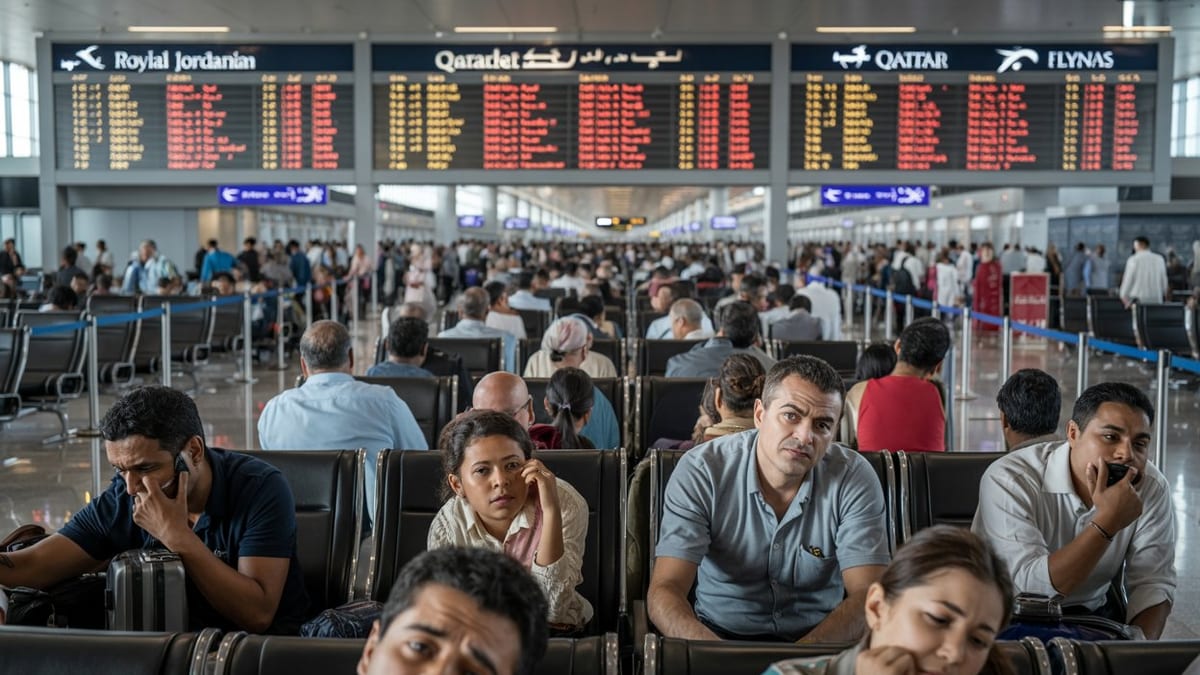
Nationwide Disruptions Snarl Key Airport Hubs
The latest day of turmoil added new strain to some of the country’s busiest airports, where long lines, rolling departure times and missed connections quickly became the norm. Data from widely used flight monitoring platforms showed clusters of delays at Chicago O’Hare and Midway, Atlanta Hartsfield–Jackson, Denver International, Los Angeles International and New York’s major airports, with secondary impacts spreading to mid‑sized cities such as Nashville and Detroit.
Reports indicate that the imbalance between delays and outright cancellations left many passengers technically still scheduled to fly, but facing repeated timetable changes and extended waits in crowded terminals. Earlier disruption patterns this year have shown similar dynamics, with airlines and airport operations attempting to preserve as much of the schedule as possible even as weather and airspace constraints reduce capacity.
Travelers passing through Miami and Boston also encountered knock‑on effects, as late inbound aircraft from the Midwest and West Coast cascaded into evening departures. Published coverage of previous disruption days in 2026 highlights how a single constrained hub can quickly affect the wider network once aircraft and crews fall out of position.
Regional gateways that rely heavily on feeder traffic from these hubs experienced their own share of delays, particularly for evening departures. Passengers heading to smaller communities often faced longer rebooking times, with fewer alternative flights available once aircraft rotations were disrupted earlier in the day.
Major Carriers and Regional Affiliates Under Pressure
Operational data indicates that the disruption was widely shared across large network airlines and their regional partners. SkyWest and Envoy Air, which fly many routes on behalf of household‑name carriers, featured prominently in the delay tallies, particularly on high‑frequency services into Chicago, Denver and major East Coast hubs. These regional operators play a crucial role in feeding passengers into long‑haul and transcontinental networks, so any disruption to their schedules can quickly affect onward connections.
American Airlines, Delta Air Lines, United Airlines and Southwest Airlines all reported elevated delay totals, consistent with trends observed during other recent systemwide events in 2026. Industry performance data compiled from Department of Transportation reports shows that large hub‑and‑spoke carriers often delay more flights than they cancel, using their extensive networks and partnerships to rebook travelers while attempting to keep aircraft moving.
Southwest, with its point‑to‑point model and heavy exposure to weather‑prone regions, appeared in delay rankings alongside the big three network carriers. Regional affiliates such as SkyWest and Envoy shouldered a disproportionate share of schedule volatility, reflecting their role in operating thinner routes that can be more vulnerable when ground stops, thunderstorms or air traffic flow restrictions are put in place.
In recent months, Delta and United have typically reported comparatively lower cancellation rates than some competitors, but have still seen spikes in delays when confronted with storms, airspace congestion or crew availability issues. The latest numbers suggest that even comparatively resilient operators can experience widespread ripple effects when multiple hubs are under strain simultaneously.
Weather, Congested Airspace and Crewing Challenges Converge
Weather continues to be a central factor in large‑scale disruption events, particularly in spring when fast‑moving storm systems can affect several key corridors in a single day. Past episodes at Denver, Chicago and the Northeast have demonstrated how low visibility, thunderstorms or high winds can trigger ground stops and arrival rate reductions, which in turn force airlines to hold departures at origin airports and reshuffle aircraft utilization plans.
National Aviation System constraints, such as air traffic control spacing requirements and saturated flight paths around major hubs, compound these challenges. Publicly available government data explains that even non‑extreme weather can lead to substantial delays when combined with already busy airspace and high travel demand, especially on peak travel days and evenings.
Crewing and aircraft positioning are additional stress points. When an early wave of flights runs late, flight crews can quickly hit duty time limits, making it harder for airlines to recover as the day progresses. Analysts reviewing on‑time performance statistics for 2026 note that tighter crew scheduling, pilot shortages in certain regions and ongoing training pipelines all contribute to a system that has less slack to absorb unexpected shocks.
Once aircraft and crews are out of place, airlines face difficult decisions over which flights to operate, delay or cancel. Long‑haul and hub‑to‑hub services are often prioritized to maintain broader network connectivity, leaving some regional and leisure routes with longer gaps between available departures.
Human Impact: Missed Connections and Overnight Stays
For passengers, the statistics translated into hours in queue and on terminal floors. At large hubs such as Atlanta, Chicago and New York, travelers queued at customer service counters to rebook missed connections after earlier delays pushed itineraries beyond connecting windows. Social media posts and local news coverage showed images of crowded departure halls, with many travelers using airport seating and gate areas as makeshift waiting rooms.
Publicly available reports from previous high‑disruption days in 2026 indicate that once evening banks of flights are heavily delayed, overnight stays become increasingly common as remaining seats on later departures run out. Hotels near major airports tend to fill quickly, often sending travelers further from the airport in search of accommodation when irregular operations stretch into the late night hours.
Families, elderly travelers and those with tight work or event commitments are among the passengers most affected by rolling disruptions of this scale. Missed cruises, tours, weddings and critical business meetings are a recurring theme when delay and cancellation counts reach into the thousands, underscoring how dependent modern travel plans are on finely tuned airline schedules.
Travel advocates note that while large disruption events attract headlines, they also fit into a broader pattern of elevated delay volumes compared with pre‑pandemic norms, as carriers adapt to changing demand, staffing models and weather volatility. For travelers, that has translated into a greater need to build buffers into itineraries and to prepare for schedule changes even on seemingly routine domestic routes.
What Travelers Can Expect in the Coming Weeks
Operational data from the first months of 2026 shows that weather‑related and system‑related delays remain above some historical baselines, particularly at large hub airports that serve as crossroads for multiple carriers. Analysts who track performance trends suggest that fluctuating spring weather patterns and strong leisure demand are likely to keep pressure on schedules into early summer.
Published performance rankings for U.S. airlines in 2026 show that while some carriers have made gains in on‑time performance, the overall network remains vulnerable to days when storms or air traffic restrictions coincide with peak travel periods. When that happens, major hubs including Chicago, Atlanta, New York, Denver, Los Angeles, Miami and Boston often see outsized impacts because of their central role in connecting traffic.
Travel planners observing the latest disruption day recommend that passengers build extra time into itineraries that include connections at these busy hubs, especially when traveling to events that cannot be easily rescheduled. Booking earlier flights in the day, monitoring flight status closely and remaining flexible with routing options are among the strategies highlighted in public guidance aimed at reducing the risk of being stranded.
As airlines and regulators review performance data from episodes like the latest one, attention is likely to remain focused on improving resilience through better crew planning, technology investments and airspace modernization. For now, however, the experience of thousands of stranded travelers serves as another reminder that the U.S. air travel system, while extensive, can still be highly sensitive to periods of intense operational stress.