


More news on this day
Travelers moving through Albuquerque International Sunport on May 18 are experiencing a difficult start to the week, as publicly available tracking data shows at least 28 arrivals and departures on SkyWest Airlines, Southwest Airlines and United Airlines running behind schedule, disrupting connections to major hubs including Dallas, Phoenix, San Francisco, Austin and Baltimore and affecting onward travel across the United States.
Get the latest news straight to your inbox!
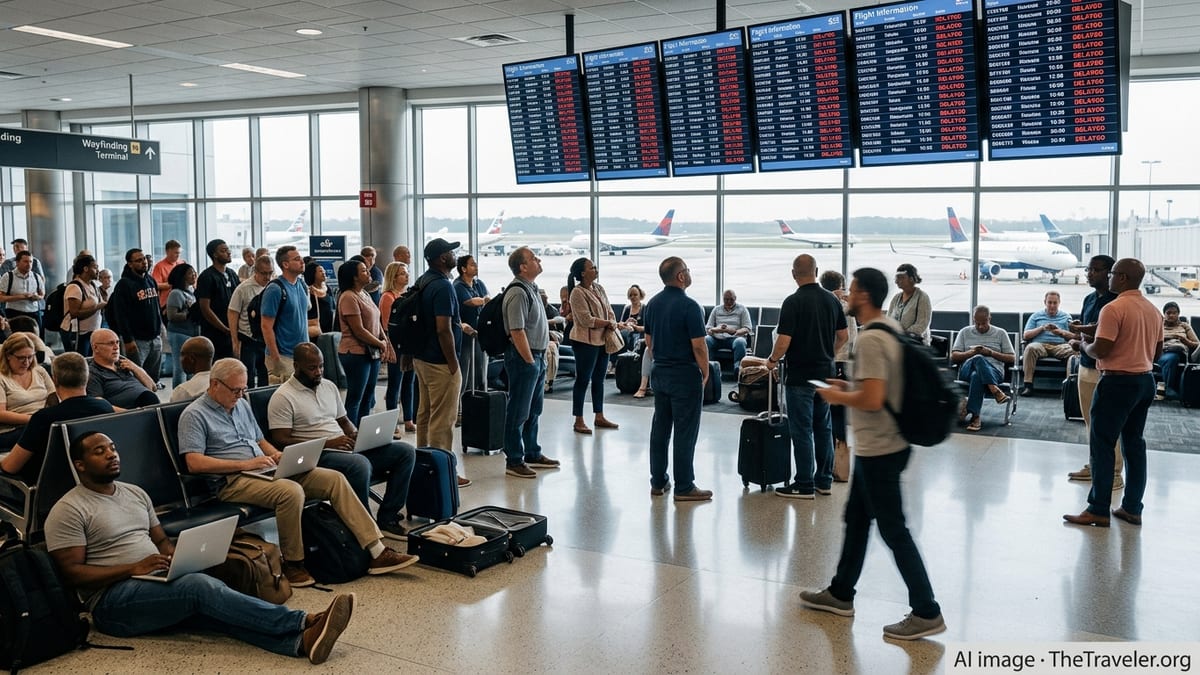
Multiple Carriers Report Delays Out of Albuquerque
Operational data from flight tracking and airline schedule platforms indicates that SkyWest, Southwest and United are each contending with delayed operations at Albuquerque International Sunport, with a combined total of about 28 flights affected throughout Monday. The irregular operations involve both departures and arrivals, complicating travel plans for passengers who rely on Albuquerque as a connecting point.
Southwest, which handles roughly half of the passenger traffic at Albuquerque International Sunport according to recent airport statistics, appears to be bearing a significant share of the delays. Several of its flights linking Albuquerque with major cities are operating behind schedule, with gate departure and arrival times pushed back from their original plans.
United and SkyWest, which together provide important regional and national connectivity, are also listed with delayed services in and out of Albuquerque. These disruptions add pressure on already busy hub operations elsewhere in the network, particularly at large connecting airports that funnel passengers across the country.
Hub Cities From Dallas to Baltimore See Knock-On Effects
The impact of Monday’s delays stretches beyond New Mexico. Flights linking Albuquerque with Dallas, Phoenix, San Francisco, Austin and Baltimore are among those affected, according to flight tracking boards and schedule databases. These routes act as feeders into dense national networks, which means a late arrival at one airport can cascade into further schedule changes down the line.
On the Dallas route, tracking information shows at least one Southwest service between Albuquerque and Dallas Love Field operating behind its planned departure time, narrowing connection windows for travelers continuing to East Coast or Midwest destinations. Similar patterns appear on Albuquerque to Phoenix services, where Southwest and partner-operated flights are showing adjusted times that differ from the original schedules.
Connections to West Coast and East Coast cities are also being squeezed. Flights that normally provide onward links from Albuquerque through San Francisco and Baltimore to other domestic and occasional international destinations are posting later-than-planned arrivals or departures. In practical terms, this means more passengers facing rebookings, tight connections or extended time in transit.
Weather, Congestion and Network Complexity Play a Role
Publicly available information from federal aviation and meteorological sources shows that parts of the central United States and several hub airports, including Dallas-area facilities, have been coping with pockets of unsettled weather and periods of traffic management. When those issues intersect with peak travel times, even modest slowdowns can reverberate through airline schedules.
Regional carriers such as SkyWest are particularly exposed when conditions deteriorate at multiple airports on a given day. With aircraft and crews cycling quickly between smaller and larger markets, a delay early in the day can carry forward through several subsequent legs. That pattern appears to be reflected in Monday’s operations, where SkyWest flights tied to larger partners are listed with late departures and arrivals relative to their timetables.
For Southwest and United, the challenge lies in maintaining tight turn times for aircraft that operate a string of short- and medium-haul segments. Schedule databases illustrate how a single late arrival into Albuquerque can ripple into departures for cities such as Phoenix, Austin or San Francisco, forcing ground teams to compress procedures or accept schedule slippage to maintain safety margins and required maintenance checks.
Passengers Face Missed Connections and Extended Travel Times
For travelers, the operational realities translate into longer queues, revised itineraries and in some cases missed connections. Passengers booked on delayed Albuquerque departures to Dallas and Phoenix face heightened risk of misconnecting with evening banks of flights at those hubs, particularly those headed to smaller regional destinations with limited daily service.
Those arriving into Albuquerque on behind-schedule flights from West Coast and Midwest cities may also see their onward plans disrupted. Travelers using Albuquerque as a connection point to reach Texas or East Coast destinations such as Baltimore could experience longer layovers or the need to shift to later flights if seats are available.
Publicly accessible airline customer guidance generally recommends that passengers impacted by delays monitor their booking status through mobile apps or airport kiosks and remain alert to gate changes or rolling departure-time adjustments. On busy days, rebooking options can narrow quickly, especially on popular routes like Albuquerque to Dallas, Austin or Phoenix that serve as important links for both leisure and business travelers.
Albuquerque Sunport’s Role in the Regional Network
The current round of delays underscores the central role of Albuquerque International Sunport in the air network of the Southwest and Mountain West. Recent airport statistics show that Southwest holds the largest share of passenger traffic at the facility, with United and its regional partners, including SkyWest, representing another significant portion of the market.
Because Albuquerque connects to a mix of major hubs such as Dallas, Phoenix and San Francisco, as well as key state capitals like Austin, disruptions there can influence travel patterns across a wide geographic area. Even when the number of delayed flights is relatively modest, the high percentage of connecting passengers on certain routes can magnify the overall impact.
As Monday’s schedule continues to evolve, publicly available tracking boards indicate that airlines are adjusting departure times and aircraft assignments in an effort to absorb the irregular operations. Travelers planning to pass through Albuquerque International Sunport in the coming hours are likely to encounter changing departure estimates and are being encouraged through online channels to verify the latest status of their flights before heading to the airport.