


More news on this day
East Asia is facing severe disruption as Tropical Storm Mekkhala and Extratropical Cyclone Higos unleash torrential rain and strong winds over Japan and Taiwan, prompting mass evacuations, widespread transport cancellations and fresh travel advisories across the region.
Get the latest news straight to your inbox!
Storm Pair Batters Japan and Taiwan
Publicly available information from meteorological agencies and regional media indicates that Mekkhala, now downgraded from typhoon status to a strong tropical storm, has swept past Taiwan and into waters south of Japan, while Higos has transitioned into a compact but powerful extratropical system tracking east-northeast off Honshu. Together, the storms have injected deep tropical moisture into the seasonal rain front, driving intense downpours over wide areas.
In Taiwan, Mekkhala’s heaviest rain bands crossed southern and central counties on Friday and Saturday, inundating low-lying districts, triggering landslides in mountain areas and leaving multiple communities isolated. Reports indicate that at least two people have died in flood-related incidents, with search and rescue teams continuing to monitor swollen rivers and unstable slopes as rainfall totals climb.
Across the East China Sea, Japan is contending with overlapping hazards as the moisture from Mekkhala interacts with Higos and the baiu seasonal front. Heavy rain has been reported from Kyushu through Shikoku and into the Tokai and Kanto regions, with localized totals already surpassing typical monthly averages in parts of Shizuoka, Kanagawa and Chiba. The complex interaction between the two systems is complicating forecasts, with meteorologists warning that additional bands of torrential rain could form through the weekend.
Analysis shared by storm-tracking services suggests that while Higos is weakening over cooler waters, its broad wind field continues to enhance onshore gales and high seas along Japan’s Pacific coast. Mekkhala, meanwhile, remains the primary driver of extreme rainfall, with forecasters cautioning that its slow movement and interaction with the frontal boundary may prolong dangerous conditions even as the storm’s peak winds ease.
More Than Two Million Ordered to Evacuate
Across southern and western Japan, evacuation information has been issued at an unprecedented scale as local governments respond to a growing number of landslides, overflowing rivers and urban flash floods. According to multiple news outlets citing official data dashboards, more than 2.2 million residents have been urged or instructed to leave their homes in vulnerable districts, particularly in Kyushu and the Nansei island chain.
In addition to these large-scale actions, targeted alerts have expanded into central Japan. Municipalities in Shizuoka, Kanagawa and Chiba prefectures have elevated their warning levels as rain gauges have recorded intense, short-duration downpours and soils become saturated. On Tokyo’s outlying Izu Islands and parts of coastal Chiba, the national warning system has reached its second-highest tier for landslide risk, signaling that evacuations should already be complete in the most exposed locations.
In Taiwan, local governments moved earlier in the week to close schools and offices in areas flagged for severe weather, keeping millions of people at home at the height of Mekkhala’s passage. Television footage and social media posts reviewed by regional outlets show flooded streets, stranded vehicles and emergency crews assisting residents through waist-deep water in southern cities such as Kaohsiung and Tainan.
Authorities across both jurisdictions have emphasized the risk of so-called stationary rain bands, in which intense showers persist over the same area for hours, rapidly overwhelming drainage systems. With rivers still rising and reservoirs releasing water, disaster management agencies are warning that the most serious flooding and landslides can occur after the heaviest rain has passed, especially overnight when visibility and situational awareness are reduced.
Flights Scrapped and Rail Networks Disrupted
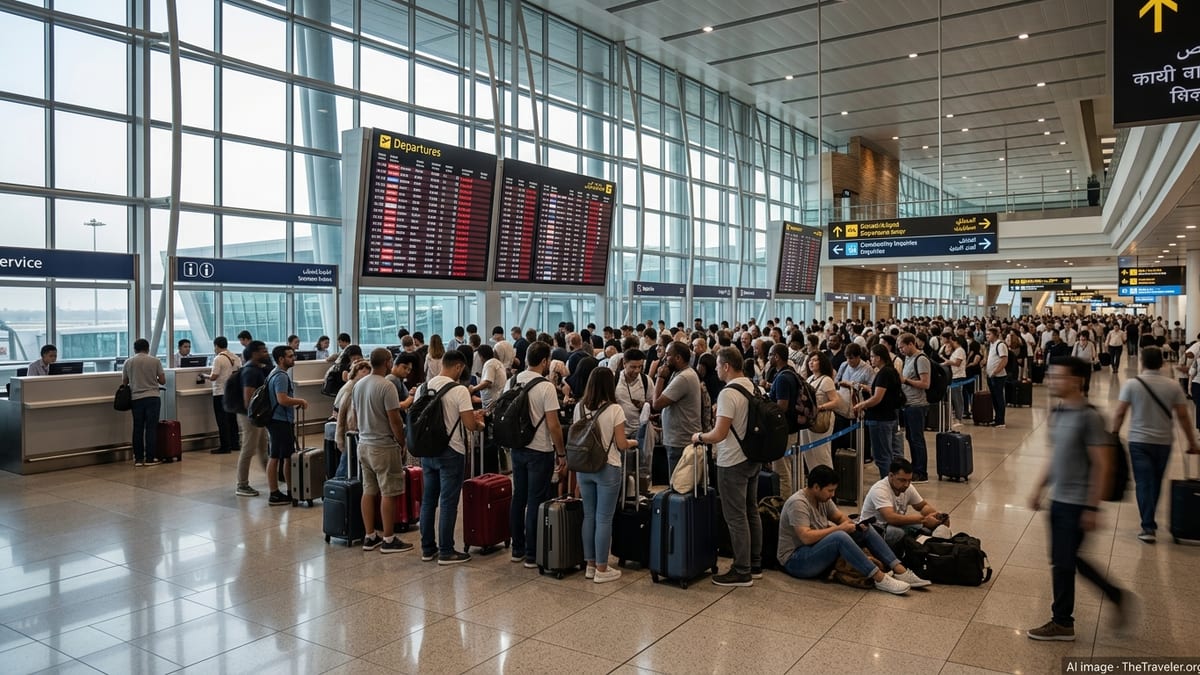
Transport operators across East Asia have reacted by cancelling or curtailing services as conditions deteriorate. Japanese media and airline advisories reviewed on Saturday indicate that more than 200 domestic and regional flights have been cancelled so far, affecting major hubs including Tokyo Haneda, Narita, Osaka Itami, Kansai, Fukuoka and Naha. Some carriers have also preemptively suspended services to and from smaller airports in the Amami and Okinawa island chains, which were closest to Mekkhala’s projected track.
In Taiwan, carriers adjusted schedules at Taoyuan, Songshan and Kaohsiung airports, with dozens of flights cancelled or delayed as crosswinds strengthened and visibility dropped. Ferry links to outlying islands have been suspended in many cases, cutting sea access to communities already grappling with flooded roads and debris-strewn coastal routes.
Japan’s rail operators are likewise signalling major disruption. Public service notices from East Japan Railway and other companies show that conventional lines in the Kanto, Tokai and Kansai regions are operating on reduced or irregular timetables due to speed restrictions, fallen branches and localized flooding near tracks. Several private railway and subway lines have announced temporary suspensions along exposed coastal sections and in tunnel approaches where water levels are being closely monitored.
High-speed rail services are under particular scrutiny. Sections of the Sanyo and Kyushu Shinkansen corridors have been subject to temporary suspensions or reduced frequencies as wind gusts have increased and track inspections reveal minor damage. Operators are urging passengers to check status updates before travelling and to expect sudden changes during the day as squall lines move through.
Fresh Travel Alerts and Safety Guidance for Visitors
The scale of the disruption has prompted updated travel advisories from foreign ministries and travel risk consultancies, which are warning visitors to Japan and Taiwan to reconsider nonessential journeys through the affected regions over the coming days. Guidance reviewed by TheTraveler.org highlights the potential for cascading impacts, including power cuts, intermittent telecommunications outages and extended delays in restoring full transport services after the storms move away.
Risk assessment briefings for Japan note that the country’s dense transport network can experience significant knock-on effects when multiple lines shut down at once, especially in major cities where commuters rely heavily on rail. Travellers are being advised to allow extra time for transfers, carry sufficient cash and essential medications in case of prolonged waits, and keep mobile devices fully charged when possible.
For Taiwan, destination reports emphasize that hillside communities and scenic mountain routes are particularly susceptible to secondary hazards such as rockfalls and road washouts long after the center of a storm has passed. Visitors planning to drive in rural areas over the coming week are being urged to monitor local weather bulletins, avoid crossing flowing water and heed any closures of highways and forest roads.
Travel insurers and corporate security providers are also circulating updated bulletins referencing Mekkhala and Higos by name, reminding policyholders that itinerary changes and cancellations caused by severe weather may be covered under certain plans. However, travellers are being encouraged to review policy wording carefully and to document any official transport cancellations if they intend to submit claims.
Outlook: Lingering Flood Risk Even as Winds Ease
Forecast models compiled by regional meteorological agencies and international storm trackers suggest that Higos will continue to accelerate away from Japan over the Pacific as a strong extratropical cyclone, gradually losing intensity over cooler waters. Mekkhala is expected to curve northeastward south of the main Japanese islands before weakening further, but its broad rain shield and interaction with the baiu front mean that dangerous conditions are likely to persist for several days.
Hydrological bulletins highlight particular concern for river basins in central and eastern Honshu, where runoff from upstream mountains typically lags peak rainfall by many hours. Even if skies begin to clear intermittently, forecasters caution that river levels may continue to rise and levees may face sustained pressure, increasing the possibility of overtopping or localized failures.
In Taiwan, attention is shifting from active rainfall bands to damage assessment and recovery. Emergency crews are inspecting hillsides, bridges and critical infrastructure for signs of instability, while utilities work to restore any remaining power outages. With the region approaching the height of the western Pacific typhoon season, hazard specialists are urging residents and travellers alike to treat Mekkhala and Higos as a reminder of the need for preparedness, including keeping emergency kits stocked and staying familiar with local warning systems.
For those currently travelling or planning trips to East Asia, the storms underscore how quickly conditions can change during the summer months. Experts stress the importance of flexible itineraries, real-time monitoring of weather and transport information, and a willingness to postpone or reroute journeys when forecasts point to escalating risk.