


More news on this day
Slow-moving thunderstorms over the Denver metro area triggered widespread disruption at Denver International Airport, with nearly 1,000 flights delayed as air-traffic managers imposed ground restrictions and airlines struggled to reposition crews and aircraft.
Get the latest news straight to your inbox!
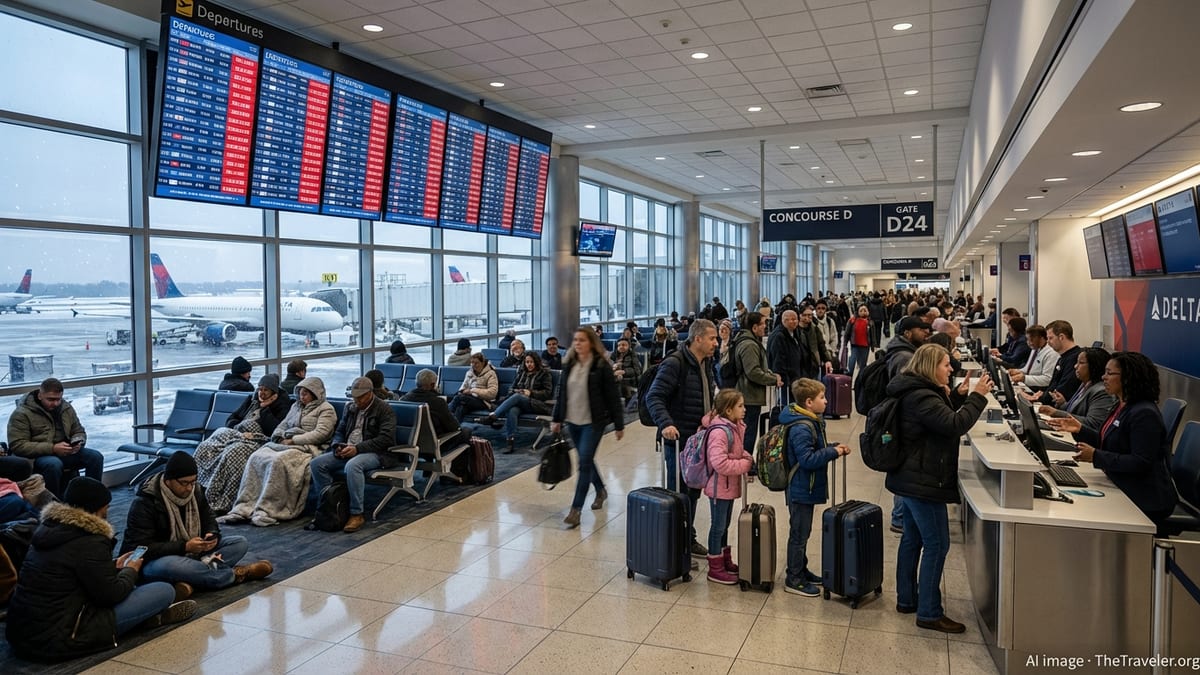
Severe Weather Triggers Ground Delay Program
According to publicly available aviation data and traffic management advisories, a band of strong thunderstorms built up along the Front Range, bringing lightning, heavy rain and shifting winds in the vicinity of Denver International Airport. As the storms intensified, federal air-traffic managers implemented a ground delay program for Denver, requiring flights bound for the airport from across the country to be held at their departure points or significantly slowed en route.
Operations information indicates that arrival rates into Denver were sharply reduced during the peak of the storms, limiting the number of aircraft that could safely land each hour. When arrival capacity drops but scheduled traffic remains high, flights stack up both in the air and on the ground, forcing controllers to meter traffic into the airport.
Tracking services showed departure queues growing through the afternoon and evening hours as airlines waited for new takeoff slots to be assigned. Some aircraft already in the Denver area were placed in holds while routing around convective cells, adding further delay to inbound schedules.
Meteorological briefings for aviation users had signaled the risk of thunderstorm-related disruption ahead of time, but the precise timing and intensity around the airport created a narrow window in which operations were repeatedly slowed or paused for safety.
Nearly 1,000 Flights Affected in Peak Summer Season
Flight-status dashboards for Denver International Airport showed that, over the course of the day, close to 1,000 flights were delayed, with some cancellations also recorded as the weather pattern lingered over key arrival and departure corridors. The majority of impacts fell on domestic services, reflecting Denver’s role as a major connecting hub for travel across the western and central United States.
Delays ranged from minor schedule slips of 30 to 45 minutes to multi-hour disruptions that pushed some evening arrivals toward or past midnight. In a number of cases, late-arriving aircraft and crews led to subsequent flights being scrubbed altogether when operating hours or required rest periods could not be maintained.
The disruption came at the height of the summer travel season, when airports such as Denver typically run near their maximum planned capacity. When convective weather forces a reduction in that capacity, congestion builds quickly and can take many hours to unwind, even after storms weaken or move away from the field.
Airline network maps suggest that the knock-on effects extended well beyond Colorado, as connecting passengers missed onward flights and aircraft scheduled to operate late-night departures from Denver were out of position for early-morning services from other cities.
Passengers Face Long Lines and Missed Connections
Reports shared publicly by travelers described crowded concourses, lengthy lines at customer-service counters and rebooking desks, and scarce available seats on alternative flights. With so many aircraft affected in a compressed time window, options for same-day re-accommodation were limited on many routes, particularly to smaller regional destinations with only a few daily departures.
Many travelers reported waits of several hours to receive updated departure times as airlines coordinated with air-traffic managers to secure new slots. Others described being held on board aircraft already at the gate or on the taxiway while ramp operations were temporarily halted for lightning in the area, a standard safety precaution that prevents ground crews from working near aircraft.
Publicly available data on hotel availability around Denver International Airport showed rising same-day bookings as delays mounted, indicating that some passengers opted or were advised to stay overnight. Social media posts from across the country pointed to missed connections through Denver affecting trips to both coasts and to resort destinations in the Rocky Mountain region.
Travel forums and airline customer channels reflected a familiar mix of frustration over disrupted plans and recognition that intense thunderstorms can temporarily shut down the safest paths into and out of a busy hub.
How Thunderstorms Disrupt a Major Hub Airport
Denver International Airport is particularly exposed to fast-developing thunderstorms that form along Colorado’s Front Range, especially in late spring and summer. Aviation weather case studies for the Denver airspace highlight how scattered cells can quickly grow into organized lines, blocking standard arrival and departure routes and forcing controllers to reroute or slow traffic.
When storms sit near the airport itself, the impact goes beyond the sky. Lightning within a defined radius requires ramp operations to stop, meaning ground crews cannot guide aircraft, load baggage or connect jet bridges. Even short closures of ramp activity can cause substantial backup when dozens of aircraft are scheduled to push back or arrive in the same time frame.
Traffic management advisories from recent Denver weather events show that, in such conditions, national airspace managers may resort to capping or tunneling arrival flows and imposing broad ground delay programs affecting flights from multiple regions. These tools are designed to keep airborne holding to a minimum and to match the number of incoming aircraft with what the airport can safely handle during adverse conditions.
Once thunderstorms move away and ramp operations resume, it can still take several hours to work through accumulated queues. Crews approaching duty-time limits, aircraft needing maintenance checks after extended ground time, and gate shortages all contribute to a slower return to normal schedules.
What Travelers Can Expect in the Coming Days
Forecast discussions indicate that the pattern favorable for afternoon and evening thunderstorms around Denver has not entirely broken down, suggesting the potential for additional periods of weather-related constraints in the short term. While a repeat of the nearly 1,000-flight disruption is not guaranteed, airlines and passengers are likely to remain alert to rapidly changing conditions.
Industry guidance commonly recommends allowing extra connection time through storm-prone hubs during peak convective season, particularly for late-day itineraries that are more vulnerable to the cumulative effects of earlier delays. Travelers with flexible schedules often choose earlier departures to increase the chances of completing their journeys the same day if storms flare later.
Publicly available operational summaries from previous summers at Denver and other major hubs show that while the majority of flights still operate close to schedule, days with intense thunderstorms can produce disproportionate impacts across the network. The latest disruption at Denver International Airport underscores how a few hours of severe weather in one region can ripple across the country’s tightly linked aviation system.
As airlines work through the backlog of passengers and aircraft, schedules at Denver are expected to gradually stabilize, although residual delays may persist into subsequent days as crews and equipment return to normal rotations.