


More news on this day
Thunderstorms sweeping across the Midwest and Mid-Atlantic have triggered 4,633 flight delays and 124 cancellations within, into, or out of the United States today, disrupting schedules at major hubs including Chicago, Detroit, and Washington’s Reagan National Airport.
Get the latest news straight to your inbox!
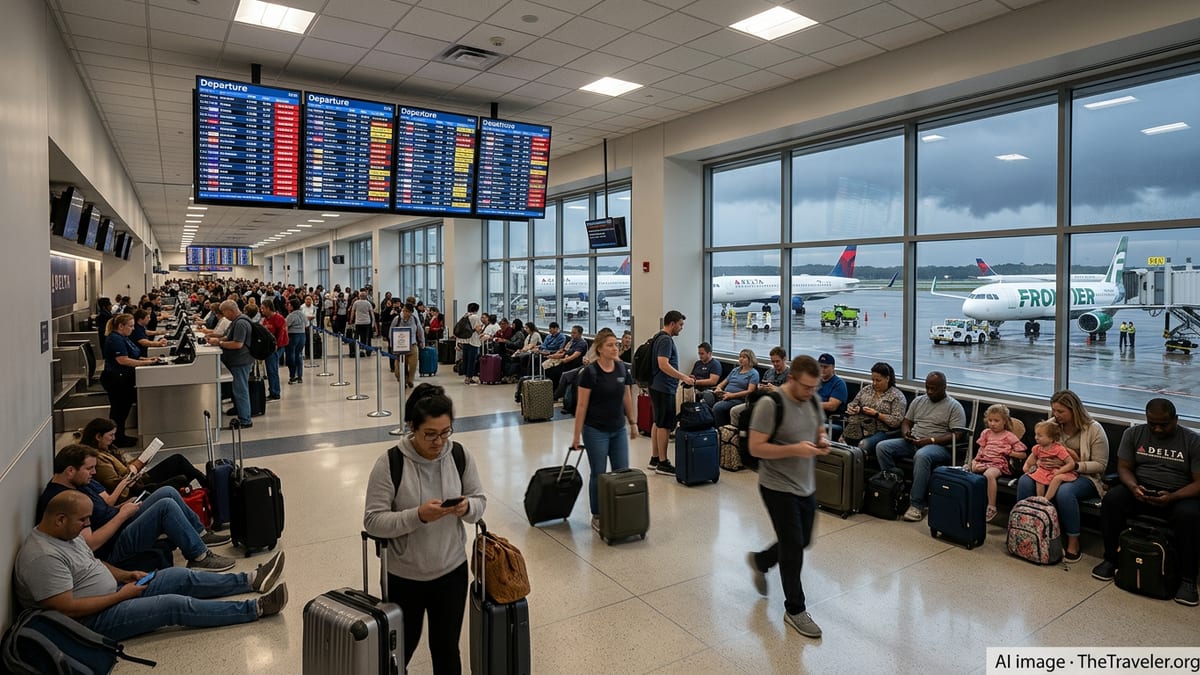
Storm Cells Snarl a Busy U.S. Air Travel Day
Real-time aviation data shows that 4,633 flights have been delayed and 124 canceled across the United States today, underscoring how quickly convective weather can ripple through the national air network. The latest figures, compiled from live tracking platforms, point to widespread schedule disruptions rather than a concentrated shutdown at any single airport.
Published coverage notes that while the national cancellation total remains relatively modest compared with some severe-weather days, the volume of delays is high enough to affect travelers in nearly every region. These numbers sit within a broader global context of tens of thousands of delayed flights, but the United States accounts for a significant share of today’s operational strain.
Industry data and past analyses indicate that summer thunderstorm patterns are a recurrent driver of such disruptions, especially during peak afternoon and evening hours when traffic volumes are highest. Even when storms are short-lived, the knock-on effects can persist for hours as airlines work through backlogs of aircraft and crews.
Chicago and Detroit Confront Thunderstorm-Driven Gridlock
Thunderstorms over the upper Midwest have been a key trigger for today’s problems, repeatedly slowing departures and arrivals at Chicago and Detroit. Federal aviation status pages list both Chicago O’Hare International and Detroit Metropolitan Wayne County Airport among facilities affected by convective weather, with traffic management initiatives and flow restrictions used to maintain safety in crowded airspace.
Reports from recent storm events show how quickly operations at Chicago can deteriorate when thunderstorm cells sit over key arrival and departure corridors. On several occasions this summer, departures to O’Hare from across the contiguous United States have been delayed by an hour or more as air traffic managers temporarily held flights on the ground while lightning and heavy rain moved through the area.
Detroit has also seen elevated delay levels during recent weather systems, emerging as one of the country’s most affected airports on some stormy days. Published travel coverage highlights instances where Detroit registered the highest combined number of delays and cancellations nationwide, underscoring its role as a critical hub that can amplify problems across the network when thunderstorms roll through southeastern Michigan.
Reagan National and the Mid-Atlantic Feel the Ripple Effects
In the Mid-Atlantic, Washington’s Ronald Reagan National Airport has been facing its own round of weather-linked strain. Flight-tracking statistics for recent storm systems show hundreds of delays in a single day at the compact riverfront airport, which operates with tightly constrained runway and airspace capacity even in ideal conditions.
Thunderstorms moving east from the Midwest frequently reach the Washington region later in the day, often coinciding with the evening departure push. Publicly available status information from federal air traffic portals has repeatedly flagged the Washington area for weather and volume-related delays this season, placing Reagan National alongside nearby Dulles International and Baltimore/Washington International in experiencing intermittent ground stops and arrival metering.
Travel commentary from the region points out that Reagan National can be particularly vulnerable when afternoon storms coincide with already dense schedules. Because there is limited room to absorb disruptions, even a short ground stop or a reduction in arrival rates can translate into a backlog of delayed flights and a higher likelihood of cancellations on regional routes.
How Thunderstorms Disrupt the Air Travel System
Thunderstorms create operational challenges that reach far beyond simple rain or low clouds. Federal performance data explains that a significant portion of delays are categorized under the national aviation system, a broad label that includes capacity reductions driven by non-extreme weather, traffic management constraints, and airspace restrictions. Convective storms fall squarely into this category when they force controllers to reroute aircraft or slow down arrival and departure flows.
Lightning, wind shear, and rapidly changing visibility can force temporary suspensions of ramp operations while ground crews clear the tarmac, delaying boarding, refueling, and baggage handling. At the same time, en route thunderstorms can close off key jet routes, requiring aircraft to fly longer paths around hazardous cells, which further strains capacity in unaffected sectors and adds to overall delay minutes.
Historical consumer reports from the U.S. Department of Transportation show that weather consistently ranks among the top contributors to both delays and cancellations, alongside carrier-related issues such as maintenance and crew availability. When intense storm systems form along heavily traveled corridors, the combination of reduced capacity and tight scheduling can produce large numbers of delayed flights even on days when outright cancellations remain comparatively limited.
What Travelers Can Expect and How to Navigate Disruptions
For passengers, a day with 4,633 delays and 124 cancellations often translates into missed connections, rebooked itineraries, and extended time in terminals. Travel rights organizations note that when disruptions are caused primarily by thunderstorms and associated air traffic control measures, airlines in the United States are generally not required to provide cash compensation, though they may still be obligated to offer rebooking or refunds in certain circumstances.
Consumer advocates and airline guidance consistently recommend that travelers monitor their flights through airline apps and sign up for push notifications, especially on days when thunderstorms are in the forecast for major hubs such as Chicago, Detroit, or Washington. Early-morning departures are frequently advised during storm-prone seasons, as weather disruptions tend to build through the afternoon and evening and can compound earlier delays.
Published analyses of recent severe-weather events in U.S. aviation also highlight the importance of flexibility. Passengers with time-sensitive connections may benefit from accepting reroutes through less congested hubs, even if the itinerary appears longer on paper. Others may choose to proactively adjust their plans when airlines issue weather waivers for affected airports, allowing changes without typical penalty fees.
As today’s thunderstorms continue to move across the central and eastern United States, the total number of delays and cancellations may shift, but the overall pattern remains clear: localized storm systems can exert nationwide pressure on air travel, particularly when they strike at already busy hubs that anchor the domestic route network.
Live U.S. flight delay and cancellation statistics
Travel and Tour World: 4,633 delays and 124 cancellations report
FAA National Airspace System current status summary
AirHelp analysis of U.S. thunderstorm-related flight disruptions