


More news on this day
Thunderstorms rolling across the Denver metro area have disrupted operations at Denver International Airport, prompting a temporary ground stop and triggering widespread delays for flights into and out of one of the nation’s busiest hubs.
Get the latest news straight to your inbox!
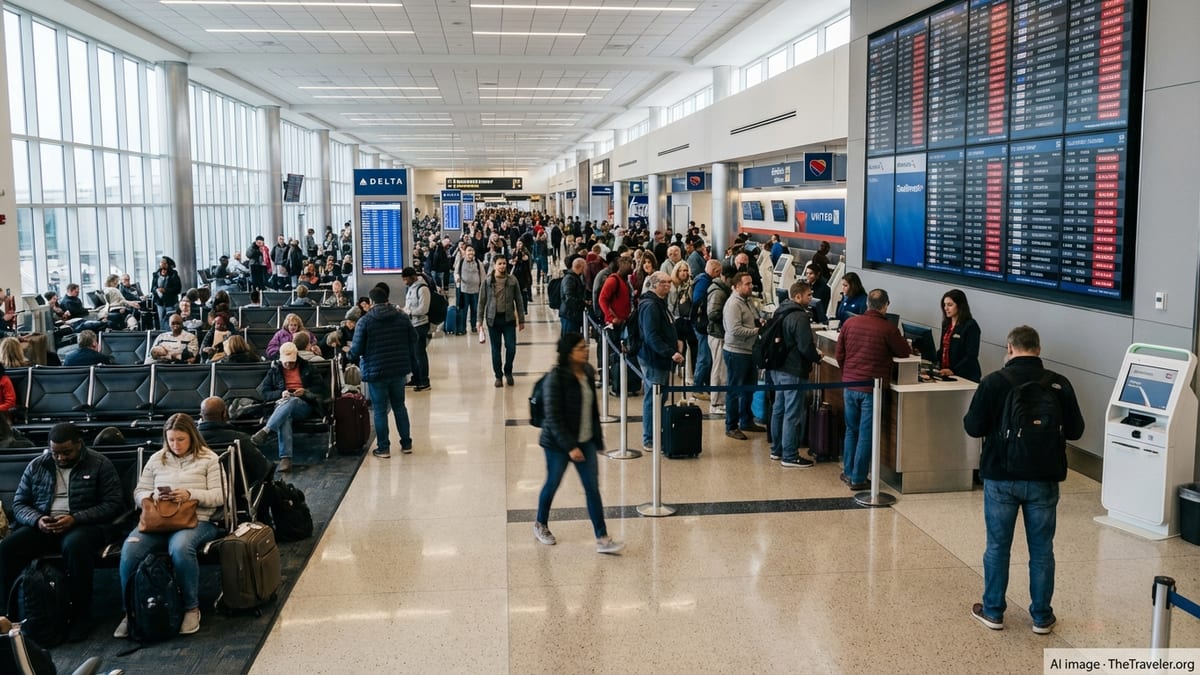
Severe Weather Halts Departures at Major Rocky Mountain Hub
According to published coverage from regional and national outlets, a fast-building line of severe thunderstorms moved over the Denver area on Monday afternoon, producing heavy rain, frequent lightning and pockets of damaging hail. As the storms intensified in the early afternoon, air traffic management programs were imposed and a ground stop was put in place at Denver International Airport, temporarily halting many departures and reducing the rate of arrivals.
Reports indicate that the weather disruption quickly rippled through the terminal, with departure boards filling with delay notices as thunderstorms lingered over key arrival and departure corridors. Denver International Airport, commonly known as DIA, serves as a critical connecting hub for domestic and transborder traffic, which meant that the slowdown in Colorado reverberated across airline networks nationwide.
Early assessments from flight-tracking and delay-monitoring services point to hundreds of flights affected over the course of the afternoon and evening period. While many services were delayed rather than cancelled outright, the knock-on effects included missed connections and extended waits for passengers already navigating peak late-spring travel.
Publicly available information from storm monitoring agencies shows that the thunderstorms developed rapidly along the Front Range, with cells repeatedly forming and moving across populated parts of the metro area, including the airport’s expansive airfield northeast of downtown Denver.
Hail, Lightning and Low Visibility Complicate Airfield Operations
Meteorological summaries describe the system as a classic early summer setup for the High Plains, with warm, unstable air colliding with higher-level disturbances to generate intense convection. In parts of the Denver metro area, large hail and torrential downpours were reported, adding to the operational challenges for both airlines and airport crews.
When thunderstorms sit over or near an airport, safety protocols generally limit or suspend some ramp activities, as lightning poses a direct hazard to ground staff. Industry guidance notes that during active lightning, tasks such as fueling, baggage loading and aircraft marshaling may be slowed or paused, which in turn extends turnaround times and contributes to rolling delays.
In addition to lightning concerns, bursts of heavy rain and brief reductions in visibility can require increased spacing between aircraft taking off and landing. Air traffic management documents on Denver-area storm patterns highlight that prolonged thunderstorms near the airport can force reductions in arrival rates and lead to a buildup of holding patterns or ground delays across the region.
On the airfield itself, the combination of wet pavement, gusty winds and rapidly changing storm cells often leads controllers and airlines to adjust runway configurations and, in some cases, to keep aircraft at gates until conditions stabilize. These layered restrictions can compound quickly at a major connecting hub such as Denver.
Ripple Effects Across Airline Networks and Peak-Season Travel
Real-time data from commercial flight-tracking platforms showed disruption radiating outward from Denver to destinations across the Midwest, Mountain West and West Coast as the storm-related slowdown took hold. Aircraft and crew scheduled to operate subsequent legs were delayed leaving Denver, tightening connection windows and forcing rebookings on later flights.
Operational analyses frequently note that hubs like Denver play an outsized role in maintaining schedule reliability. When departures are held for thunderstorms, airlines may need to reshuffle aircraft rotations, adjust crew assignments and sometimes trim schedules for the remainder of the day to restore balance. This can lead to follow-on delays in cities far removed from the original weather event.
Travel and aviation observers point out that the latest disruption in Denver comes during a broader period of weather-linked strain on the U.S. aviation system, with recent waves of severe thunderstorms also affecting major hubs in Texas, the Midwest and along the East Coast. Each localized storm outbreak places additional stress on a system already supporting high passenger volumes at the start of the summer travel season.
Passengers booked on multi-leg itineraries through Denver reported, through social media posts and travel forums, a mix of extended gate holds, aircraft waiting for ramp clearance and missed onward flights as schedules stretched deeper into the evening hours.
Guidance for Travelers Facing Weather-Related Delays
Airline customer advisories and federal consumer information emphasize that weather-related disruptions such as thunderstorms are generally classified as circumstances outside carrier control, which limits mandated compensation. However, most airlines encourage passengers to monitor their reservations closely via mobile apps and to take advantage of free same-day changes when flexible rebooking policies are activated.
Travel industry guidance suggests that passengers transiting through storm-prone hubs like Denver during the late spring and summer months can reduce risk by allowing longer connection times, especially on afternoon and evening flights when thunderstorms most often peak along the Front Range. Morning departures are often recommended because they are less likely to be affected by daily storm development and earlier operational ripple effects.
Consumer advocates also advise checking flight status repeatedly on the day of travel rather than relying solely on the original schedule. When widespread delays appear, travelers may find better options by contacting airlines through mobile chat functions or call centers instead of waiting at crowded gate podiums, particularly when rebooking is needed for missed connections.
With more unsettled weather in the forecast for the central United States in coming days, aviation planners and travelers alike are likely to keep a close watch on conditions around Denver International Airport, where another round of slow-moving thunderstorms could once again test the resilience of airline schedules at one of the country’s key high-altitude gateways.