


More news on this day
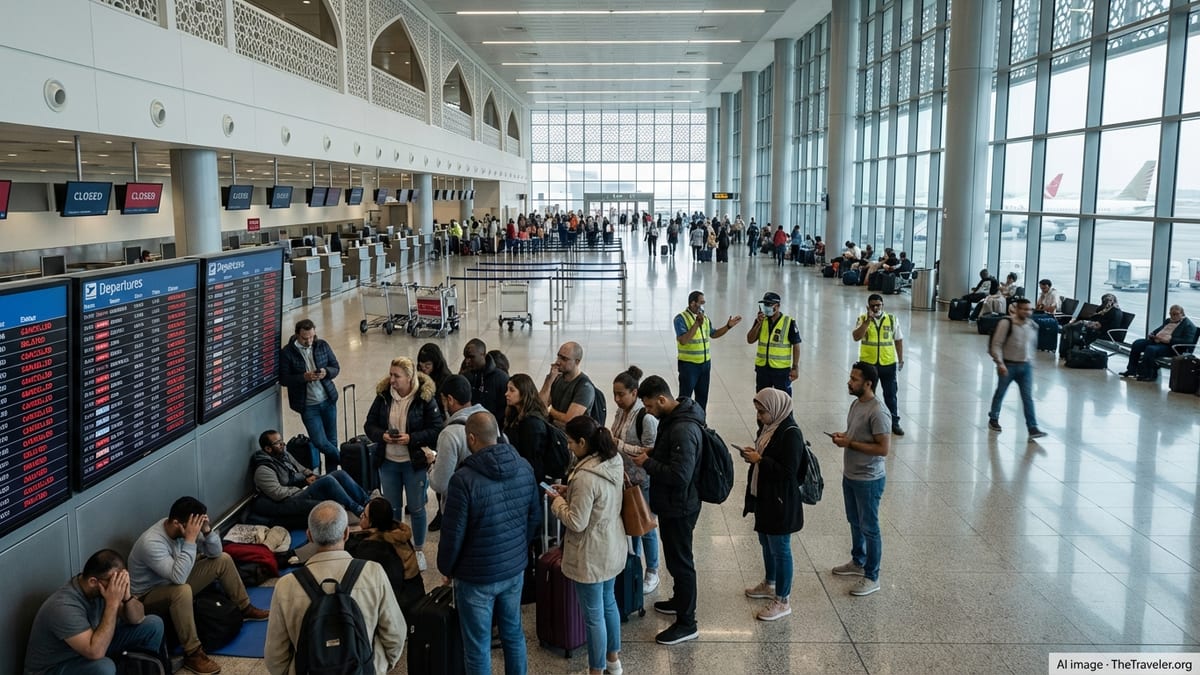
Israeli travelers are facing mounting disruption at Tel Aviv’s Ben Gurion Airport as an unprecedented deployment of U.S. Air Force refueling jets occupies much of the facility’s limited apron space, reducing civilian capacity and triggering delays, cancellations and higher fares during an already tense travel season.
Get the latest news straight to your inbox!
Military Tankers Take Over Key Parking Stands
Publicly available reporting indicates that dozens of U.S. military aircraft, including aerial refueling tankers, have been positioned at Ben Gurion since late February as part of expanded regional operations. Satellite imagery and photographs published across international and Israeli media show long rows of U.S. Air Force jets lined up on the civilian airport’s ramps and taxiways, effectively turning large portions of the commercial hub into a forward operating site.
Coverage in regional and aviation outlets describes a fleet that includes KC-135 Stratotankers and KC-46 Pegasus aircraft, which require wide safety buffers, specialized servicing and secure zones. Those demands have absorbed many of the airport’s contact gates and remote parking stands that would normally be used by Israeli and foreign airlines for passenger flights, leaving fewer options for carriers to position and turn aircraft.
Analyses shared by aviation officials in recent days suggest that more than half of Ben Gurion’s usual stand capacity is currently restricted due to the military build-up. Some local media have reported that as much as 70 percent of the airport’s apron and parking infrastructure is now dedicated or effectively blocked by U.S. and Israeli military activity, sharply limiting flexibility for civilian operations.
The deployment follows months of elevated tensions and air activity surrounding Iran and broader regional flashpoints. Flight-tracking data compiled by independent observers shows repeated tanker sorties launching from the Tel Aviv area toward Iraq and the eastern Mediterranean, underscoring Ben Gurion’s evolving role in U.S. and allied planning.
Capacity Cut to One-Third, With Peak Season Looming
According to recent statements highlighted in international wire service coverage, Ben Gurion is currently operating at roughly one-third of its normal capacity due to the presence of U.S. refueling aircraft and associated restrictions. The head of Israel’s Airports Authority has warned in local media that this reduced capacity could translate into “very heavy” cancellations and schedule cuts over the busy summer travel period if the situation continues.
Industry-focused reporting has also pointed to a sharp financial impact on Israel’s aviation sector. One aviation news outlet cited Airports Authority figures estimating revenue losses of around 248 million dollars over the past two months alone, a hit attributed to reduced passenger throughput, constrained flight schedules and lost fees from grounded or rerouted services.
For Israeli travelers, the effect is already filtering down into day-to-day journeys. Travel coverage and passenger accounts describe longer queues, more frequent last-minute gate changes and a noticeable uptick in departure delays, particularly in the late afternoon and evening waves when traffic traditionally bunches toward major hubs in Europe and North America.
Airlines are warning that with fewer slots and stands available, small disruptions can quickly cascade. A single delayed inbound aircraft now has fewer alternative parking options, complicating turnaround plans and making it likelier that follow-on departures will leave late or be rescheduled altogether.
Airlines Face Operational Headaches and Rising Costs
Public comments by senior Israeli civil aviation figures, reported across regional outlets, describe a commercial sector under mounting strain. Airlines are contending with curtailed access to Ben Gurion, new routing and scheduling constraints and heightened uncertainty over how long the military deployment will last. Some officials have cautioned that the current situation risks deterring foreign carriers that have yet to return to Israel at pre-crisis levels.
Reports from business and aviation media suggest that Israeli carriers have been forced to keep more aircraft outside the country or to rely heavily on overnighting jets at foreign airports to work around bottlenecks in Tel Aviv. That adds fuel, staffing and handling costs, which industry analysts expect will be passed on to passengers through higher fares, especially on popular European and North American routes.
Travel experts quoted in recent coverage note that the squeeze comes on top of already fragile connectivity. Several major international airlines have only partially restored service to Israel following earlier security-related suspensions, leaving local operators to shoulder a disproportionate share of outbound and inbound demand. With apron capacity now sharply constrained, their ability to grow or even maintain frequencies is limited.
Some route planners are reportedly exploring expanded use of Israel’s Ramon Airport near Eilat and other regional gateways as relief valves. However, the geographic distance from the country’s main population centers and more modest infrastructure mean such alternatives are unlikely to fully offset constraints at Ben Gurion in the short term.
Travelers Confront Delays, Cancellations and Uncertainty
For passengers, the military footprint at Ben Gurion translates into more than abstract capacity figures. Israeli news coverage and social media posts describe travelers arriving at the airport to find their flights delayed, rerouted to remote stands or, in some cases, canceled outright as airlines adjust to rapidly changing operational limits.
Late-day departures appear particularly vulnerable. Travel reporting notes that when an afternoon flight leaves Tel Aviv behind schedule, passengers can miss onward connections in Europe or the Gulf, forcing involuntary overnight stays and rebookings on crowded services the following day. With fewer flights operating overall, those displaced travelers have fewer options and may face extended delays before securing new seats.
Consumer advocates cited in local media encourage travelers to build in longer connection windows, monitor flight status apps closely and consider flexible tickets where possible, given the elevated risk of disruption. Some have also urged carriers to proactively communicate schedule changes earlier, arguing that clearer information can help passengers rearrange plans before they reach the airport.
Despite the challenges, traffic statistics from the Israel Airports Authority show that Ben Gurion remains the country’s primary international gateway, with hundreds of thousands of passengers still moving through the terminal each month. That combination of strong demand and constrained supply is likely to keep pressure on travelers until more capacity is freed or additional alternatives come online.
Longer-Term Questions Over Israel’s Air Gateway
The scale and duration of the U.S. deployment at Ben Gurion are raising broader questions about how Israel manages the balance between civilian and military aviation at its main international gateway. Publicly reported remarks from senior aviation officials in recent weeks have characterized the airport as having effectively become a U.S.-linked military base with limited civilian activity, a shift that many in the tourism and travel industry view with concern.
Separate coverage by international news agencies indicates that Washington has requested permission for its refueling aircraft to remain in Israel at least through the end of 2026, with some regional outlets suggesting the presence could extend longer depending on security developments. If that timeline holds, the current disruption for travelers may be a preview of a more prolonged period of constrained capacity.
Aviation analysts commenting in specialist publications argue that, over time, some traffic could migrate to secondary airports or be rerouted via regional hubs in Cyprus, Greece or the Gulf, eroding Ben Gurion’s status as a central connecting point for Israeli outbound travelers. Others note that Israel has previously invested heavily in moving most of its permanent air force operations to dedicated bases, specifically to avoid conflicts between military and civilian traffic at Tel Aviv.
For now, Israeli travelers and airlines remain caught between strategic military imperatives and the everyday need to keep people and commerce moving. As long as U.S. refueling jets continue to occupy prime real estate at Ben Gurion, delays, cancellations and higher costs are likely to remain a defining feature of international travel to and from Israel.