


More news on this day
American Airlines and United Airlines are preemptively trimming flights and expanding travel waivers for the U.S. East Coast, as forecasters warn of severe thunderstorms and aviation officials signal another round of heavy airspace congestion for some of the country’s busiest corridors.
Get the latest news straight to your inbox!
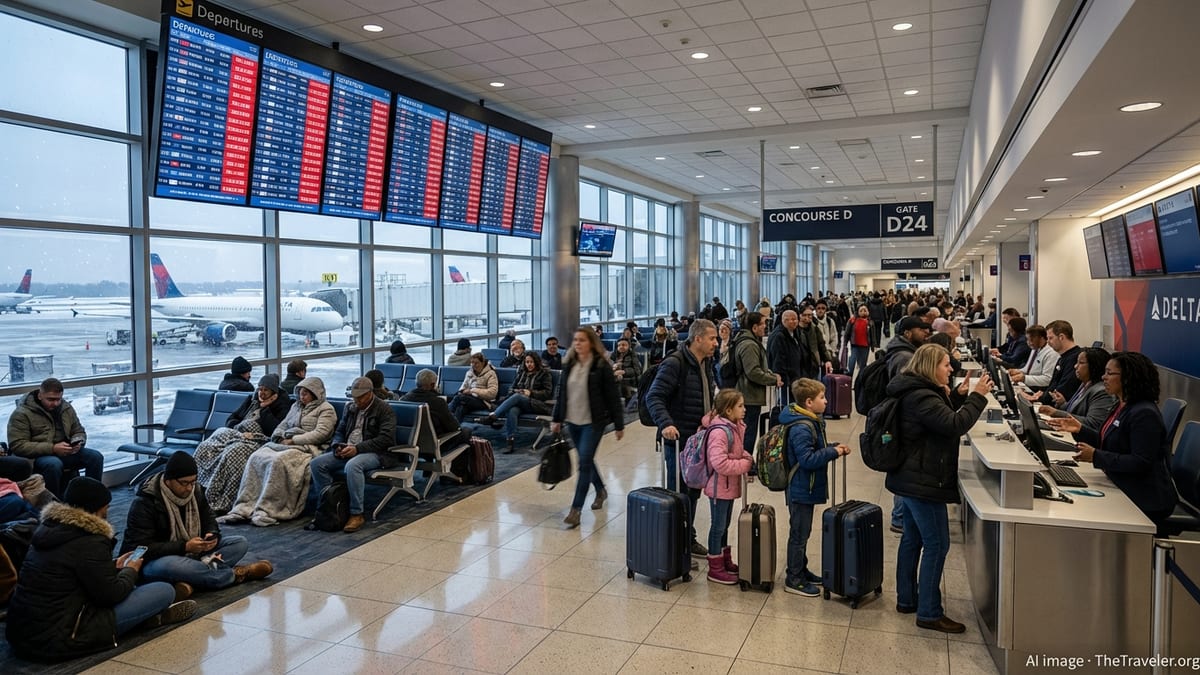
Carriers Move Early To Limit Widespread Disruptions
Publicly available travel alerts show American Airlines activating a flexible travel policy for customers scheduled to fly through multiple East Coast airports between July 20 and July 21, 2026, allowing affected travelers to change plans without additional change fees. The policy applies to a broad list of hubs and focus cities that typically feel the brunt of summer weather and traffic control programs, including airports along the Northeast and Mid-Atlantic corridor.
Separate tracking of airline waivers indicates United Airlines has also extended an “East Coast Thunderstorms Travel Waiver” that now covers departures between July 20 and July 23, 2026 on United and United Express flights. The waiver window follows an earlier series of advisories this month, signaling that the carrier expects the current storm pattern and associated air traffic management initiatives to continue affecting operations for several days.
These steps reflect a strategic shift toward canceling and consolidating flights before storms fully develop, rather than allowing large numbers of aircraft and crews to become stranded across the system. By trimming schedules in advance and encouraging voluntary rebooking, airlines are attempting to avoid the cascading delays and airport gridlock that have characterized several recent severe-weather episodes.
Industry data and recent performance reports suggest that overall cancellation rates for U.S. carriers have risen in the first half of 2026 compared with prior years, with weather and airspace congestion playing an outsized role. That backdrop has increased pressure on major airlines to demonstrate that they are taking proactive measures to manage forecast disruptions, particularly at chronically constrained East Coast hubs.
Storms, Congestion And Air Traffic Limits Drive Risk
Weather outlooks for the eastern United States point to another stretch of unstable summer conditions, with fast-moving thunderstorms, low clouds and high humidity combining to reduce runway capacity at major airports. In those conditions, the Federal Aviation Administration typically imposes ground delay programs and other flow restrictions that sharply cut hourly arrivals and departures in dense metropolitan areas.
Recent accounts from passengers and aviation observers describe days when airports such as Newark, Philadelphia, New York LaGuardia and Washington-area fields have operated under heavy traffic management initiatives, leading to diversions, lengthy tarmac waits and late-night cancellations. Reports from the weekend of July 18 to 19, 2026, highlight diversions into Boston and extensive disruption at Newark, as airlines attempted to reposition aircraft around fast-changing weather and airspace constraints.
Operators are particularly sensitive to the way thunderstorms can form quickly along the I‑95 corridor, closing key arrival and departure routes used by both domestic and transatlantic traffic. Once those routes are restricted, flights can back up across multiple time zones, creating knock-on effects for passengers whose trips do not begin or end on the East Coast but rely on connections through these hubs.
Travel advisories issued for Miami International Airport earlier in July, after storms and traffic restrictions triggered more than one hundred delays and a series of cancellations, illustrate how quickly operations can unravel when summer weather interacts with already crowded schedules. American Airlines and United Airlines were among the carriers most affected in that event, underscoring why both are now leaning on advance waivers as new storm systems threaten the broader region.
What American’s Travel Alert Means For Flyers
American’s current alert for the East Coast, updated July 20, 2026 according to the airline’s travel information pages, allows eligible customers to move their trips to another date without incurring the usual change fee when they keep the same origin and destination. In many cases, fare differences may also be waived for rebookings that occur within a specified window, encouraging travelers to shift out of the highest-risk travel days.
Customers who decide not to travel at all can request a refund if their flight is canceled or if a significant schedule change is introduced, consistent with American’s published customer service plan and conditions of carriage. The carrier’s policies outline that when cancellations are within its control it will rebook passengers on the next available American or partner flight at no additional cost, though weather-related disruptions are typically treated as outside its direct control for purposes of additional compensation.
American has also highlighted recent enhancements to its mobile app intended to give travelers more self-service options during irregular operations. According to the airline’s newsroom updates, customers can now see clearer disruption notifications, review alternative flights and sometimes secure hotel or meal options directly through the app or website, rather than waiting in line at an airport service desk when storms snarl operations.
By pairing digital tools with advance waivers, American is attempting to reduce the strain on airport staff on days when thunderstorms and air traffic programs are forecast to hit hardest. The strategy is designed to shorten call center wait times, smooth rebooking and enable more travelers to reroute before they arrive at the airport, which in turn can ease crowding at congested terminals.
United Expands Thunderstorm Waiver As Summer Meltdowns Loom
United’s East Coast Thunderstorms Travel Waiver, updated on July 21, 2026 according to automated waiver trackers, builds on earlier advisories that covered departures from mid-July. The latest version extends the eligible travel window through July 23 and applies to flights on United and United Express, provided customers rebook within the dates specified in the waiver.
The policy allows travelers booked on affected routes to change their itineraries once without incurring a change fee, while keeping the same cabin of service. In many cases, fare differences are waived when the new itinerary begins and ends at the same airports and falls within the waiver’s date range, giving customers an incentive to shift to earlier or later flights that may be less exposed to afternoon thunderstorm patterns.
Monitoring of United’s operations over recent weeks shows the carrier frequently invoking similar East Coast thunderstorm waivers as volatile weather has persisted. Travelers and aviation enthusiasts posting flight experiences in mid-July described a mix of long delays and cancellations, along with some successful rebookings under the waivers, particularly for those willing to accept early-morning departures or alternate connecting cities.
The airline has also been adjusting its broader summer schedule, with industry route data indicating a modest reduction in overall domestic flights for the peak season. Analysts interpret that pullback as an effort to create more operational breathing room, making it easier to absorb weather and traffic control disruptions without triggering the extensive multi-day cancellations that have drawn criticism in earlier summers.
What Travelers Should Expect In The Coming Days
For passengers booked on American or United flights along the East Coast through at least July 23, 2026, the latest advisories point to an elevated risk of disruption, particularly for afternoon and evening departures when thunderstorms are most likely to interfere with operations. Early-morning flights historically show better on-time performance during stormy periods, though they are not immune to residual delays from overnight disruptions.
Public tools from the U.S. Department of Transportation and aviation data providers emphasize that when a flight is canceled for any reason, travelers are entitled to a refund if they choose not to travel, even when the cause is weather or air traffic control limitations. However, additional compensation such as hotel vouchers and meal credits generally depends on whether the disruption is considered within the airline’s control, and policies vary by carrier.
Given the combination of forecast storms and tight airspace, industry observers recommend that travelers monitor flight status frequently through airline apps, confirm that contact details are up to date for notifications and consider building extra time into connections through East Coast hubs. Choosing nonstop flights where possible, and avoiding tight layovers at historically congested airports, can reduce the likelihood of becoming stranded when schedules begin to slide.
While the proactive cancellations and travel waivers issued by American Airlines and United Airlines are likely to frustrate some customers, aviation analysts note that these measures are designed to turn what might otherwise be chaotic, day-of disruptions into more managed, predictable changes. As summer weather and capacity constraints continue to test the U.S. air travel system, advance planning by both airlines and passengers is emerging as a central theme in navigating the busiest travel months of the year.