


More news on this day
Singapore based low cost airline Scoot has temporarily suspended flights between Singapore and Jeddah, cancelling services through early August and creating fresh uncertainty for travellers flying between Southeast Asia and Saudi Arabia.
Get the latest news straight to your inbox!
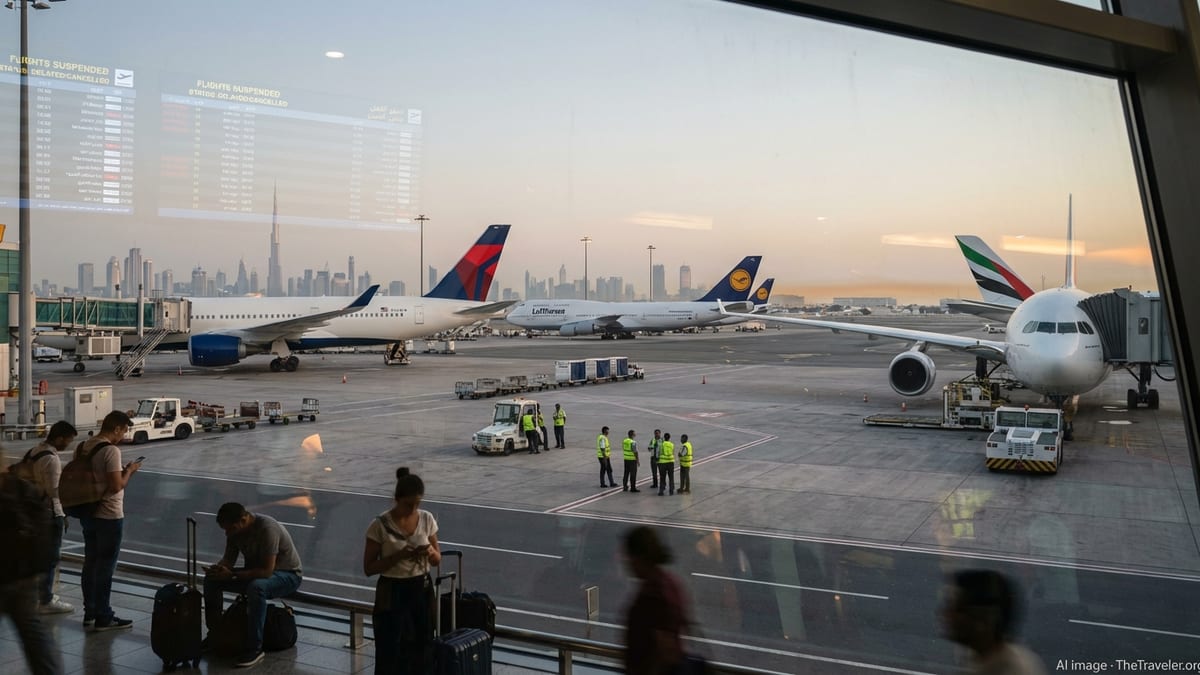
Latest cancellations extend to early August
According to publicly available information on the carrier’s advisory pages, Scoot has cancelled its Singapore–Jeddah flight pair on multiple dates, with notices indicating that services will remain suspended until at least early August 2026. The disruption affects flight TR796 from Singapore to Jeddah and the return service TR797 from Jeddah to Singapore, which had only recently resumed after an earlier pause in operations.
Earlier airline advisories and regional media coverage show that Scoot had already been operating a reduced and frequently adjusted schedule to Saudi Arabia in recent months. Flights on the Singapore–Jeddah route were suspended from February 2026 during an escalation in US–Iran tensions and associated risks around key Middle East air corridors. Services resumed on 22 June with a thrice weekly schedule before the latest round of cancellations was announced.
The renewed pause means travellers connecting between Southeast Asia and Saudi Arabia via Scoot’s Singapore hub face cancellations across the peak northern summer period. While Scoot continues to operate a broad Asian and Australia network, its current Saudi operation is effectively on hold pending further assessments of regional conditions.
Travel industry analysts note that Scoot’s move comes as other international carriers adjust or suspend selected Middle East routes, reflecting continued caution around airspace exposure and operational certainty even as demand for travel to Saudi Arabia remains strong.
Geopolitical tensions reshape Middle East flight patterns
Published coverage of airline schedule changes across the region indicates that Scoot’s decision is part of a wider pattern of adjustments linked to the evolving security situation in the Middle East. In recent weeks, several full service and low cost airlines have trimmed or suspended flights to cities including Riyadh, Dubai and Beirut, citing the impact of renewed hostilities and changing risk assessments on overflight routes.
For airlines operating to Saudi Arabia from Asia and Europe, routing choices are closely tied to the status of airspace over and around the Gulf and adjacent conflict zones. Carriers have already spent months working around earlier restrictions and advisories, which added flying time, increased fuel burn and in some cases made certain long haul services commercially or operationally unsustainable.
The latest round of cancellations suggests that, despite intermittent diplomatic progress and periods of relative calm, airlines remain wary of committing to sustained schedules that rely on contested corridors. Budget carriers such as Scoot, which operate with thinner margins than many full service rivals, may have less flexibility to absorb prolonged detours or day to day volatility in routing conditions.
Observers also highlight that Saudi Arabia’s own aviation ambitions, including significant expansion plans for Jeddah’s King Abdulaziz International Airport and the development of new carrier Riyadh Air, are unfolding against this backdrop of uncertainty. While domestic and regional services are largely continuing, the international network into and out of the kingdom remains sensitive to external geopolitical shocks.
Disruption for pilgrims and labour travellers
The suspension of Scoot’s Jeddah services is particularly significant for religious and labour travel markets. Jeddah is the main international gateway for pilgrims heading to the holy cities of Mecca and Medina, and it also serves large flows of expatriate workers travelling between Saudi Arabia and Southeast or South Asia.
Budget options between Singapore and Jeddah have been limited in comparison with full service offerings via major Gulf and Asian hubs. Scoot’s direct connection provided an important low cost alternative for travellers from Singapore, Malaysia, Indonesia and beyond, many of whom connected through Changi Airport on separate tickets. With the service now cancelled into August, these passengers are likely to face higher fares, longer journeys and more complex connections on other airlines.
Published reports on regional aviation forums and in local media indicate that some travellers with upcoming Umrah trips or family visits have already had to rebook at short notice, often at significantly higher prices. The timing is especially challenging for those who planned post Hajj travel or late summer journeys before the start of school and work terms in their home countries.
Industry watchers note that repeated schedule changes over the past year have added another layer of uncertainty to travel planning for Saudi bound passengers. Many now factor in the risk of sudden cancellations when choosing routes, balancing fare levels against perceived reliability and the strength of consumer protection rules on different carriers.
Options for affected Scoot passengers
Scoot’s customer advisories state that travellers on cancelled Jeddah flights are eligible for remedies such as rebooking or refunds, in line with the airline’s standard disruption policies. Passengers are being directed to manage changes through the carrier’s digital channels, where options may include moving to alternative Scoot flights on different dates or obtaining a full refund if they no longer wish to travel.
Travel agents and consumer advocates generally recommend that affected passengers act quickly to secure replacement itineraries, especially during the busy summer travel season when seats on alternative routes can sell out rapidly. In some cases, travellers may be able to reroute through other Middle East or Asian hubs operated by airlines that continue to serve Saudi Arabia, though this often involves higher costs and longer travel times.
For customers who booked Scoot tickets as part of a wider package or with separate connecting flights, coordination with booking intermediaries is key. Industry practice suggests that while the airline is responsible for the cancelled sector, downstream arrangements with other carriers or ground providers may need to be renegotiated on a case by case basis.
Observers also point out that passengers should monitor schedule updates regularly, as the situation around Middle East operations has evolved rapidly in recent months. Travel insurance policies that cover airline disruptions can provide an additional layer of financial protection, although coverage terms vary and often require documentation of the cancellation.
What the suspension means for Saudi–Southeast Asia connectivity
The temporary suspension of Scoot’s Jeddah flights underscores how fragile some long haul low cost connections remain in the face of geopolitical risk and operational complexity. While full service carriers with larger fleets and broader networks can sometimes redistribute capacity or absorb longer routings, point to point budget routes are more exposed to cost spikes and abrupt changes in airspace availability.
For Saudi Arabia, the latest disruption represents a setback to efforts to deepen direct links with Southeast Asia’s fast growing outbound travel market. The kingdom has been investing heavily in tourism promotion and infrastructure, positioning Jeddah as a major international gateway not only for religious pilgrims but also for leisure and business visitors.
In the near term, connectivity between Singapore and Jeddah will depend on alternative routings via other carriers, potentially involving one or more stops in Gulf, South Asian or other Southeast Asian hubs. This may slow growth in price sensitive segments, even as premium and corporate travel continues to be served by established network airlines.
Analysts suggest that once regional conditions stabilise, airlines are likely to revisit suspended routes, particularly those with strong underlying demand such as Jeddah. For now, however, travellers planning journeys between Southeast Asia and western Saudi Arabia are being advised by travel professionals to build in extra flexibility, budget for potential fare increases and keep a close eye on further schedule changes from Scoot and other carriers.