


More news on this day
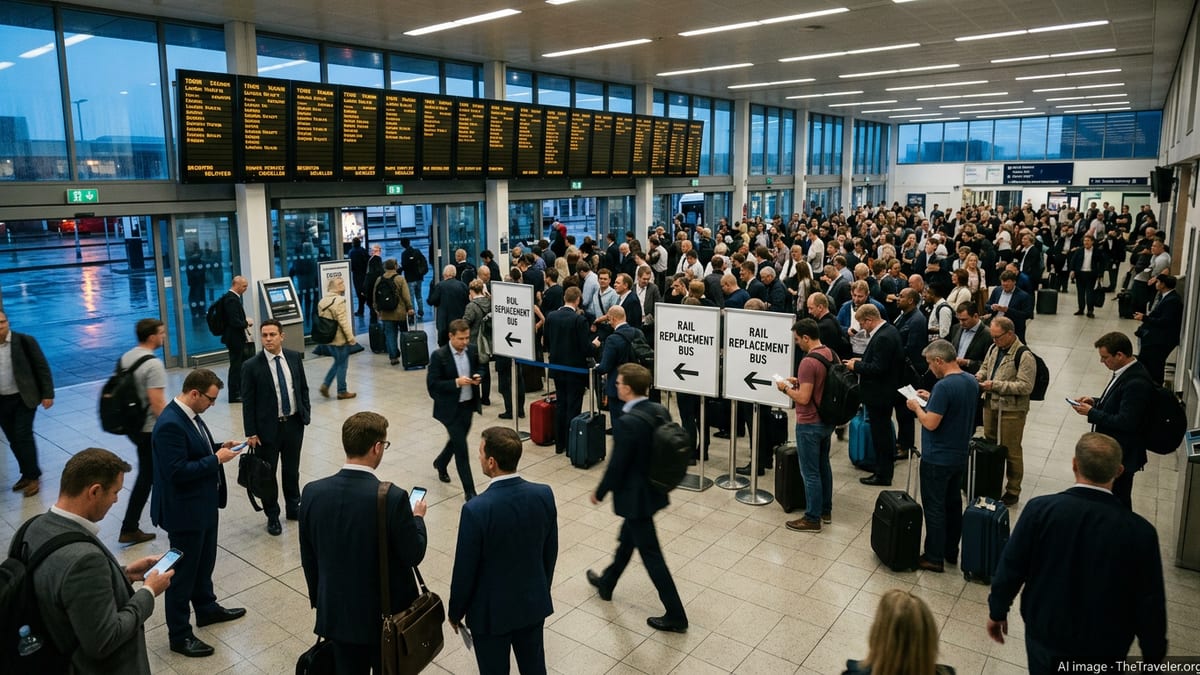
Hundreds of Auckland rail commuters were left stranded on a citybound service after a station fire alarm triggered a precautionary shutdown of part of the network, forcing trains to halt and passengers to seek alternative routes into the central city.
Get the latest news straight to your inbox!
Alarm triggers sudden halt to morning peak service
Reports indicate the disruption unfolded during the morning peak when a fire alarm activated at an inner-city Auckland rail station used by citybound services. As the alarm sounded, signalling and station systems automatically moved into a safety mode, bringing at least one heavily loaded train to a stop before it could continue toward the central business district.
Publicly available information suggests the incident involved a citybound train that was held near a central hub while station platforms and concourse areas were cleared. In line with standard emergency procedures, the priority shifted from maintaining the timetable to safeguarding passengers in the underground and enclosed parts of the station.
Initial indications are that the alarm was not linked to a significant fire, but the response still required a full check of station systems before services could be restored. The lack of clarity in the early minutes left many passengers uncertain whether they should remain on board, disembark if permitted, or look for other modes of travel into the city.
While the immediate technical trigger was the fire alarm, the scale of the disruption reflected the pressure already on Auckland’s rail network as it prepares for integration with the City Rail Link and associated timetable changes. Even a short-lived station shutdown had wider consequences for services queued on the approaches to the city.
Hundreds stranded and a scramble for buses, rideshares and walking routes
Commuter accounts on social media describe crowded carriages suddenly coming to a standstill, followed by long waits with limited information about what would happen next. With no clear estimate of when the alarm would be cleared, many passengers opted to leave the train where it had stopped at a nearby station and attempt to complete their journey by road.
Replacement buses and regular scheduled bus routes quickly became heavily loaded as rail passengers spilled onto nearby streets and interchanges. Rideshare prices reportedly surged in some suburbs as demand spiked, and queues formed at taxi ranks as city workers tried to salvage their morning appointments and school runs.
Some travellers chose to walk from outlying stations toward the city centre, adding up to several kilometres to their commute. Others reported turning back home to work remotely once it became clear that delays would extend well beyond a single missed train.
The scene was familiar to Auckland regulars, who have faced years of intermittent disruption linked to track upgrades, network-wide test closures and ongoing preparations for the City Rail Link. For many, the incident reinforced the sense that even brief faults or alarms can rapidly ripple across the constrained rail system.
Safety systems designed to err on the side of caution
Rail safety guidance for large urban stations in New Zealand emphasises automatic responses whenever a fire alarm is triggered, even if there is no visible smoke or flames. Public documentation on Auckland’s rail infrastructure highlights that alarm activations can affect ventilation, lighting, escalators, ticket gates and signalling feeds, all of which must be stable before passenger operations return to normal.
City Rail Link material on emergency preparedness notes that train crew and station teams are trained to work with emergency responders and to move people to street level if needed. That framework appears to have shaped the handling of the latest incident, with priority given to clearing potentially affected spaces and preventing more trains from entering the area until checks were complete.
Network operators have repeatedly argued that these protocols, while disruptive, are essential in tightly confined underground and partially underground stations where passenger numbers can be high. Waitematā station, for example, already has capacity limits in place connected to fire safety planning, and similar constraints are expected to apply at new CRL stations once they open.
Transport observers point out that these design choices inevitably mean alarms, false or otherwise, can halt multiple services at once. The trade-off is between keeping trains moving and ensuring that evacuation routes and environmental systems are ready for a worst-case scenario.
Ongoing frustration over communication and resilience
Beyond the immediate inconvenience, the disruption added to broader public frustration over Auckland rail reliability. Online commentary following the event focused less on the existence of strict safety rules and more on the perceived lack of timely, clear communication about what was happening and how long it might last.
Commuters described onboard announcements that were infrequent or difficult to hear, combined with platform displays that lagged behind events as services were cancelled, short-turned or held outside the central area. For those trying to make decisions about work commitments, school drop-offs or connecting buses, that information gap made an already stressful situation more difficult to manage.
Travel advocates have previously raised concerns about the resilience of the rail network when even a single incident at a key station can effectively close a corridor of track. With City Rail Link due to dramatically increase passenger flows through central Auckland, debates continue about whether contingency planning and redundancy are keeping pace with demand.
Recent public reports on rail performance show that punctuality and reliability have been improving in some periods but remain vulnerable to isolated incidents, particularly around complex junctions and busy central hubs. The latest alarm-triggered stoppage is likely to renew calls for both stronger communication protocols and a more robust operating plan for emergencies.
What the disruption signals for future travel in the city
The latest incident comes at a pivotal moment for Auckland’s transport network, as the city prepares for a new era of rail travel once the City Rail Link opens. The project is expected to reshape commuting patterns by allowing more frequent services and new through-routing across the metropolitan area.
However, the morning’s events underline that investments in track, tunnels and stations must be matched by operational readiness, particularly around emergency systems and passenger information. Fire alarms and similar safety triggers are likely to remain an unavoidable reality in a large, electrified, mostly enclosed rail system.
Analysts note that this disruption, while relatively short-lived, serves as a live test of how quickly the network can absorb a shock and recover without leaving large numbers of passengers cut off from the city centre. Observed bottlenecks around alternative transport and crowding at interchange points provide real-world data for planners.
For daily travellers, the episode reinforces the importance of flexible commuting habits, from working remotely when possible to building in extra time or identifying backup routes. As Auckland continues to invest in rail as a backbone of its transport future, balancing safety, reliability and real-time communication is likely to remain a central challenge.