


More news on this day
Ticketed passengers attempting to travel from Newry on a late-night bus towards Dublin were left stranded after a full service departed without them, according to recent local reports and social media accounts.
Get the latest news straight to your inbox!
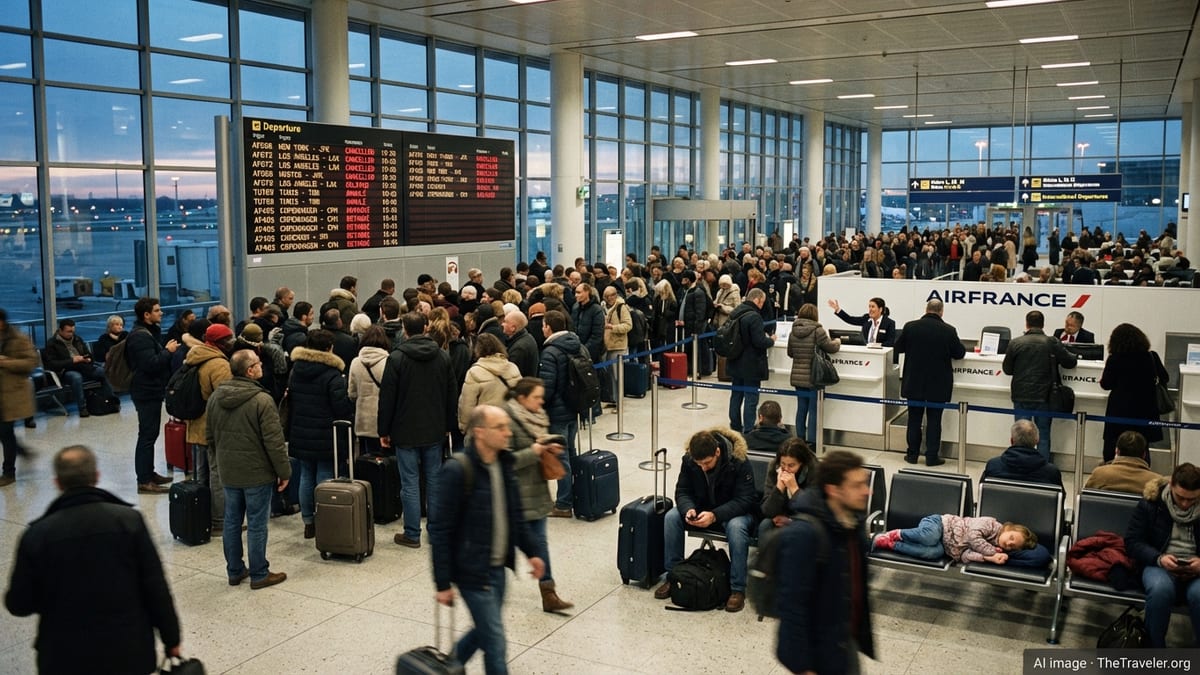
Crowded Night Service Leaves Ticket Holders Behind
Accounts circulating in recent days describe a busy late-night departure from Newry in which a scheduled interurban service reached capacity before all ticketed passengers could board. Travellers who had pre-purchased tickets reportedly arrived at the stop to find the coach already full, with no additional vehicle available and no clear guidance on how they would complete their journey.
Publicly available timetable data for services between Newry and Dublin shows that the last departures of the evening already operate close to midnight, leaving limited fallback options once connections are missed or a bus leaves passengers behind. In practical terms, travellers left at the roadside late at night can face long delays, expensive last-minute taxis or the prospect of abandoning early-morning flights and work commitments in Dublin.
While the precise number of passengers affected in the reported Newry incident is unclear, the scenario reflects a broader pattern in which strong demand from cross-border commuters and airport-bound travellers strains limited overnight capacity. For many in the region, these late services are a critical link to Dublin’s transport hubs and night-time economy.
Capacity Strain on the Newry to Dublin Corridor
Newry has increasingly developed as a commuter base for Dublin, with rising numbers of residents depending on early-morning and late-evening cross-border connections. Published analysis of the town’s evolving role highlights heavy use of both rail and bus links to the capital, with car parks at stations and stops frequently filled and peak-time services often standing-room only.
Timetable and fare comparison platforms indicate that dozens of daily bus departures connect Newry with Dublin and Dublin Airport, but they also show that the few remaining night and very early morning options are concentrated into a small number of departures. Data from travel aggregators suggests that daytime frequencies on the corridor can be high, while night-time options remain comparatively limited, leaving travellers vulnerable when a single service is disrupted or oversubscribed.
Past local coverage has already pointed to concerns about overnight provision. Reports from Newry several years ago noted that once-hourly through-the-night buses serving Dublin and the airport had been reduced, creating a substantial gap in service during the small hours. Although additional journeys have been added at various times, campaigners have argued that overnight coverage has not kept pace with growth in cross-border travel or with demand generated by low-cost early flights from Dublin Airport.
Reliability, “Ghost Buses” and Passenger Trust
The Newry episode is emerging against a wider backdrop of public concern about bus reliability across Ireland. Recent discussions in national and local media have highlighted “ghost buses,” where scheduled services simply do not appear, as well as last-minute cancellations that leave commuters waiting for long periods without clear information.
Transport-focused commentary points to staffing pressures, traffic congestion and timetable design as recurring factors behind cancellations and delays on interurban and city routes. Parliamentary debates in both Dublin and London have drawn attention to buses that are consistently full, with some passengers left behind at stops even when they hold valid tickets or passes. In these discussions, passenger groups have stressed that real-time apps and roadside information are often unreliable or slow to reflect cancellations, making it difficult for travellers to adapt their plans.
In this context, a late-night situation in which ticketed passengers are left standing while a full coach departs is seen by many as more than an isolated inconvenience. It taps into broader worries that public transport networks, particularly outside daytime peaks, are struggling to provide the predictable, dependable service required to encourage people to leave their cars at home.
Information Gaps and Limited Options After Dark
Reports relating to the Newry night bus incident describe particular frustration with the lack of clear, on-the-spot information. Travellers who had purchased tickets in advance expected either a guaranteed seat or, at minimum, guidance on alternative arrangements if a departure was oversubscribed. Instead, passengers were reportedly left to make their own contingency plans with little official direction.
Late at night, such uncertainty can quickly translate into real risk. Taxis and ride-hailing options are more limited and costly in smaller cities and border towns than in major capitals, and accommodation may be fully booked when there is a surge in demand caused by a missed bus. For passengers travelling to catch early flights from Dublin Airport, even a single missed night bus from Newry can mean forfeiting non-refundable airline tickets.
Transport advocacy organisations have frequently argued that, when capacity is tight, operators and regulators should place a stronger emphasis on clear messaging. Suggested measures include timely in-app alerts, on-street announcements where possible, and visible guidance on what rights passengers have when advance tickets do not translate into a seat. Without this, incidents such as the Newry case risk eroding trust among those who depend on public transport at the most sensitive times of day.
Calls for Stronger Night-Time Links and Oversight
In the wake of the latest reports, some local commentators and commuters are renewing calls for improved late-night provision between Newry and Dublin. Ideas that have surfaced in public debate include restoring or expanding through-the-night bus frequencies, introducing additional “relief” buses on dates and times known to be busy, and exploring closer coordination between bus and rail operators to ensure that last services connect reliably.
National-level discussions about transport funding and service design already acknowledge the importance of 24-hour or near-24-hour public transport for growing night-time economies. Policy papers and parliamentary questions in recent months have referred to extended operating hours on key corridors, with an emphasis on connecting regional towns to major urban centres and airports. Advocates argue that Newry’s position on a heavily travelled cross-border route makes it an obvious candidate for such attention.
For now, the incident has served to highlight a tension familiar to many travellers across Ireland and the United Kingdom. As operators and authorities encourage passengers to pre-book tickets and rely on public transport for long-distance journeys, expectations of certainty and backup options rise. When a full night bus leaves ticketed passengers behind in a town like Newry, those expectations collide with the realities of limited vehicles, staffing constraints and narrow overnight timetables, underscoring the need for clearer communication and more resilient planning.