


More news on this day
Regional airline Star Air is preparing to add a new nonstop route between Ahmedabad and Mundra from August 2026, a move expected to significantly strengthen air links within Gujarat and support growing demand between the state’s commercial capital and its fast expanding port and industrial hub on the Kutch coast.
Get the latest news straight to your inbox!
New Route Builds on Star Air’s Mundra Expansion
The planned Ahmedabad–Mundra service follows a rapid build up of Star Air operations at Adani Mundra Airport in 2026, where the carrier has already launched multiple direct routes connecting the Kutch region with major cities including Mumbai, Goa and key northern markets. Publicly available information shows that Mundra became part of Star Air’s network as its 32nd destination, underlining the airline’s focus on regional connectivity and tier two and tier three city links within India.
Reports indicate that Mundra’s emergence as a scheduled destination has coincided with a wider push to provide better access to Gujarat’s coastal and industrial belt. Earlier launches from Mundra have concentrated on inter state connectivity, serving business and leisure demand from Maharashtra, Goa and the National Capital Region. The planned link to Ahmedabad would shift part of that focus in state, targeting faster point to point travel within Gujarat itself.
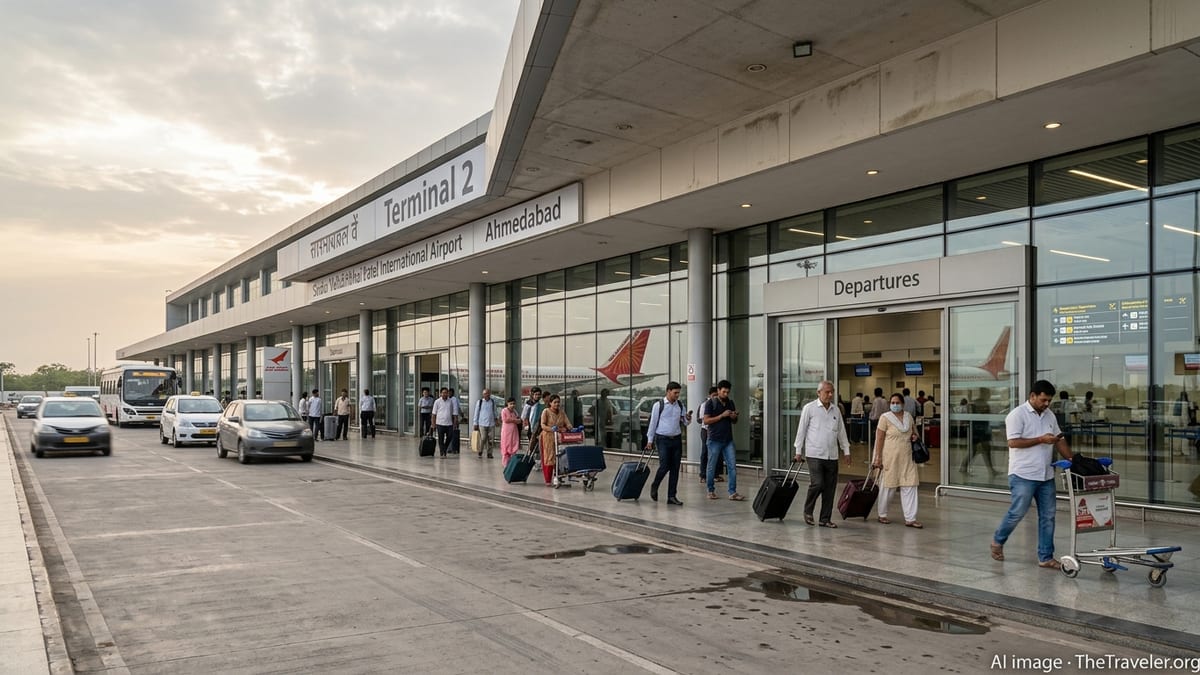
The new service is expected to complement existing capacity at Ahmedabad, one of western India’s busiest airports and a key gateway for both domestic and international routes. By adding a nonstop option to Mundra, Star Air is set to create a shorter, more predictable journey for passengers who currently rely on road or rail over several hundred kilometres between the two centres.
While detailed schedules and frequencies for the August 2026 launch have not yet appeared in the public domain, industry observers expect the service to be aligned with business friendly timings and to connect with other Star Air flights operating to and from Ahmedabad, improving overall network flexibility.
Strategic Link Between Gujarat’s Commercial Capital and Port Hub
Ahmedabad functions as Gujarat’s largest metropolitan and commercial centre, with strong activity across finance, textiles, pharmaceuticals, education and services. Mundra, by contrast, has grown rapidly around its private port complex, logistics clusters and associated manufacturing and energy projects on the Gulf of Kutch. The planned direct flight is therefore seen as a strategic link between the state’s administrative and financial core and one of its most important gateway ports.
Travel industry commentary suggests that a nonstop air connection could reduce total journey times between Ahmedabad and Mundra to under an hour of flying, compared with many hours by road or rail. For executives, port users, logistics operators and project consultants moving frequently between the two centres, this has the potential to improve productivity and make short same day trips a more realistic option.
The route is also expected to cater to professionals working on long term infrastructure and energy projects based around Mundra who maintain family or business ties in Ahmedabad and other parts of central Gujarat. A reliable, scheduled air link offers an alternative to overnight road travel and may help distribute traffic away from already busy highway and rail corridors in the region.
Tourism planners note that faster air access can support emerging coastal leisure circuits in Kutch by tapping into Ahmedabad’s large catchment of domestic travellers. Although Mundra itself is primarily known as an industrial hub, its location provides a gateway to wider Kutch attractions, including beaches and cultural destinations that benefit from better connectivity.
Boost for Regional Connectivity and UDAN Style Networks
India’s aviation policy in recent years has encouraged airlines to deepen connectivity between major cities and smaller regional centres, with a focus on making air travel more accessible and improving last mile links to economic hubs. Published data on earlier routes between Ahmedabad and Mundra under regional connectivity initiatives highlights the long standing demand for faster links on this corridor and provides a precedent for renewed scheduled services.
Star Air’s planned direct service fits within this broader push to connect secondary cities and emerging economic clusters that are not always served by larger mainline carriers. By using regional jets with fewer seats than standard narrowbody aircraft, the airline can viably operate routes that require frequency and schedule convenience more than sheer capacity, including shorter in state hops such as Ahmedabad–Mundra.
A regular service is likely to integrate Mundra more closely into Gujarat’s wider aviation grid, making it easier for passengers from other parts of India to access the region through a single connection at Ahmedabad. This could be particularly important for travellers from cities that already have Star Air links into Ahmedabad, effectively turning the new route into a feeder for the coastal district.
Analysts also point out that improved air connectivity can support public objectives beyond passenger travel, by helping anchor investment, generate employment around airports and port linked ecosystems, and reinforcing the role of aviation as a catalyst for regional growth.
Implications for Business, Trade and Logistics
Mundra’s position as one of India’s leading container and cargo gateways means that any enhancement in passenger connectivity has potential knock on benefits for trade and logistics activity. Business coverage of the port’s development has repeatedly highlighted the need for faster access for shipping lines, freight forwarders, customs brokers, surveyors and technical specialists who often travel at short notice.
A direct Ahmedabad–Mundra flight is expected to reduce transit times for such professionals and may encourage more frequent on site visits and inspections. Companies coordinating supply chains across Gujarat and neighbouring states could find it easier to schedule meetings and inspections on the same day, instead of allocating additional time for overland travel.
For Ahmedabad based firms operating warehouses or industrial units near Mundra, the route offers greater flexibility in staffing and management oversight. Senior team members based in the city would be able to reach coastal facilities quickly, potentially improving responsiveness to operational issues or client requirements.
Industry watchers suggest that over time, better air access between the two centres could contribute to a more integrated economic corridor, where investment decisions factor in the availability of quick passenger transport alongside port infrastructure, highway links and rail freight capacity.
What Travelers Can Expect From the New Service
Based on patterns from Star Air’s existing network, travellers can expect the Ahmedabad–Mundra service to be operated by regional jets with a single class configuration and a focus on short haul comfort. The carrier has typically positioned itself in the affordable regional segment, targeting travellers who value time savings and direct routes over premium frills.
Observers anticipate that the schedule will aim to support both business day trips and longer stays, with at least one rotation that allows passengers to arrive in one city early enough for meetings and return by evening. Pricing will likely be set to compete with the combined cost and time of road or rail travel, especially for those valuing convenience and reduced fatigue.
Travel planners recommend that passengers monitor official announcements from Star Air and airport operators as August 2026 approaches, as final details on flight numbers, days of operation and exact start date are typically confirmed closer to launch. Once operational, the route is expected to feature on common booking channels alongside other domestic services from Ahmedabad.
With the addition of this direct link, Gujarat’s internal air map is set to become denser, providing residents, businesses and visitors with another option for fast, point to point travel between its inland commercial heart and its rapidly expanding coastal gateway at Mundra.