


More news on this day
A freight train derailment near South Charleston has disrupted rail operations in the area, prompting detours, delays, and renewed scrutiny of rail safety practices along a key corridor used by both freight and passenger services.
Get the latest news straight to your inbox!
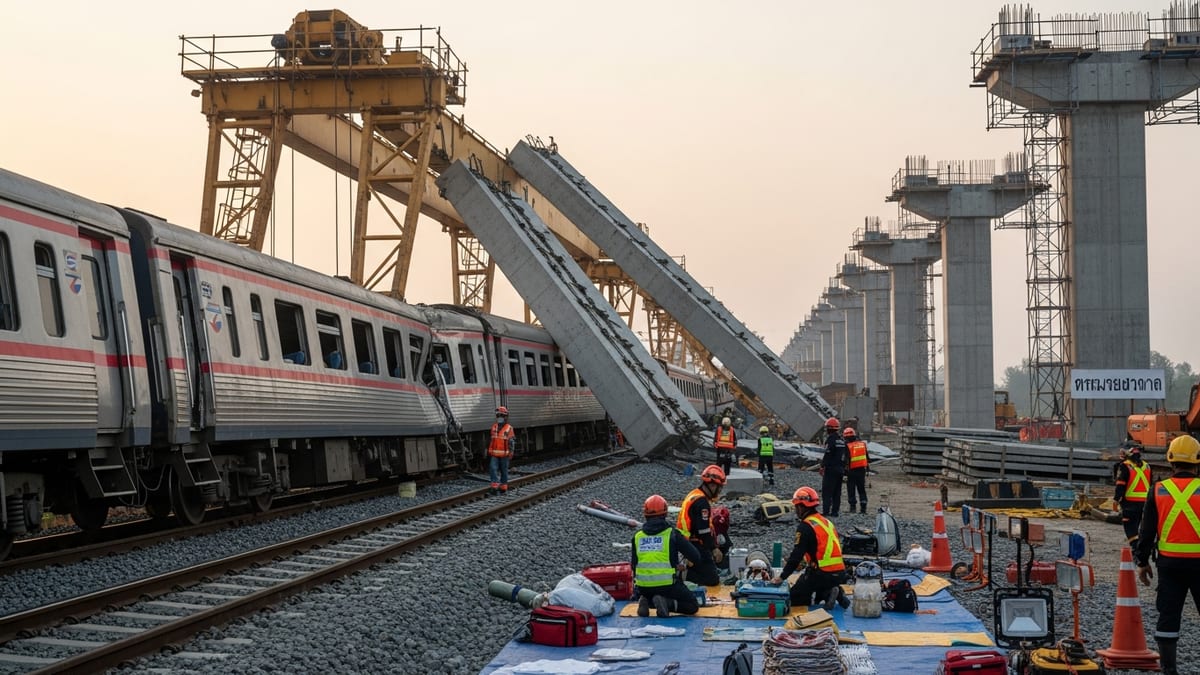
What Is Known So Far About the Derailment
Initial reports indicate that several freight cars left the tracks on a main line serving the South Charleston area, a section of rail heavily used for moving coal, manufactured goods, and other commodities across the region. Early coverage describes a scene of jackknifed cars and damaged track, with rail traffic halted in both directions while crews assessed the site and began clearing equipment.
Publicly available information shows that the incident occurred in a mixed-use rail corridor that also supports passenger services on select schedules. While most of the affected consist appears to have been freight equipment, the disruption has had a ripple effect on other trains, as dispatchers adjust timetables and reroute traffic around the blocked stretch of line.
According to published coverage, there were no immediate reports of life-threatening injuries, and early indications suggest that hazardous materials, if present, did not result in a major release. Emergency response plans for the area place a strong emphasis on containing any possible leaks from freight cars, and local agencies implemented precautionary measures while rail and environmental teams surveyed the scene.
As is standard practice after a derailment, federal rail safety officials and company investigators are expected to review track conditions, train handling data, and mechanical records to determine the sequence of events that led up to the incident.
Operational Disruptions for Trains and Travelers
For travelers and rail-dependent businesses, the most immediate impact has been service disruption. Freight operations through the South Charleston area have faced temporary suspensions or significant slow orders, with some trains held short of the affected segment and others rerouted over alternate lines where capacity allows.
Passenger rail services that share parts of this corridor have also been affected, with schedule adjustments, bus substitutions, or shortened routes reported on certain departures. In similar derailments on nearby lines in recent years, travelers have experienced extended journey times, missed connections, and last-minute platform changes as operators work around blocked track and damaged signaling infrastructure.
Logistics operators and shippers that rely on consistent rail service through the Kanawha Valley and surrounding corridors may face short-term delays in moving coal, aggregates, and intermodal freight. When incidents of this type occur, companies often temporarily shift some loads to highway trucking or storage facilities while they wait for the affected line to reopen at full capacity.
Travel planners note that disruptions of this kind tend to be most acute in the first days after a derailment, before a stable temporary operating plan is in place. Once debris is cleared and repairs begin, railroads typically introduce staged timetables, restoring limited movements before returning to normal service.
Safety, Infrastructure, and the Broader Rail Context
The derailment near South Charleston comes amid sustained national attention on rail safety standards and infrastructure resilience. Public data from federal regulators show that most derailments in the United States involve freight trains and occur at relatively low speeds, often in yards or industrial tracks, yet incidents on main lines can have wider implications for communities and travelers.
In West Virginia and neighboring states, key rail corridors have historically carried heavy coal and bulk traffic, placing long-term stress on track structures, bridges, and tunnels. Over the past decade, infrastructure programs and railroad-led initiatives have focused on reinforcing certain sections, upgrading signaling, and increasing clearances, but derailments continue to occur periodically across the broader network.
Analysts who study rail incidents frequently highlight a combination of factors that can contribute to derailments, including track defects, equipment failures, train handling issues, and extreme weather. While the specific cause of the South Charleston incident remains under review, the event aligns with a wider pattern in which even relatively routine freight movements can be disrupted by localized infrastructure or mechanical problems.
For travelers, the incident reinforces the reality that rail journeys, while generally safe and efficient, are vulnerable to occasional, unpredictable interruptions. Travel experts often recommend building additional time into itineraries that rely on connecting services, especially in regions where freight and passenger trains share limited-capacity routes.
Environmental and Community Considerations
Environmental concerns are a central focus whenever a freight train leaves the tracks, particularly if tank cars or cars carrying bulk commodities are involved. In the South Charleston area, rail lines often run close to residential neighborhoods, commercial districts, and waterways, increasing sensitivity to any potential spill or long-term contamination.
According to early local reporting, cleanup crews concentrated on stabilizing derailed cars, containing any minor leaks, and preventing debris from entering nearby drainage systems. Even in cases where hazardous materials are not a major factor, spilled coal, aggregates, or grain can require extensive cleanup to prevent dust, runoff, or nuisance conditions for nearby residents.
Communities along busy rail corridors have, in recent years, raised broader questions about emergency preparedness, evacuation planning, and notification systems. Incidents like the one near South Charleston often prompt renewed interest in how residents receive timely information about transportation disruptions and any related safety advisories.
For visiting travelers staying in rail-adjacent districts, local officials typically recommend monitoring regional news outlets and transportation bulletins for updates on air quality, road closures, or access restrictions near rail lines, particularly in the immediate aftermath of a derailment.
What Travelers Should Watch in the Days Ahead
In the coming days, rail companies are expected to focus on restoring full track functionality, testing signals, and gradually returning trains to regular speeds through the affected area. The duration of the disruption will likely depend on the extent of track damage, the availability of replacement components, and the outcome of initial safety inspections.
Rail passengers planning trips through West Virginia or connecting routes should review updated timetables and service advisories, as schedules can change with limited notice during recovery operations. Alternative routing, bus bridges, or temporary suspensions on specific segments are common tools used by operators to maintain some level of service while reconstruction is underway.
For road travelers, short-term congestion may occur near rail crossings and access roads where heavy equipment, cranes, and maintenance vehicles are operating. Detours are often set up around the perimeter of derailment sites, and some smaller streets may see intermittent closures while damaged cars are removed.
Travel industry observers note that, once repairs are completed, rail operators frequently conduct additional inspections and sometimes introduce targeted infrastructure upgrades at the incident location. For regular riders on the affected corridor, this can translate into improved track condition and reliability over the longer term, even as the short-term disruption remains an unwelcome complication in travel plans.