


More news on this day
A freight train derailment in Bensalem Township, Pennsylvania, on Tuesday, June 30, 2026, prompted a shelter-in-place advisory for nearby neighborhoods as hazmat teams and emergency crews assessed potential risks from the damaged rail cars.
Get the latest news straight to your inbox!
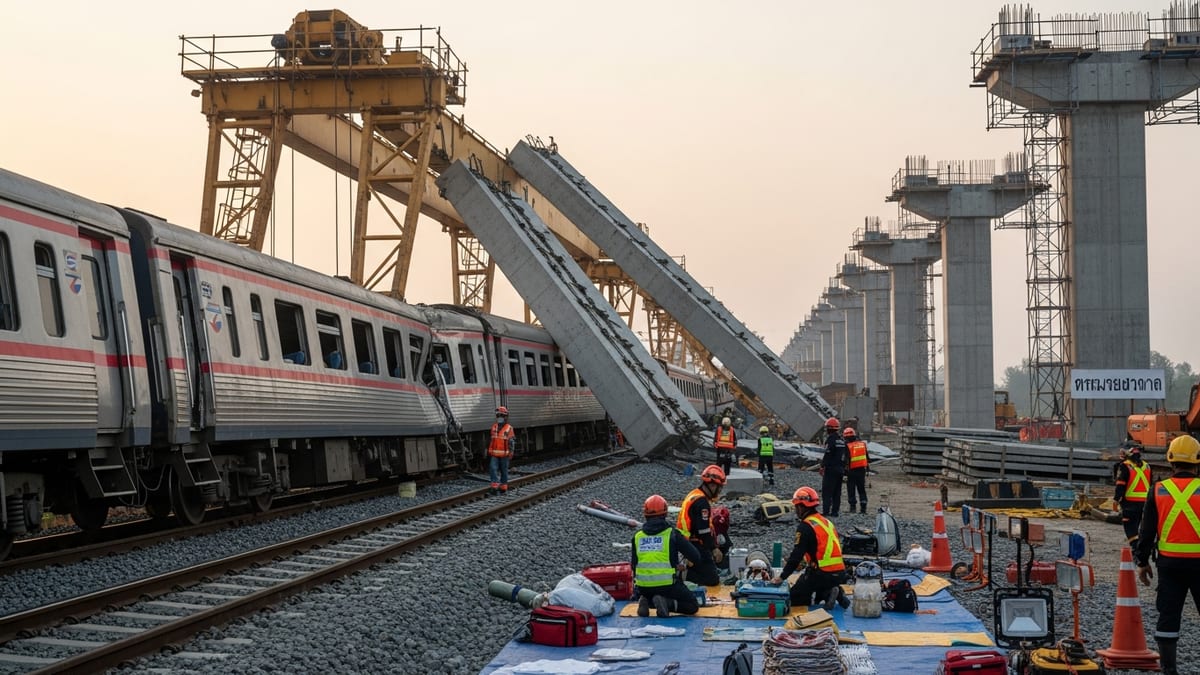
Derailment near Neshaminy Falls halts trains and roads
The derailment occurred on a freight line between Street Road and Neshaminy Falls train station in Bucks County during the midafternoon. Initial reports described a multi-car incident, with several freight cars leaving the tracks and coming to rest at angles across the right of way. Photos and video shared by local outlets showed crumpled and toppled cars scattered along the corridor.
Rail traffic through the area was halted for hours as responders moved in and railroad personnel began inspecting the scene. Passenger services using nearby lines experienced delays and diversions while the site remained active, with some evening commuters facing longer journeys and altered timetables.
Local roads close to the tracks, including sections of Bristol Road and connecting routes near Old Lincoln Highway, were temporarily shut to allow access for fire engines, hazmat units and heavy equipment. Traffic detours added to the afternoon disruption across parts of Bensalem and neighboring Middletown Township.
Shelter-in-place advisory and hazmat response
The derailment was treated as a hazardous materials incident due to the presence of tank and freight cars capable of carrying industrial products. Publicly available information from county emergency management and regional news coverage indicates that residents within a defined radius of the tracks were instructed to shelter in place shortly after the incident was reported.
Residents in portions of Bensalem and Middletown were advised to remain indoors, close windows and doors, and avoid using air-conditioning units that draw in outside air while crews evaluated the contents and condition of the derailed cars. Some properties closest to the scene also received evacuation instructions as a precaution.
Hazmat teams and specialized rail contractors worked along the line to check for leaks, monitor air quality and secure any damaged tanks or valves. By mid to late evening, local media reports indicated that monitoring showed no significant release affecting surrounding neighborhoods, allowing the shelter-in-place and evacuation orders to be lifted and access roads gradually reopened.
No injuries reported as investigation begins
Early accounts from regional coverage reported no injuries among train crew or residents, despite the scale of the derailment and the initial concern about potential hazardous materials. Emergency medical units remained on standby near the scene, but there were no immediate reports of hospitalizations connected to the incident.
Railway investigators and company safety personnel are expected to focus on track conditions, train speed, mechanical issues and any signaling or switching activity near the site. The configuration of the derailed cars, damage to the rails and ties, and data from onboard recorders will form part of the technical review.
In recent years, Pennsylvania has seen a series of freight derailments involving both hazardous and nonhazardous cargo, which have drawn increased public scrutiny to rail safety standards and infrastructure maintenance. The Bensalem derailment is likely to add to ongoing discussions about how freight traffic is routed through suburban communities and what safeguards are in place when trains carry chemical or industrial loads.
Travel disruptions and local impact
The derailment disrupted both rail and road travel across a busy commuter corridor north of Philadelphia. Some regional rail services experienced delays and adjusted schedules into Tuesday evening while crews worked on track clearance and inspections. Rail operators advised riders to check updated service notices and to plan for longer travel times.
For drivers, the temporary closure of key access points in Bensalem and nearby Feasterville-Trevose created congestion on alternate routes, particularly during the late afternoon and early evening peak. Local businesses near the affected stretch of track reported reduced foot traffic as customers navigated detours and avoided the immediate area.
Utility crews were also dispatched to inspect overhead lines and buried infrastructure running alongside the tracks, looking for any damage from shifting rail cars or heavy equipment operations. Publicly available updates described a step-by-step reopening of affected roads once inspections were completed and the area was deemed safe for general traffic.
Ongoing cleanup and questions about rail safety
Cleanup operations at the site are expected to continue for several days, as contractors rerail or cut apart damaged freight cars, remove spilled cargo where necessary and repair sections of track and ballast. Heavy cranes and specialized rail equipment are typically required for this work, extending the presence of work crews along the corridor even after emergency orders are lifted.
The incident has renewed attention on freight rail safety in the region, particularly regarding trains that may carry hazardous materials through densely populated suburbs. Public discussion often centers on questions of track maintenance, speed management, train length and the condition of older tank cars that remain in service.
Policy studies and past derailments in Pennsylvania have already prompted calls from advocacy groups and some local officials for more transparency about what travels on nearby rail lines, as well as for investments in infrastructure upgrades and emergency preparedness. The Bensalem derailment is likely to feed into these broader debates, as residents and local leaders weigh the economic importance of freight rail against concerns about safety and environmental risk.