


More news on this day
Central Railway has upgraded five special trains to regular services across Maharashtra and Karnataka, bolstering year-round connectivity for business, education, and pilgrimage travel in one of India’s busiest rail corridors.
Get the latest news straight to your inbox!
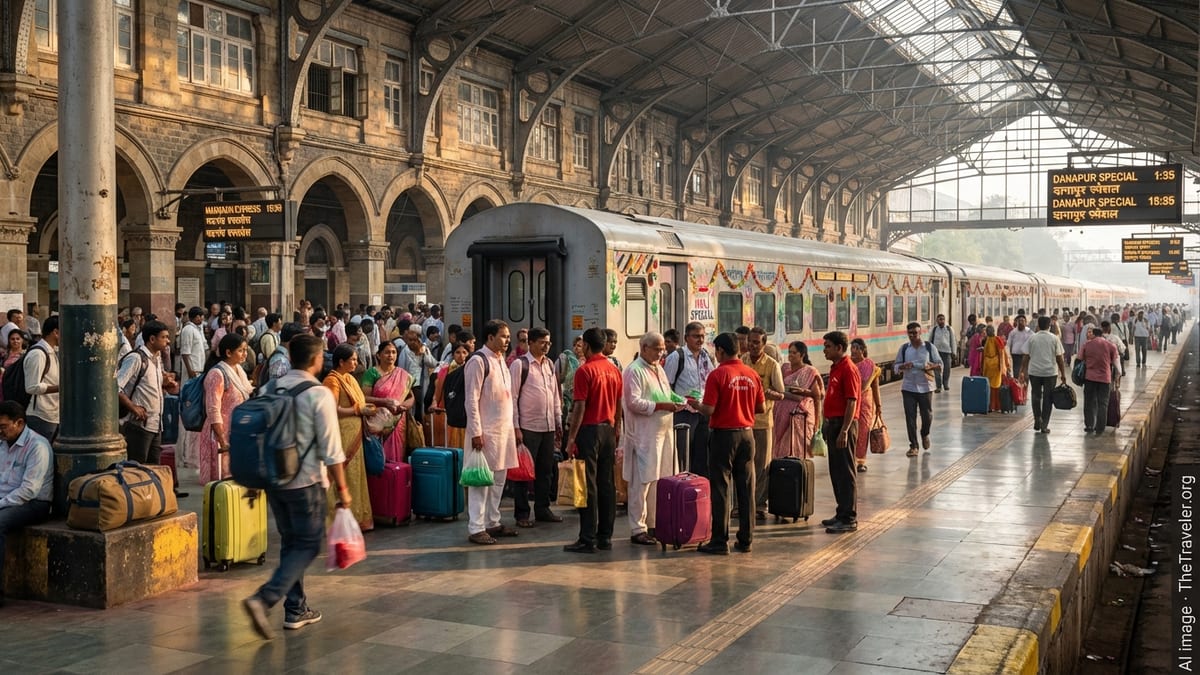
Special Trains Move Into the Regular Timetable
Publicly available information from recent railway circulars and regional media coverage indicates that Central Railway has converted five long-running special trains into regular services on routes linking major cities in Maharashtra and Karnataka. The move reflects sustained passenger demand on corridors that had been served for months, and in some cases years, by temporary specials.
The upgraded services include key links between Maharashtra hubs such as Mumbai, Pune and Solapur and important centres in Karnataka including Bidar, Kalaburagi and Bengaluru. These trains were earlier operated with special train numbers and notified for limited periods, typically extended from time to time around festivals, weekends and high-demand seasons.
With the latest decision, these services are now incorporated into the permanent timetable with regular train numbers, ensuring greater certainty for passengers planning journeys well in advance. Reports indicate that the change follows consistently high bookings and repeated appeals from passengers and regional stakeholders for stable, year-round connectivity.
Railway documents outlining the change describe the step as part of a broader effort to rationalise special services, reducing the need for repeated short-term notifications while improving transparency in scheduling and reservation availability.
Stronger Links Between Maharashtra and Karnataka
The newly regularised trains are understood to focus on corridors that knit together northern Karnataka with western and southern Maharashtra, regions that share close economic, educational and cultural ties. Routes connecting cities such as Kalaburagi and Bidar with the Mumbai and Pune regions have seen marked growth in demand due to migration for work, higher education, healthcare and trade.
By providing fixed, year-round services, Central Railway is effectively strengthening secondary inter-state links beyond the traditionally dominant Mumbai–Bengaluru axis. Observers note that these trains typically serve a mix of intermediate stations in both states, giving smaller cities and district headquarters more dependable long-distance connectivity.
In particular, regularisation is expected to benefit passengers from interior Maharashtra districts who depend on overnight and bi-weekly trains to reach employment hubs and university cities in Karnataka. Similarly, residents of northern Karnataka gain more reliable access to Mumbai’s financial and healthcare facilities without relying solely on seasonal specials or complex multi-change itineraries.
Railway data highlighted in public reports suggest that many of these special services had evolved into de facto regular trains, operating year-round with only brief gaps between notification periods. Converting them to permanent status aligns the timetable with on-ground usage patterns.
Benefits for Reservation Planning and Capacity Use
Travel planners and passenger forums have long argued that an overreliance on special trains complicates booking, because services may appear or disappear from the system depending on short-term operating decisions. With the five Maharashtra–Karnataka specials now part of the regular timetable, travellers gain earlier visibility of schedules and a full range of reservation quotas.
Regularisation also helps Central Railway better allocate rolling stock and staff resources. Instead of repeatedly arranging rakes and crew on an ad hoc basis for temporary services, operations teams can plan maintenance cycles, rake rotations and crew diagrams around fixed, recurring trains. This has the potential to improve punctuality and reduce last-minute adjustments that ripple across the wider network.
Ticketing patterns on earlier special runs showed strong demand in sleeper and air-conditioned classes, especially during weekends and holiday periods. Making these services permanent could support more dynamic pricing and quota management, giving railways clearer data for future capacity decisions on these corridors.
Industry commentators point out that regular trains also tend to attract more consistent patronage from business and institutional travellers, who often avoid special services because of uncertainty about long-term continuity. With firm train numbers and published schedules, corporate and educational groups can now integrate these trains into their standard travel plans.
Impact on Smaller Towns Along the Routes
The five upgraded services are expected to have a noticeable impact on intermediate towns located between the major termini in Maharashtra and Karnataka. Publicly accessible route details indicate that several of these trains pass through commercial and agricultural centres that rely heavily on rail for both passenger movement and small-scale freight carried as luggage or parcels.
For such towns, a permanent long-distance train is more than a transport link; it is often a lifeline that shapes access to jobs, exams, specialist medical care and large urban markets. Regular services can encourage more frequent travel, allowing residents to consider weekend or overnight trips instead of planning only around festival-time specials.
Some regional commentary has suggested that improved connectivity could support local tourism as well, by making it easier for visitors from Mumbai and Pune to reach heritage sites, religious destinations and nature attractions in northern Karnataka and adjoining parts of Maharashtra. Over time, this may encourage development of ancillary services such as homestays, tour operations and local transport at smaller stations.
However, observers also caution that to fully realise these benefits, supporting infrastructure at intermediate stations, including lighting, waiting areas and last-mile road links, will need to keep pace with higher passenger footfall.
Part of a Wider Shift From Temporary to Permanent Services
The decision to convert five specials into regular trains sits within a wider trend across Indian Railways of reassessing long-running special services. In the years following the pandemic, many routes in Maharashtra and Karnataka were restored initially as special trains, often with higher fares and limited introductions, before being gradually shifted back to regular status as demand stabilised.
Recent railway performance documents and responses in the public domain show a gradual migration of certain bi-weekly and weekly specials toward permanent numbering once passenger demand remained steady for multiple timetable cycles. Central Railway’s latest move adds to this list, particularly for cross-border routes between Maharashtra and Karnataka.
Transport analysts note that moving long-standing specials into the regular timetable can be seen as a signal that the route has matured into a core connectivity corridor. It also aligns with broader policy goals of enhancing regional integration across state borders through reliable, affordable rail services.
Further changes remain possible as railway zones review their portfolios of special trains, especially on busy inter-state stretches where temporary services have effectively operated as regular trains for extended periods. For travellers between Maharashtra and Karnataka, the latest upgrade of five trains marks a tangible step toward more predictable and robust rail connectivity across the region.