


More news on this day
Summer air travel in the United States is shaping up as a clash between rising ticket prices and increasingly fee-conscious passengers, with Delta Air Lines and other major carriers boosting base fares even as new federal rules and consumer scrutiny force more transparency around so-called hidden costs.
Get the latest news straight to your inbox!
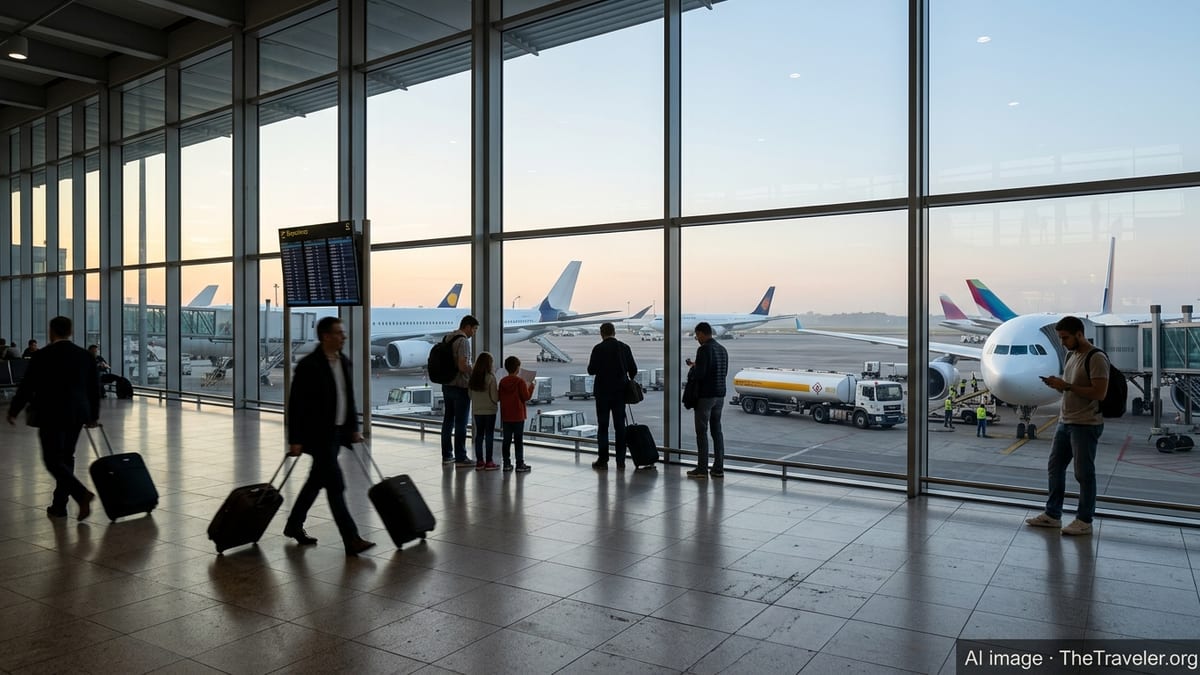
Summer 2026 fares rise on strong demand and higher costs
Domestic airfares are trending higher heading into the peak 2026 vacation season, reflecting a mix of resilient demand, higher jet fuel prices and tighter capacity on some routes. Government inflation data for July indicates that airline fares rose on a monthly basis, reversing some of the declines seen in late 2025 and underscoring how volatile ticket prices have become as airlines adjust to shifting travel patterns and cost pressures.
Delta Air Lines, often viewed as a bellwether for the US industry, has signaled a focus on revenue quality rather than pure volume. Industry coverage notes that the carrier has leaned on premium cabins and business heavy routes to drive results, while also adjusting economy pricing on popular summer leisure destinations. Travelers comparing options on major booking platforms are now frequently finding Delta priced at a premium to low cost rivals on the same city pairs, particularly on nonstop flights and peak weekends.
Similar patterns are evident at American, United and Southwest, where published fares for summer departures are generally higher than a year earlier on busy domestic and transatlantic routes. Analysts point to full flights, limited spare aircraft and ongoing labor and maintenance costs as factors that make airlines reluctant to discount aggressively, especially on departures around long weekends and school holidays.
The result for many travelers is sticker shock at the base fare level, even before add ons such as seat assignments, bag fees and early boarding enter the equation. For families or groups traveling together, a modest per person fare increase can translate into several hundred dollars more for a single trip.
Bag fees and seat charges quietly climb
While airfares draw the most attention, many passengers are discovering that a larger share of their travel budget is being absorbed by ancillary charges. Major US airlines have made incremental changes to bag and seat fees over the past year, often targeted at specific markets or fare types. American Airlines, for example, updated bag fees for tickets issued from mid May 2026, adjusting what passengers pay for checked baggage on certain routes and in particular for basic economy customers.
Industry filings and airline websites show a steady expansion of paid seat options, priority boarding bundles and changeable basic economy fares across the largest carriers. These products can add flexibility and comfort, but they also complicate price comparisons by pushing part of the total trip cost into optional categories that appear only later in the booking process.
Ancillary revenue has become a central pillar of US airline business models, helping to offset the volatility of base fares. Analysts estimate that fees tied to bags, seat selection and other extras now generate billions of dollars annually across the industry. For summer 2026, higher fuel and labor costs are increasing the incentive for airlines to fine tune these charges, especially on routes where competitive pressure limits how far base fares can rise.
Travelers, meanwhile, report that the total cost of a supposedly low fare can climb quickly once a first checked bag, a standard economy seat and basic change flexibility are added. That experience is driving more attention to the fine print on what each fare actually includes.
Regulators move against surprise airline fees
As fares and extras climb, federal regulators are reshaping the rules around what airlines can charge and how clearly those costs must be presented. The US Department of Transportation has adopted a series of measures in recent years aimed at automatic refunds and the disclosure of what the administration has labeled junk fees in air travel.
A rule finalized in 2024 requires airlines that are the merchant of record to provide automatic cash refunds when flights are canceled or significantly changed and a passenger declines alternative transportation or credits. The same framework entitles passengers to refunds of baggage fees when checked bags are significantly delayed and of ancillary service fees when a service paid for, such as onboard Wi Fi or advance seat selection, is not provided. The department has since reinforced these protections through the 2024 Federal Aviation Administration reauthorization and follow up guidance.
Separate regulations on enhancing transparency of airline ancillary service fees are being phased in between 2024 and 2026. Those rules require airlines to share data on key extras with ticket agents and to display critical charges such as checked and carry on bag fees, change fees and cancellation terms up front, before a traveler completes a purchase. Compliance deadlines extend into 2026 for some online agencies and smaller sellers, but the practical effect is that comparison shopping tools are expected to display more of the true cost of flying on each carrier.
Consumer advocates argue that these measures are particularly important in a high fare environment, where even small undisclosed add ons can discourage travelers or distort competition. Airlines, for their part, have raised concerns in public comments about regulatory overreach and implementation costs, but have also begun rolling out updated displays and terms to comply with the new standards.
How travelers are adapting to higher summer prices
With both base fares and many extras rising, travelers are responding by changing when and how they book. Travel agencies and search platforms report more interest in flexible dates, secondary airports and red eye departures as price sensitive passengers hunt for savings. Some fliers are shifting short haul trips to rail or car, or combining business and leisure travel to justify higher air expenses.
Within the booking path itself, more consumers appear to be scrutinizing fee breakdowns and fare rules. Publicly available guidance from consumer groups and federal agencies now encourages passengers to check what each fare category includes, verify bag and seat policies before paying and keep records of receipts in case a refund or fee reversal is warranted under the new rules. That level of research, once reserved for frequent fliers, is becoming routine for occasional travelers planning a once a year vacation.
Loyalty programs and co branded credit cards are also playing a larger role in how people manage rising air travel costs. Many premium cards offer statement credits for airline incidental fees or free checked bags on specific carriers, turning program choice into a hedge against surcharges. At the same time, some travelers are reevaluating their loyalty to a single airline in favor of shopping across multiple carriers and alliances for each trip.
For families, the search for transparency now includes seat assignments and family seating policies, as regulators work on further restrictions around charging parents to sit with young children. Until those measures are finalized, many parents are booking earlier, contacting airlines in advance and weighing the trade off between paying for assigned seats or risking separation in standard economy.
What to watch as the peak season unfolds
As August progresses and the US peak travel season reaches its height, several factors will determine how painful the final bills prove for passengers. Fuel prices, which influence airlines’ cost structures, remain a key variable. If oil markets stabilize or soften, carriers could gain room to adjust late summer and early autumn fares, although they typically move cautiously after setting peak season pricing.
Another factor is how quickly the new disclosure and refund rules change consumer expectations. If travelers begin to challenge fees more often and demand refunds when services are not delivered, airlines may adapt pricing strategies or bundle more features into higher fare products. Conversely, if the process proves confusing, ancillary revenue could continue to rise quietly in the background of already elevated ticket prices.
For now, the message to US travelers booking Delta and other major airlines for summer trips is that headline fares tell only part of the story. The combination of strong demand, higher operating costs and an increasingly complex menu of add ons means that the real test of affordability comes at the final checkout screen, where every bag, seat and change policy is tallied.
As regulators, airlines and passengers navigate this environment, the balance between profitable operations and fair, transparent pricing remains at the center of the summer travel debate. How that balance evolves through the rest of 2026 may shape not just the cost of a vacation, but the level of trust travelers place in the US airline system as a whole.