


More news on this day
Hundreds of air travelers across Europe have faced major disruption as fresh operational problems triggered 2,845 delayed flights and 174 cancellations, stranding passengers at several of the continent’s busiest hubs during an already crowded travel period.
Get the latest news straight to your inbox!
Network Disruption Ripples Across Major European Hubs
Published data and media reports indicate that a fresh wave of operational disruption has affected air traffic across Europe, with thousands of flights subject to schedule changes in a short window. The tally of 2,845 delays and 174 cancellations has translated into missed connections, overnight airport stays and rebookings for hundreds of passengers at key transit hubs.
While the precise breakdown by airport and carrier continues to evolve, the pattern reflects a now familiar scenario for European aviation. When a combination of capacity constraints, weather, industrial action or technical issues converges, congestion at one airport quickly spreads through the wider network, creating knock-on delays for aircraft and crews scheduled to operate subsequent flights.
Operational snapshots from recent seasons show that such spikes are no longer isolated anomalies. Across the region, airport and air traffic control capacity is frequently stretched during peak periods, leaving little room to absorb disruption without visible effects for travelers, including long waits at departure gates and crowded rebooking desks.
The latest figures are modest compared with continent-wide shutdowns but still significant for passengers caught mid-journey. Even limited clusters of cancellations at a major hub can translate into widespread inconvenience once missed onward flights and overnight connections are taken into account.
Structural Strains Behind High Delay Numbers
Aviation analysts have repeatedly highlighted structural constraints in Europe’s air traffic management system as a major driver of delays. Industry assessments show that en route air traffic flow management bottlenecks, staff shortages and fragmented national control systems routinely add minutes to average flight times and can trigger lengthy queues when traffic levels are high.
Seasonal peaks have become a particular flashpoint, with summer and holiday travel surges often exposing limited spare capacity. When aircraft, crew and airport resources are already fully utilized, any additional stress such as adverse weather or reduced runway availability tends to result in cascading delays and selective cancellations, similar in scale to the latest 2,845 delays reported.
Airlines have responded by building more buffers into schedules and adjusting turnaround times at congested hubs. However, these measures can only partially offset systemic constraints. Once aircraft arrive significantly late into a hub, onward rotations are disrupted, crews may hit duty-time limits, and operators are at times forced to cancel flights to reset the schedule for the following day.
For passengers, this dynamic means that even short-lived local problems can have lasting consequences. A storm cell, temporary technical outage or staffing shortfall in one corner of the network can generate missed connections and rerouting needs thousands of kilometers away from the original disruption.
Passengers Confront Missed Connections And Long Queues
The immediate impact of the latest disruption has fallen most heavily on passengers traveling through large European hubs, where tight connections are common. Hundreds have reported missed onward flights after arriving late from feeder services, as well as crowded service counters and long waits to secure alternative routings.
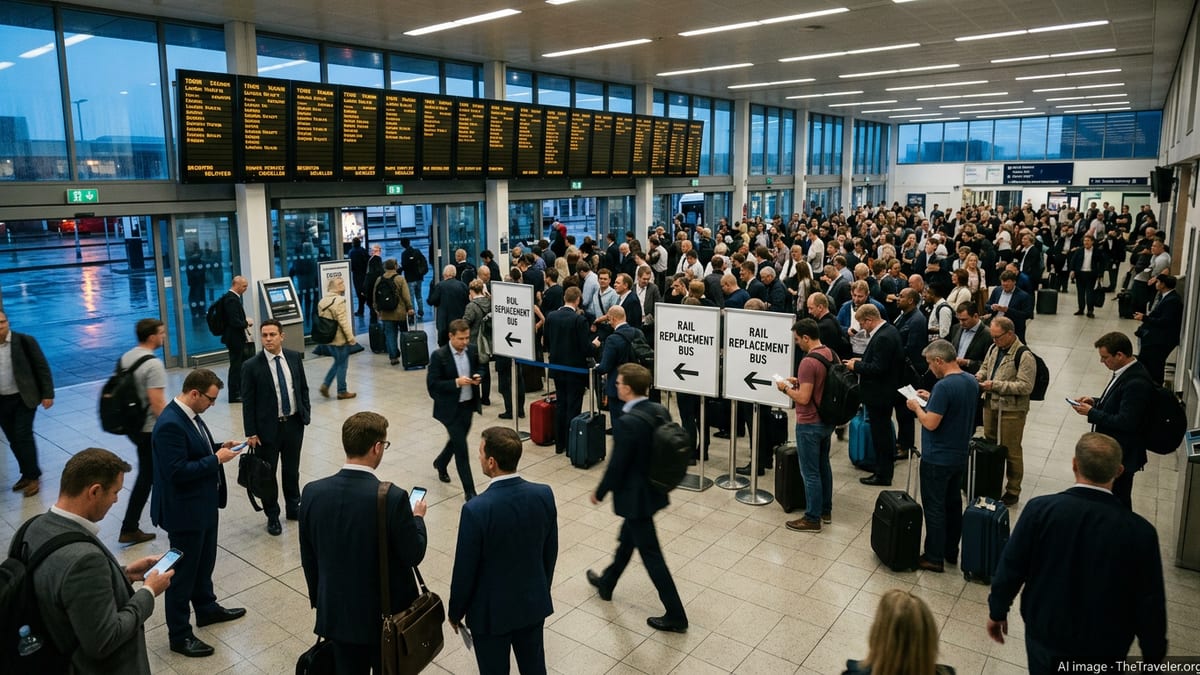
Publicly available coverage describes scenes that are now familiar in major European airports during disruption events: departure boards filling with delay notices, long lines at airline service desks, and passengers attempting to rebook through mobile apps that at times struggle to keep up with real-time schedule changes.
For those traveling on leisure itineraries or family visits, cancellations often mean lost nights of accommodation and changes to local plans. Business travelers can face missed meetings and added costs to rearrange trips at short notice. In many cases, travelers must decide whether to accept airline-provided rebooking options or seek their own alternatives by rail or with other carriers.
Delays of several hours also create pressure on airport facilities, particularly in departure areas that were not designed for extended dwell times. Seating, food and beverage outlets and power points can become crowded, adding to frustration for travelers waiting to learn whether their flights will operate.
What European Passenger Protections Offer In Such Events
In the European Union and several associated countries, passenger protections for flight disruptions are framed by a well-established regulatory regime. Under this framework, travelers departing from EU airports, or flying into the EU on EU-based carriers, may be entitled to assistance, rerouting and in some cases financial compensation when flights are heavily delayed or cancelled.
The rules distinguish between situations within the airline’s control, such as technical faults or crew resourcing issues, and so-called extraordinary circumstances, which can include severe weather, security incidents or certain air traffic control restrictions. In practice, this distinction often shapes whether travelers receive only care and rerouting or also a fixed cash payment.
During disruption spikes such as the current one, passengers are encouraged by consumer groups to keep records of boarding passes, booking confirmations and receipts for meals, hotels or alternative transport. These documents can help support later claims for reimbursement or compensation where regulations apply and the disruption is not classified as beyond the airline’s control.
Experts also note that travelers should pay close attention to communications from airlines through official channels. Rebooking options, digital meal vouchers and hotel arrangements are increasingly handled through carrier apps and websites, which may offer more flexibility and faster processing than crowded airport counters.
Growing Calls For Long-Term Capacity And Resilience Measures
The latest surge of 2,845 delays and 174 cancellations is adding to pressure on policymakers and industry bodies to accelerate reforms aimed at improving Europe’s air traffic capacity and resilience. Strategy papers and industry position documents have underlined the need for more integrated airspace management, investments in modern traffic control technology and coordinated staffing plans across borders.
Airports, for their part, are focusing on ground infrastructure, de-icing capacity, stand availability and passenger-flow management to lessen the operational impact when disruption occurs. Some hubs are enhancing real-time data sharing between airlines, ground handlers and air navigation service providers to react more quickly when schedules begin to unravel.
Consumer advocates argue that, in parallel with technical upgrades, there is a need for clearer, more consistent communication to passengers during disruption episodes. Transparent information about causes of delays, realistic departure expectations and available alternatives is seen as essential to maintaining trust during increasingly frequent episodes of travel turmoil.
With European skies set to remain busy throughout the current travel season, the recent wave of delays and cancellations serves as another reminder that the continent’s aviation system continues to operate close to its limits. Until deeper structural issues are addressed, travelers are likely to see more days when even minor shocks result in widespread timetable upheaval.