

More news on this day
A freight train derailment near Bucyrus, Ohio, prompted an evacuation of nearby homes and disrupted travel through the Crawford County community, drawing hazmat crews and rail inspectors to a key Midwestern corridor used by travelers and freight haulers.
Get the latest news straight to your inbox!
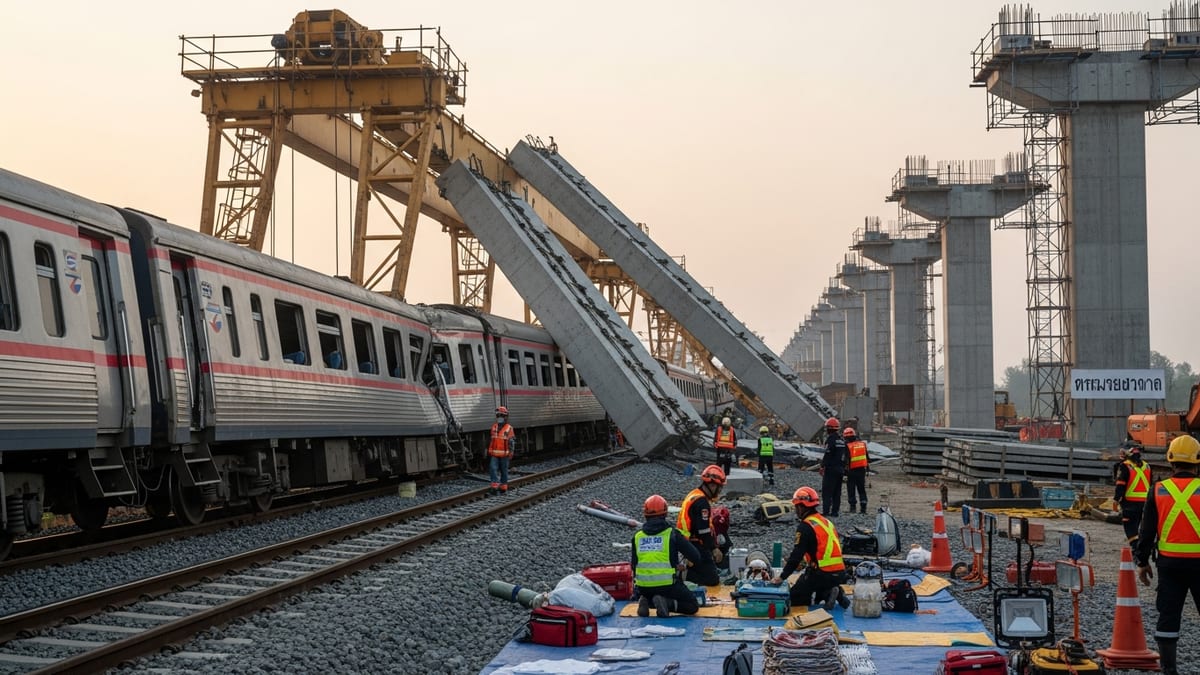
Evacuation Orders and Immediate Response
Initial reports indicate that several railcars left the tracks on the outskirts of Bucyrus, close to residential neighborhoods and local roadways used by through traffic. Emergency alerts advised residents in the immediate area to leave their homes as a precaution while responders assessed the contents of the derailed cars and potential risks to air quality.
Publicly available information shows that local agencies activated an emergency operations plan designed for hazardous materials incidents, with responders establishing a safety perimeter around the derailment site. Travelers passing through Bucyrus by road encountered detours as access routes closest to the tracks were closed to nonessential traffic.
While early details about injuries or damage remained limited, images and video shared on social media platforms depicted a line of toppled freight cars and heavy equipment moving into position. Rail travel through the corridor was temporarily suspended while inspectors began documenting the scene and determining how to safely clear the wreckage.
Advisories circulated locally stressed that the evacuation order would remain in place until air monitoring and structural assessments around the tracks confirmed that residents could safely return. For visitors in nearby lodgings, guidance focused on avoiding the immediate area and following instructions from local emergency managers.
Potential Hazards and Environmental Monitoring
Train derailments that prompt evacuations typically involve concern over hazardous materials, even when leaks are not immediately evident. According to published coverage of similar incidents in other states, freight consists often include tank cars carrying fuels, industrial chemicals, and other regulated substances that require wide safety zones if compromised.
In Bucyrus, hazmat teams were reported to be using handheld instruments and mobile monitoring equipment to test for flammable vapors and other airborne contaminants around the derailment site. Publicly available emergency guidance for rail incidents emphasizes that monitoring results over time are crucial, since warming daytime temperatures and shifting winds can influence how vapors move, even if initial readings appear within normal ranges.
Environmental specialists were expected to conduct visual inspections of nearby waterways and drainage ditches that could carry runoff from the site. When freight cars carrying fuel or chemical products are involved, response plans often include erecting temporary berms and deploying absorbent materials around any visible pools or sheens to limit spread.
Published reports from other Midwestern derailments suggest that if no significant leaks are detected, evacuation zones can sometimes be reduced within hours. However, more complex cleanups, such as those involving damaged tank cars or products with long-lasting environmental impacts, can keep sections of track and adjacent rights of way closed to the public for an extended period.
Impact on Travel Through North-Central Ohio
The derailment near Bucyrus disrupted one of the key freight corridors that thread across north-central Ohio, a region where rail lines intersect with major east-west and north-south highways. While passenger rail service through the community is limited, the line carries substantial freight traffic that can indirectly affect road travelers when incidents occur.
With rail crossings in the vicinity of the accident closed, drivers heading toward Bucyrus encountered rerouted traffic and longer travel times on alternate local roads. Motorists using regional highways to reach destinations farther afield, including Lake Erie communities and interstate connectors, were advised through local alerts to allow extra time and watch for congestion on detour routes.
For long-distance rail travelers planning to pass through Ohio, disruptions of this type can trigger schedule changes or rerouting of trains around damaged track segments. Industry reports on recent derailments in other states show that rail operators often stage heavy cranes, replacement track components, and specialized work trains nearby, which can result in extensive construction activity visible from nearby roads and lodging corridors.
Travel businesses in the Bucyrus area, including roadside motels and restaurants, were monitoring developments as evacuees and cleanup crews potentially increased short-term demand for lodging and services. At the same time, drivers seeking scenic or small-town stops found certain streets temporarily less accessible while safety restrictions remained in place.
Safety Guidance for Residents and Visitors
Publicly available emergency preparedness materials for communities along major rail lines emphasize several basic steps for anyone in an area affected by a derailment. For Bucyrus residents and visitors, the most important recommendation was to closely follow local alerts and to leave the area if an evacuation is requested, even if conditions appear calm.
Travelers staying in accommodations near the rail corridor were encouraged to identify two routes away from the tracks and to keep phones and devices charged so that they could receive updated instructions. Guidance from past incidents also recommends packing essential items such as medications, identification, and basic toiletries in case a precautionary evacuation extends longer than expected.
For those driving through the region, advice centered on avoiding the urge to stop and photograph the scene. Rail corridors during cleanup are active industrial zones, with heavy machinery, high-voltage lines, and unstable equipment. Public information from prior derailments stresses that limiting traffic close to the site helps responders work faster and reduces the risk of secondary accidents.
Once monitoring data confirm that air quality and structural conditions are safe, local announcements typically specify when residents may return and which streets or crossings remain closed. Even after an evacuation order is lifted, travelers can expect lingering slowdowns as rail and roadway repairs continue, and as investigators conclude their work at the scene.
Broader Rail Safety Concerns Along Travel Corridors
The Bucyrus derailment adds to a series of rail incidents that have drawn renewed attention to freight safety across North America. Coverage of recent derailments in Tennessee, Pennsylvania, and the upper Midwest has highlighted how quickly routine freight movements can translate into complex emergency responses that affect both residents and passersby.
Publicly available federal data show that, while most derailments involve minor track issues in rail yards, a smaller number occur near communities and can trigger evacuations, temporary shelter-in-place advisories, or air and water monitoring. These higher-profile events tend to focus debate on train lengths, track maintenance, inspection technology, and the routing of hazardous materials.
For travelers who rely on highways and regional corridors parallel to rail lines, such incidents underline the value of checking local news and advisory channels during long drives, especially in regions with frequent freight traffic. While serious derailments remain relatively rare compared with daily train movements, the consequences when they do occur can influence itineraries, overnight stays, and perceptions of safety for days or weeks.
As cleanup and investigation activities proceed near Bucyrus, attention among travel planners and safety advocates is likely to focus on how quickly rail operations can resume normal patterns and what additional measures, if any, are proposed for the corridor. For a community accustomed to the steady rhythm of passing freight trains, the derailment and ensuing evacuation serve as a reminder of the complex infrastructure that underpins both local life and regional travel.