


More news on this day
A freight train derailment near Bucyrus has prompted an evacuation order for nearby homes and businesses after early assessments raised concern about a possible acid leak from at least one tank car, according to published local and regional news coverage.
Get the latest news straight to your inbox!
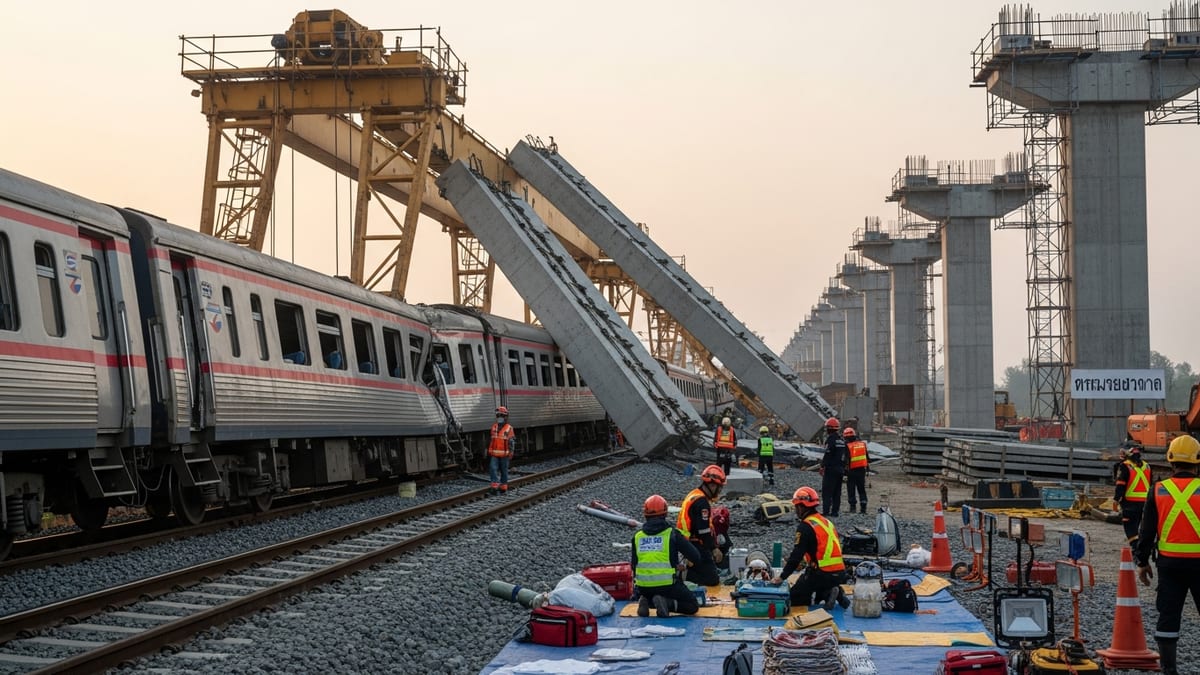
Evacuation Order Follows Hazard Concerns
Initial reports indicate that several rail cars left the tracks on a freight corridor serving the Bucyrus area, with at least one car believed to be carrying an acid used in industrial processes. In the hours following the derailment, local public safety alerts advised residents within a defined radius of the tracks to leave their homes as a precaution against potential fumes or liquid runoff.
Publicly available information shows that the evacuation zone focused on neighborhoods closest to the derailment site and low-lying areas where any leaked material could migrate. Emergency alerts urged residents to follow detour routes, avoid driving toward visible smoke or vapor, and seek temporary shelter with family, friends, or designated community sites outside the affected area.
Reports indicate that responders were working from train cargo manifests and placard information to verify exactly which chemicals were involved and whether any tanks had been breached. Until inspectors could safely approach derailed cars, officials kept the evacuation order in place, emphasizing that the move was precautionary while monitoring air quality and surface water near the tracks.
According to regional broadcast coverage, the incident caused rail traffic disruptions on the line and temporary road closures near key crossings, affecting commuter travel and local business operations for much of the day.
What Is Known About the Suspected Acid Cargo
Early descriptions from incident briefings and media summaries refer to an acid shipment commonly used in manufacturing and water treatment, transported in pressurized tank cars designed to reduce the risk of catastrophic release in a derailment. At this stage, publicly available information does not confirm a large-scale spill, but references to a possible leak led responders to treat the situation as a hazardous materials event.
Chemical safety guidance for strong acids notes that inhalation of concentrated vapors can irritate or burn the respiratory tract, while direct contact with liquid can damage skin, eyes, and mucous membranes. Even limited leaks can create localized pockets of corrosive vapors, particularly in calm or humid conditions, which explains why responders tend to favor conservative evacuation distances until field readings clarify the extent of any release.
Published reference material on previous rail incidents involving acids highlights the importance of wind direction, terrain, and drainage patterns in shaping exposure risks. Low-lying or poorly ventilated areas can trap heavier-than-air vapors, and roadside ditches or culverts may channel contaminated runoff away from the tracks. These factors typically influence the footprint of evacuation and shelter-in-place advisories around a derailment.
Rail incident summaries also show that many acid-carrying tank cars remain intact even after leaving the tracks, limiting spills to small valve or fitting leaks that can often be controlled with specialized patching equipment once hazmat teams gain safe access.
Response Efforts and Monitoring Near Bucyrus
According to news and emergency management updates, local fire and hazmat teams established a unified command post close to the derailment, with additional support from regional and state-level agencies experienced in rail and chemical incidents. Their first priorities included extinguishing any small fires, establishing isolation zones around damaged tank cars, and setting up initial air monitoring at the edge of the evacuation area.
Portable sensors, handheld detectors, and sample pumps are commonly used in such situations to test for corrosive vapors and to determine whether gases are present at levels that could affect health. Reports from the Bucyrus response indicate a focus on measuring airborne concentrations around residential streets and key access points, while specialized crews evaluated storm drains, roadside ditches, and nearby waterways for any sign of contamination.
Publicly available information notes that transportation along the main corridor was rerouted while cranes and heavy equipment were brought in to stabilize and eventually remove derailed cars. Rail operators are typically required to provide detailed consist records listing each car’s cargo, weight, and hazard classification, which responders rely on to prioritize which cars require immediate attention.
As the situation developed, regional outlets described a gradual shift from urgent life-safety measures to more technical cleanup and recovery tasks, including neutralizing any acidic residue, removing contaminated ballast or soil, and preparing the line for eventual reopening.
Impact on Residents, Travel and Local Businesses
The evacuation order around Bucyrus led to early morning and mid-day disruptions for residents, with some households leaving with little more than essential documents, medications, and pets. Local reporting describes traffic congestion on routes leading out of the affected zone, as well as queues at fuel stations and convenience stores as people arranged temporary lodging.
Schools and childcare providers within or near the evacuation area adjusted schedules or shifted to remote operations for the day, according to publicly available notices, while several small businesses closed or operated with reduced staff due to limited access. For those living just outside the evacuation boundary, shelter-in-place guidance and advice to keep windows closed and air conditioning on recirculation created a quieter but still unsettled atmosphere.
Travelers passing through the region by road encountered detours where crossings were shut to allow room for heavy equipment and emergency vehicles. Freight movements along the line serving Bucyrus were suspended on the affected segment, with rail operators working to reroute time-sensitive shipments and warning customers of potential delays.
In the short term, residents are watching for information on potential health screenings, environmental testing results, and any assistance programs for temporary housing or business interruption as cleanup progresses.
Derailment Renews Focus on Hazardous Rail Traffic
The Bucyrus derailment has once again drawn attention to how frequently communities intersect with freight lines carrying hazardous materials. Public databases and prior investigative reports show that acids, fuels, fertilizers, and various industrial chemicals routinely move by rail through towns and small cities, often within a few hundred yards of homes, schools, and commercial districts.
Rail safety advocates frequently point to incidents involving toxic or corrosive cargo as evidence that stronger tank car standards, better track maintenance, and more detailed route risk assessments are needed. In recent years, transportation regulators and industry groups have promoted upgraded tank designs, improved braking systems, and enhanced emergency planning, though implementation varies across fleets and corridors.
Published analyses of previous chemical derailments also emphasize the importance of clear public communication, from wireless emergency alerts to door-to-door notifications, so that residents understand when to evacuate, where to go, and when it is safe to return. Events like the Bucyrus incident often prompt reviews of local emergency plans, mutual-aid agreements, and the availability of specialized hazmat training and equipment for first responders.
As investigations move forward, findings on track conditions, train handling, equipment performance, and cargo documentation are expected to inform discussions about additional safeguards. For communities along busy freight lines, the Bucyrus derailment serves as a reminder of both the economic importance of rail transport and the need for robust preparation for rare but high-consequence accidents involving hazardous cargo.