

More news on this day
British police and emergency services are responding after two trains reportedly collided on a busy rail corridor north of London near Bedford, leaving multiple passengers injured and causing widespread disruption to evening travel.
Get the latest news straight to your inbox!
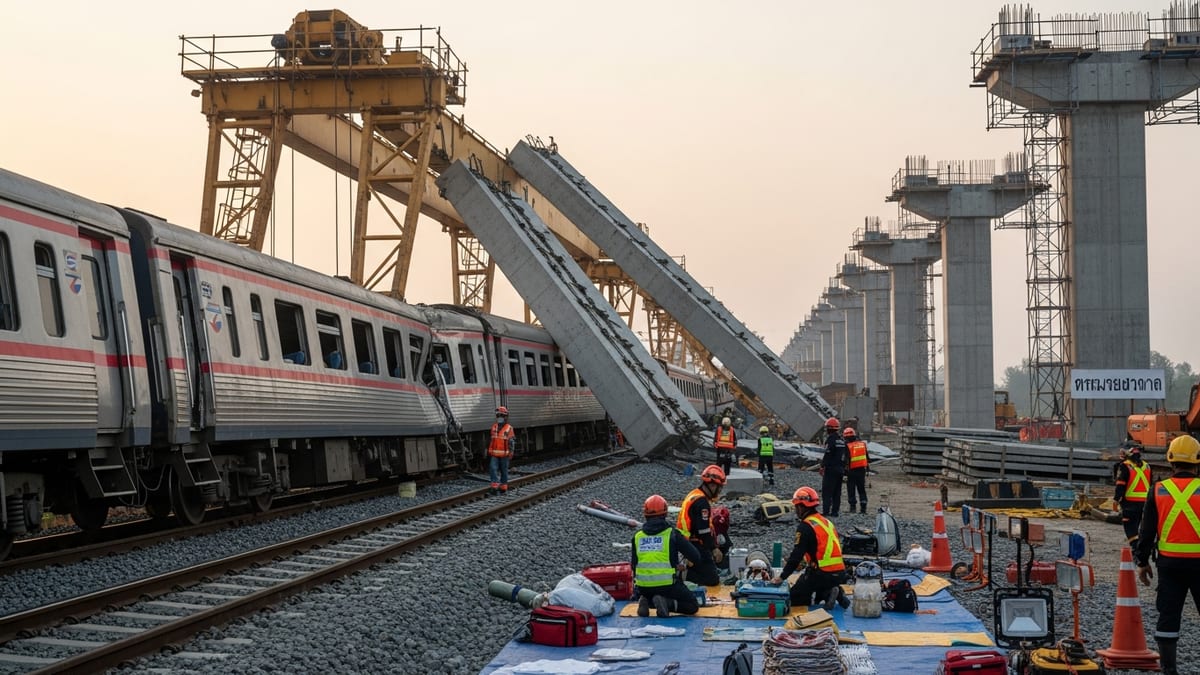
Collision Reported on Key London–Midlands Route
Initial reports indicate that the incident occurred on Friday evening on lines linking London St Pancras with destinations in central England, near the town of Bedford. The collision is described in early coverage as involving two passenger services traveling on a heavily used section of track that carries commuter and intercity traffic in and out of the capital.
Publicly available information suggests that both trains remained upright on the rails but sustained visible exterior damage. Images circulating on social media show crumpled carriage ends, shattered windows and debris scattered along the ballast, while interior photos depict dislodged panels and strewn luggage.
Rail services into and out of London St Pancras were severely affected in the immediate aftermath, with passengers reporting cancellations and diversions on operators serving the Midland Main Line corridor. Evening peak and late services north and southbound were expected to face continued disruption as rail managers assessed the damage and arranged alternative routing.
British Transport Police and Fire Crews Lead Response
British Transport Police officers were among the first specialist teams dispatched to the scene, supported by Bedfordshire Fire and Rescue as well as local ambulance services. Coverage from United Kingdom news outlets points to a coordinated response focused on triaging injuries, evacuating carriages and securing the surrounding railway environment.
Photos published by national and local media show a substantial presence of police vehicles, fire appliances and ambulances positioned along access roads and at rail-side entry points. Portable lighting rigs were deployed as daylight faded, allowing emergency workers to move along the train line and reach carriages furthest from track access points.
Early reports indicate that some passengers suffered head wounds and suspected limb injuries consistent with sudden deceleration and interior impacts. Several individuals were seen receiving treatment on or beside the tracks before being moved to waiting ambulances. Hospitals in the wider Bedfordshire area were reportedly placed on alert to receive potential casualties as assessments continued.
Passengers Describe Sudden Impact and Confusion
Accounts shared with broadcasters and in social media posts describe a brief period of normal travel followed by a powerful jolt as the trains collided. Some passengers reported being thrown from their seats, while others described overhead luggage and personal items crashing through the carriage as the trains shuddered to a halt.
Several images show travelers with improvised bandages and blankets, congregating on embankments and access paths after being led out of the carriages. Others remained on board for a time while crews checked for structural risks and ensured that power to the line was fully isolated before evacuations proceeded.
Rail passengers caught elsewhere on the network reported being held at intermediate stations or on stationary trains while control centers paused movements in the affected sector. Many described limited initial information, followed by gradual updates over public address systems as the scale of the disruption became clearer.
Disruption Spreads Across Wider Rail Network
The collision near Bedford quickly prompted delays and route changes across a broad swath of the rail network north of London. Services operating between the capital, the East Midlands and further north were especially affected, with operators advising travelers to check journey planners and expect extended travel times.
Rail analysts note that the main north–south arteries leading out of London are particularly sensitive to sudden blockages, as even a single disabled train can reduce line capacity and lead to cascading knock-on delays. With two damaged trains occupying parallel tracks, signallers and controllers were expected to limit or suspend movements through the affected section until recovery operations could proceed safely.
Evening commuters and long-distance travelers faced crowding at alternative London stations as passengers sought different routes. Replacement road transport was being considered where feasible, though traffic conditions and the rural nature of some access roads near the crash site were likely to limit the speed of any large-scale bus operation.
Investigation and Safety Questions Ahead
Rail investigators are expected to focus on several early lines of inquiry, including signalling performance, train speeds and any relevant engineering works or timetable changes in the area. According to publicly available information about previous United Kingdom rail incidents, modern signalling systems are designed to prevent conflicting train movements, making collisions of this kind relatively rare.
Specialist teams are likely to examine onboard data recorders, driver actions and communication logs between trains and control centers. They will also assess track conditions, points and signal aspects at the time of the collision, along with any reports of technical issues in the minutes leading up to the impact.
Rail safety advocates frequently highlight the importance of continuous investment in signalling upgrades, automatic train protection and staff training to reduce the likelihood of such events. While overall serious train collisions in Britain remain uncommon by international standards, the incident near Bedford is expected to renew public scrutiny of network resilience, emergency planning and passenger communication when rare but high-impact disruptions occur.