

More news on this day
As Cuba’s aviation network reels from a severe jet fuel shortage that has triggered widespread flight cancellations and emergency schedule changes, Spain’s Air Europa is holding its ground on the Madrid–Havana route, relying on offshore refueling stops and tactical adjustments to keep a vital transatlantic link open.
Get the latest news straight to your inbox!
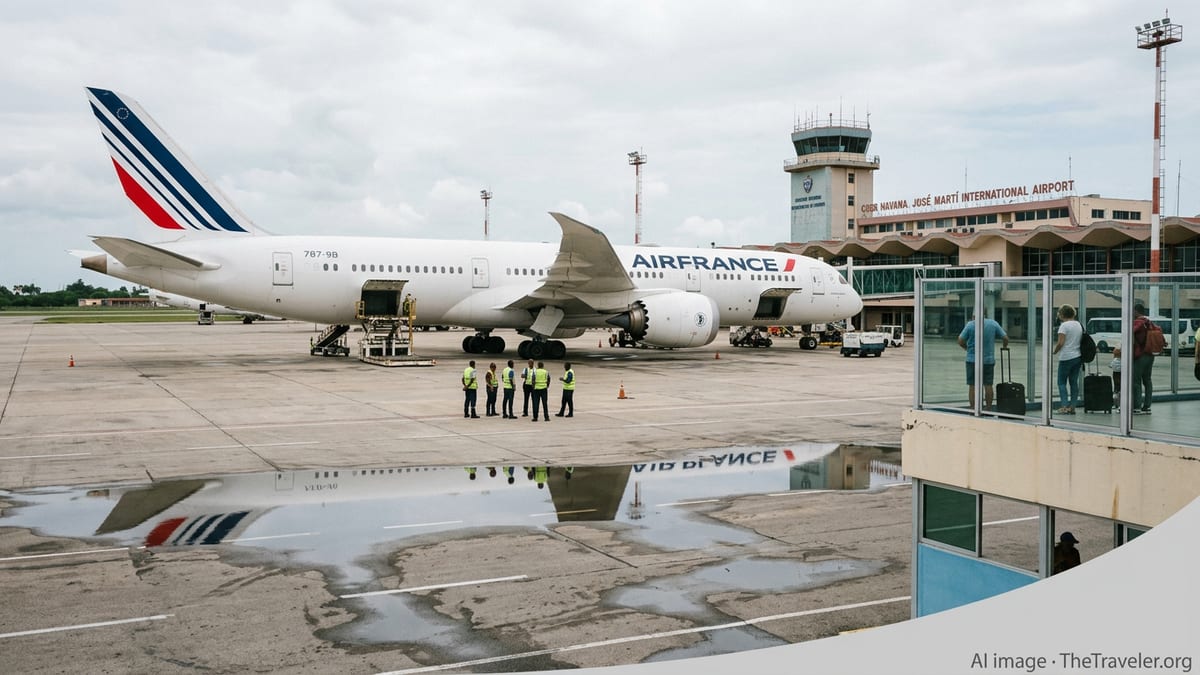
Cuba’s Jet Fuel Crisis Deepens, Stranding Airlines and Travelers
Cuba’s aviation system has been pushed to the brink in 2026, with a cascading fuel emergency disrupting operations at José Martí International Airport in Havana and other key gateways. A formal aeronautical notice earlier this year warned airlines that Jet A-1 fuel would not be available at multiple international airports, including Havana, triggering immediate cancellations and diversions across the network.
The shortages are part of a broader energy crisis affecting power generation, public transport and basic services across the island. Published humanitarian assessments describe fuel supplies as critically constrained, with knock-on effects for water systems, hospitals and logistics, leaving the tourism-dependent economy increasingly isolated from its main source of foreign currency.
For aviation, the impact has been swift and visible. Carriers serving Cuban cities have been forced either to tanker extra fuel from origin airports or to redesign their networks around refueling stops outside the country, eroding already-thin margins and adding operational complexity to long-haul leisure routes.
Travelers have faced growing uncertainty as airlines weigh safety, fuel security and commercial viability against still-persistent demand for holidays and family visits. In many cases, the result has been abrupt cancellations, extended layovers and sharply higher fares on the limited remaining seats into and out of Cuba.
Major Carriers Pull Back as Fuel Runs Dry
Amid the mounting disruption, several international airlines have opted to suspend or sharply reduce service to Cuba. Reporting from Canadian outlets and specialist aviation media indicates that Air Canada halted its Cuba operations earlier in the year, citing the inability to guarantee reliable refueling at Cuban airports and the need to prioritize repatriation flights for customers already on the island.
Russian and European carriers have followed a similar path. Coverage from aviation-focused publications notes that Rossiya and other Russian airlines suspended regular services while they evacuated remaining tourists, while package-focused operators in Canada and Europe have paused most leisure flights until at least the peak winter season. Spanish flag carrier Iberia has also temporarily halted its Madrid–Havana operation, with published schedules indicating a suspension running into the autumn.
Domestic Cuban aviation has not been spared. Local carriers that already faced chronic fleet and maintenance challenges have had to cut back further, reducing connectivity between Havana and regional destinations. Analysts say this has compounded the tourism slump by making it harder for visitors to reach popular resort areas beyond the capital.
Across the market, these withdrawals have concentrated demand onto the few remaining operators still flying regularly to Cuba. That has translated into higher load factors and, in many cases, steep fare increases on the routes that remain, especially for travelers needing last-minute tickets out of the country.
Air Europa Adapts: Offshore Refueling and Route Tweaks
Against this turbulent backdrop, Air Europa has chosen a different strategy on its core Madrid–Havana route. According to specialist airline coverage and Cuban media reports, the Spanish carrier has continued operating multiple weekly flights between Spain and the Cuban capital, while systematically shifting refueling operations to airports outside Cuba.
After the Cuban aviation notice on fuel availability took effect in February, Air Europa began adding technical stops in the Dominican Republic to ensure its long-haul aircraft could refuel securely. Initially, these stops were scheduled at Santo Domingo, but more recent reports indicate the carrier is relocating the refueling point to Punta Cana, reflecting ongoing fine-tuning of routings and airport partnerships across the Caribbean.
Network data shows that Air Europa continues to deploy widebody aircraft on the Madrid–Havana sector, using the Dominican Republic stop purely as a fuel and technical break rather than as a full passenger turnaround. The arrangement allows the airline to maintain through service on a key long-haul route while insulating its operations from the most acute effects of Cuba’s fuel shortage.
The airline has publicly acknowledged that it is closely monitoring the situation on the island, but current schedules and statements compiled by regional outlets indicate that its three weekly rotations remain in place. For travelers in Spain and Europe looking to reach Havana, this makes Air Europa one of the very few full-service options still offering a direct-ticket, same-plane itinerary.
Capacity Holds as Competitors Exit, Fares Spike
The decision to maintain the Madrid–Havana connection is reshaping the competitive landscape between Europe and Cuba. With Iberia’s suspension and the exit or downsizing of other European and Canadian airlines, Air Europa is increasingly prominent on the corridors linking Havana to major Western European hubs.
Industry observers note that this relative resilience does not mean business as usual. Published pricing data and traveler accounts point to substantial fare inflation on remaining services, reflecting both constrained capacity and the extra costs associated with refueling detours and longer block times. For Cuban residents and diaspora communities, this has made visiting family significantly more expensive, particularly on short notice.
Tourism operators in Spain and other source markets are also adjusting. Some have shifted marketing efforts to Caribbean destinations unaffected by the fuel crunch, while others continue to package Cuba trips around the Air Europa service and a much smaller set of alternative flights via third countries. The result is a patchwork of options that can change quickly as fuel availability and regulatory conditions evolve.
Despite these challenges, the continued operation of Air Europa’s Madrid–Havana flights has provided a crucial lifeline for travelers needing to move between Europe and Cuba for personal, business or humanitarian reasons. In many cases, the carrier’s flights have become the default option when other itineraries fall through.
What the Crisis Means for Travelers Planning Cuba Trips
For prospective visitors, the current aviation landscape around Cuba demands more planning and flexibility than in previous years. Travel advisories and independent analyses alike emphasize that fuel availability, flight schedules and ticket prices can shift quickly as the crisis unfolds and as airlines periodically reassess the viability of their routes.
Experts recommend that travelers booking trips to Havana in the coming months pay particular attention to whether their itineraries involve refueling stops outside Cuba, and to the minimum connection times at those intermediate airports. With Air Europa routing Madrid–Havana services via the Dominican Republic for technical reasons, passengers may see slightly extended flight durations and revised arrival times compared with historical schedules.
Travel insurance, flexible fares and clear contingency plans are also becoming more important. In a market where carriers can announce suspensions with little notice in response to operational or political changes, having options to reroute or postpone a trip can significantly reduce the risk of being stranded.
As the Cuban fuel crisis continues to play out, Air Europa’s ability to sustain its Madrid–Havana operation through offshore refueling and schedule adjustments has turned the airline into a central player in the island’s shrinking international air network. Whether that position can be maintained will depend on how long the fuel shortages persist and whether broader energy supplies to Cuba begin to stabilize in the months ahead.