


Two Finnish lakes, two very different worlds. Lake Inari in the far north is wild, sparse and mystical, wrapped in Sámi culture and Arctic light. Lake Saimaa in the east is softer and more lived-in, a labyrinth of islands dotted with cottages, steamships and spa hotels. Both are unforgettable, but they suit very different kinds of travelers. Here is how to decide which Finnish lake experience fits your travel style better.
Get the latest updates straight to your inbox!
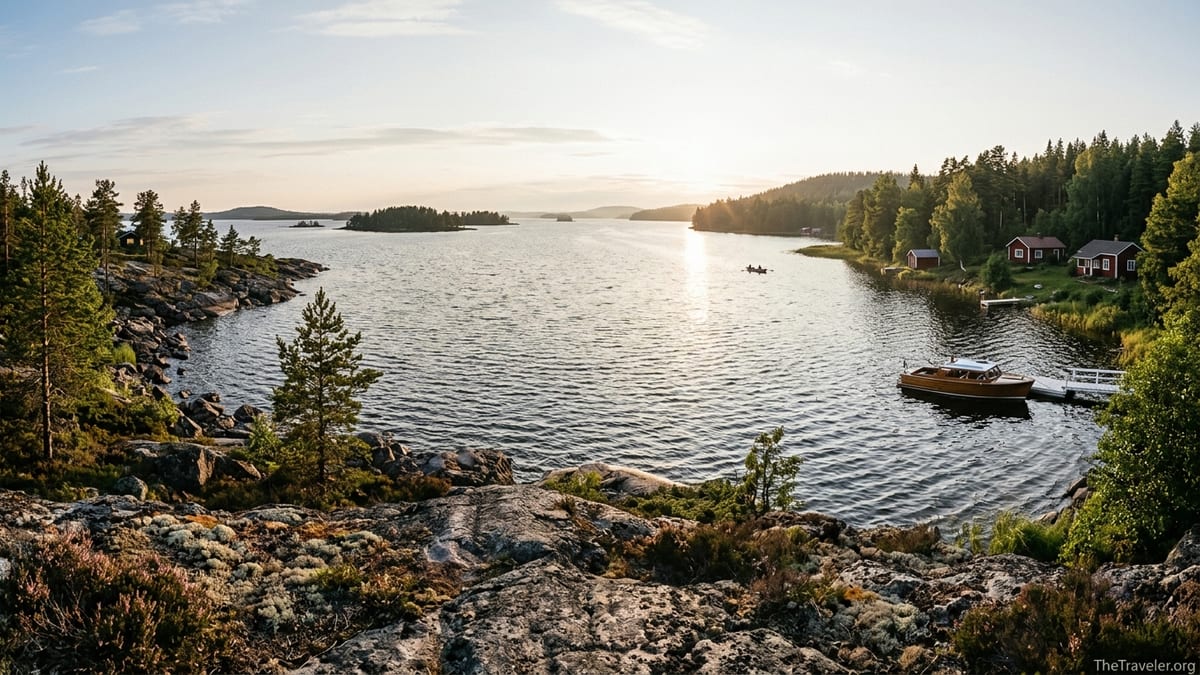
Lake Inari and Lake Saimaa at a Glance
Lake Inari sits above the Arctic Circle in Finnish Lapland, close to the small village of Inari and roughly 300 kilometers north of Rovaniemi. It is Finland’s third-largest lake, but it feels remote and almost untouched, with forested shores, scattered islands and long horizons of clear water. In winter it freezes into a vast white plain. In summer the sun barely sets, bathing the lake in long, pale evenings.
Lake Saimaa, by contrast, is the heart of Finland’s Lakeland region in the southeast. Often described as Europe’s largest lake district, Saimaa is a maze of interconnected lakes and around 14,000 islands, with towns like Savonlinna, Mikkeli, Lappeenranta and Imatra spread along its shores. Visitor infrastructure is well developed, from heritage steamships like the s/s Punkaharju in Savonlinna to spa resorts and cycle routes through the Puumala archipelago.
In practical terms, Lake Saimaa is easier to reach and easier to “sample” on a short trip. You can take a morning train from Helsinki, be in Savonlinna by early afternoon, check into a lakeside hotel and join a 1–2 hour evening cruise. Lake Inari is a commitment: most visitors fly into Ivalo Airport and then continue by shuttle or hire car to Inari, trading convenience for an immediate feeling of stepping off the map.
That basic contrast carries through everything: Inari is about wilderness, silence and elemental experiences; Saimaa is about gentle lake life, cottage culture, cruises and accessible outdoor fun. Neither is objectively better. The right choice depends on when you are traveling, how adventurous you feel and what comforts you want around you.
Seasonality: Midnight Sun, Northern Lights or Slow Summer Days
If experiencing the midnight sun or northern lights is high on your wish list, Lake Inari clearly has the edge. From roughly mid-June to mid-July the sun does not set in Inari, and even in May and August nights are very bright. Many lodges and local operators offer late-night boat trips among the islands so you can watch the sun hover above the horizon, with the lake glowing in shades of gold and pale blue.
In winter, Inari is one of Finland’s prime regions for aurora hunting, thanks to its latitude and relatively low light pollution. Tour companies in and around Inari village run small-group excursions on snowmobiles, snowshoes or kick-sleds onto the frozen lake. On a good night you might watch ribbons of green and purple moving above the islands while your guide pours hot berry juice by a campfire.
Lake Saimaa’s magic is more about classic Nordic summer. From late June to August, days are long and warm by Finnish standards, with locals escaping to lakeside cottages for saunas, swims and barbecues. Around Savonlinna, July centers on the Savonlinna Opera Festival in medieval Olavinlinna Castle, paired with sunset cruises on steamships or modern excursion boats. In shoulder seasons like late May or early September, Saimaa is quieter and often more affordable, but you still get lingering evenings and good conditions for cycling and paddling.
Winter at Saimaa is possible but not the main draw for first-time visitors. Parts of the lake freeze and there are curated activities like tour skating tracks near Punkaharju if conditions are right, but the atmosphere is more about peaceful cottages, indoor spa days and occasional walks on snowy forest trails. If your dream is dramatic winter landscapes and strong chances of northern lights, Inari is the safer choice; if you prefer green forests, blueberry bushes and mild evenings on a deck, Saimaa fits better.
Access, Transport and Trip Logistics
Reaching Lake Inari usually starts with a flight to Ivalo Airport, Finland’s northernmost commercial airport. There are year-round connections from Helsinki, with extra seasonal flights in peak winter. From Ivalo, a shuttle bus and pre-booked transfers link the airport with Inari village and nearby accommodations, or you can rent a car and drive the roughly 40-minute route along the E75 highway. Services are reliable but infrequent compared with southern Finland, so building your itinerary around fixed flight times and shuttle schedules is important.
Because distances in Lapland are long and public transport is limited, a hire car often makes sense at Lake Inari, especially if you want to explore side trips like the Urho Kekkonen National Park near Saariselkä or the road north toward the Norwegian border. Fuel and rental costs can be higher than in the south, and you should be prepared to drive in winter conditions if visiting between November and April.
Lake Saimaa is much more straightforward. Towns like Savonlinna and Lappeenranta are linked to Helsinki by trains and coaches, and there are regional buses between lake towns and popular resort areas such as Punkaharju Ridge or the Puumala archipelago. Many visitors skip car rental entirely, combining rail travel with local taxis, hotel transfers and organized cruises or day tours.
For a one-week holiday, you might fly into Helsinki, take a direct train to Savonlinna, spend a few nights at a lakeside hotel like Spahotel Casino or a cottage village near Punkaharju, and then return to the capital by train. In contrast, a week at Lake Inari typically involves at least one internal flight, more time built in for weather-related delays in winter, and a slower pace that suits travelers comfortable with remote settings.
Nature and Wildlife: Arctic Stillness vs Island Labyrinths
The nature experiences at Lake Inari and Lake Saimaa are very different in mood. Around Lake Inari, forests of pine and birch slope down to stony shores, and the lake itself is studded with thousands of small, mostly uninhabited islands. It feels airy and open; on a calm day you may go several minutes on a boat without seeing another human. Guided boat tours from Inari village might stop at Ukko Island, a historic sacred site for the Sámi people, where you can climb a short trail to a lookout over the water.
Hiking options near Inari are focused on short waymarked trails and longer wilderness routes in nearby areas like the Lemmenjoki River valley and Urho Kekkonen National Park. Even the shorter routes have a raw feel: roots underfoot, wooden duckboards over boggy sections, reindeer occasionally wandering along the path. If you enjoy the sense of being on the northern edge of Europe, this is deeply satisfying.
Lake Saimaa’s landscapes are softer but no less compelling. The signature views are of narrow forested ridges dividing stretches of water, as seen on Punkaharju Ridge where a historic scenic road and walking paths run between lakes on both sides. Island-dotted bays near Savonlinna and Puumala make for sheltered waters ideal for beginner paddlers. Small villages, wooden boat sheds and traditional smoke saunas appear along the shore, so you never feel entirely alone.
Wildlife is another major difference. Saimaa is home to the endangered Saimaa ringed seal, which lives only in this lake system. Specialized seal-watching cruises operate in spring and early summer from towns like Savonlinna and Oravi, with guides helping you spot seals basking on rocks or swimming near quiet islands. At Lake Inari, you are more likely to encounter semi-domesticated reindeer, various bird species and, with luck and patience, signs of Arctic wildlife such as grouse or foxes, though actual sightings of large predators are rare and not guaranteed.
Cultural Experiences: Sámi Heritage or Historic Castles and Spas
For travelers interested in Indigenous culture and Arctic history, Lake Inari offers experiences you simply will not find in the south. The village of Inari is one of the central communities of the Sámi people in Finland. Here you can visit the Sámi Museum and Nature Center Siida, which combines modern exhibitions on Sámi traditions, language and seasonal ways of life with an open-air museum of historic dwellings and reindeer enclosures. Some local companies offer small-scale visits to reindeer farms where families explain herding practices and share reindeer stew or smoked fish in simple wooden huts.
Throughout the year there are Sámi cultural events and handicraft markets in Inari, though the biggest gatherings, such as winter festivals and music events, concentrate into specific weeks. Even if your trip does not coincide with a major festival, just staying in a locally run guesthouse, trying dishes like sautéed reindeer or Arctic char and hearing Sámi languages in everyday use gives a strong sense of place.
At Lake Saimaa, culture takes a different form. Savonlinna’s Olavinlinna Castle, a massive medieval fortress rising from the water, hosts one of Europe’s best-known summer opera festivals. Even outside festival dates, guided tours lead visitors through its stone halls and towers, often combined with lunch on a terrace overlooking the lake. In the surrounding region you will find the Lusto Forest Museum in Punkaharju, which explores Finland’s forest culture, and the world’s largest wooden church in Kerimäki, a short drive from Savonlinna.
Saimaa is also heavily associated with spa and wellness culture. Lakeside hotels in places like Imatra, Lappeenranta and Mikkeli offer pools, saunas and treatments paired with views across the water. It is common to spend a day cycling through forest roads, then return for a long sauna session and a swim before dinner, a rhythm that feels almost ritual for many Finns. If your travel style leans toward combining light activity with comfortable evenings and cultural events, Saimaa is usually the better fit.
Activities and Adventure: How Active Do You Want to Be?
Lake Inari is ideal for travelers who like their adventures slightly rugged and are comfortable with guided excursions in remote conditions. In summer, the core activities are boat trips among the islands, fishing tours targeting species like Arctic char and grayling, and gentle hikes on marked trails outside the village. Many visitors book a multi-activity package through local operators, combining a day on the lake with an evening sauna and traditional dinner, plus perhaps a berry-picking walk or visit to a reindeer farm.
Winter ramps up the sense of adventure. Snowmobile safaris across the frozen lake, ice fishing trips where guides drill holes through thick ice, and overnight stays in glass-roofed cabins or simple wilderness huts are common offerings. Because conditions can be harsh, most activities are guided and equipment-heavy, which pushes costs higher but also ensures safety for visitors who may have limited Arctic experience.
At Lake Saimaa, the activity menu is broader and generally easier for beginners or families. From Savonlinna, you can join a 1–3 hour sightseeing cruise, including historic steamships like the s/s Punkaharju that chug slowly between islands with commentary about local history. Around Puumala, a dedicated 60-kilometer archipelago cycling route circles peninsulas and islands, crossing the lake by ferry and offering frequent cafés, swimming spots and small accommodations along the way.
Paddling is one of Saimaa’s biggest draws. Rental companies in hubs such as Oravi, Puumala and Punkaharju supply kayaks or canoes, maps of sheltered routes and safety gear. Many independent travelers plan 2–4 day island-hopping trips, camping at simple lean-to shelters or staying in waterside cabins. For something quieter, you might book a yoga retreat at a boutique resort or take a half-day guided nature walk on Punkaharju Ridge followed by a smoke sauna session in the evening.
Budget, Comfort Level and Trip Planning
Neither Lake Inari nor Lake Saimaa is a “budget” destination in a global sense, but Saimaa is generally easier to visit cost-consciously. Because it is closer to major cities and better connected by public transport, you can save on internal flights and rely more on trains and buses. Self-catering cottages around Saimaa come in a wide range of price points, from simple older cabins without dishwashers or indoor saunas to upscale villas with private jetties and hot tubs. Outside peak July weeks and major events, you can often find competitive rates, especially for longer stays.
Lake Inari tends to be more expensive day to day. Seasonal demand from winter and summer visitors means flights, accommodation and guided activities are priced to match the remote location and shorter operating seasons. Many experiences, such as northern lights tours or snowmobile safaris, require specialized gear and small-group guiding, which adds to the cost but also to the value. If you are willing to travel in shoulder seasons like late September or early October, you may find slightly better prices while still catching autumn colors and the start of aurora season.
Comfort levels differ, too. Saimaa is well suited to travelers who want reliable amenities: supermarkets in small towns, a choice of restaurants, indoor pools on rainy days and easy access to medical care if needed. You can tailor your stay to be very soft, with daily spas and short scenic walks, or more active but still cushioned by comfortable hotels.
Inari demands more self-sufficiency. You should pack carefully for weather changes, especially in winter when temperatures can drop far below freezing, and accept that options for dining, shopping and nightlife are limited. For some travelers that simplicity is a major part of the appeal. Waking up to quiet, watching mist lift from the lake and planning just one or two focused activities a day can feel like a reset from ordinary life.
Which Lake Fits Different Types of Travelers?
If you are an adventurous traveler who values remoteness, strong sense of place and elemental landscapes, Lake Inari is likely to resonate more deeply. Photographers chasing unusual light, couples who want to combine northern lights with cultural insight into Sámi life, and solo travelers comfortable with introspective, quiet days often describe Inari as a highlight of their time in Finland.
Families, mixed-ability groups and first-time visitors to Finland frequently find Lake Saimaa a more practical introduction. You can keep everyone happy with short cruises, safe swimming areas in summer, a castle visit on a drizzly day and easy access to supermarkets and playgrounds. Because distances are shorter within the Saimaa region, it is also possible to sample several flavors in one trip, such as combining Savonlinna’s culture with a few nights at a cottage on Punkaharju Ridge.
If you are traveling outside peak season, preferences matter as well. In late October or early November, before reliable snow, Inari can feel very quiet and dark, suitable mostly for aurora enthusiasts and those who enjoy tranquil off-season moods. Saimaa in May or September, by contrast, can be wonderful for hikers and cyclists: cooler air, fewer insects, lower prices and still plenty of daylight.
One compromise for travelers with enough time is to experience both on the same longer journey. You might spend a week in the south around Lake Saimaa, getting used to Finnish rhythms of sauna and lake life, then take a domestic flight north for four or five days on Lake Inari focused on Arctic landscapes and Sámi culture. The contrast between the two lake worlds makes each feel more vivid.
The Takeaway
Choosing between Lake Inari and Lake Saimaa is less about which is “better” and more about what kind of Finland you want to encounter. Lake Inari offers Arctic vastness, midnight sun, northern lights and an intimate window into Sámi heritage in a setting where silence is part of the experience. It suits travelers who do not mind long journeys, simple amenities and the higher costs that come with remoteness.
Lake Saimaa delivers the classic, gentler picture of Finnish lake life: forested islands, old steamers, castle courtyards and cottage saunas, all within reach of trains and small cities. It is flexible, family-friendly and easy to adapt to different budgets and comfort levels. For many visitors, Saimaa becomes the place they imagine when they think of Finland afterward.
If your heart is set on auroras, raw wilderness and learning about Sámi culture, prioritize Lake Inari. If you picture yourself cycling quiet roads between bays, watching an opera in a castle courtyard, or paddling through an island maze at sunset, Saimaa is your lake. And if you have the time, stitching both into the same itinerary reveals just how many different stories a single country of lakes can tell.
FAQ
Q1. Is Lake Inari or Lake Saimaa better for a first trip to Finland?
For most first-time visitors, Lake Saimaa is easier because it is closer to major cities, has better public transport and offers a wide mix of activities and comforts.
Q2. Which lake is better for seeing the northern lights?
Lake Inari is far better for aurora viewing thanks to its northern latitude, darker skies and established winter tour operators focused on northern lights experiences.
Q3. Can I visit Lake Inari and Lake Saimaa in one trip?
Yes, if you have at least 10 to 14 days. Many travelers combine a week around Lake Saimaa with four or five days in Inari, using a domestic flight to link the regions.
Q4. Do I need a car at Lake Inari?
A car is not strictly required but is very helpful, especially outside peak seasons. Public transport is limited, and a car gives more flexibility for day trips.
Q5. Is it safe to swim in Lake Saimaa and Lake Inari?
Yes, both lakes have clean water and popular swimming spots in summer. As always, choose safe entry points, be mindful of temperature and follow local advice.
Q6. Which lake is more budget friendly?
Lake Saimaa is usually more affordable because you can avoid internal flights, use trains and buses, and choose from a wider range of self-catering cottages and hotels.
Q7. When is the best time to visit Lake Saimaa?
Late June to August is ideal for warm-weather lake life. May and September are quieter and often cheaper, with good conditions for hiking and cycling.
Q8. What kind of accommodation is available around Lake Inari?
Around Lake Inari you will find small hotels, guesthouses, cabin villages and some specialty options like glass-roofed aurora cabins and simple wilderness huts.
Q9. Is Lake Saimaa suitable for families with children?
Yes, Lake Saimaa suits families well, with gentle activities like short cruises, safe swimming areas, easy walking paths and family-friendly lakeside resorts.
Q10. How many days should I spend at each lake?
For Lake Saimaa, three to five days works for a good overview. For Lake Inari, at least three full days are recommended, with four or more if you want varied activities.