

More news on this day
As Guadalajara prepares to welcome tens of thousands of FIFA World Cup fans in 2026, a series of cartel-related incidents, civil unrest and upgraded travel advisories are prompting renewed scrutiny of safety conditions in the Jalisco capital.
Get the latest news straight to your inbox!
Elevated Travel Advisories for Jalisco and Guadalajara
Recent updates to foreign government travel advisories have placed Jalisco, the state whose capital is Guadalajara, under a higher-risk category than many other Mexican destinations. The current United States advisory for Jalisco is rated at Level 3, urging travelers to reconsider nonessential trips because of crime and unrest. The advisory, refreshed at the end of May 2026, highlights persistent concerns about violent crime, including homicide, kidnapping and carjacking, across parts of the state.
Specialized travel-risk bulletins and consular updates also point to practical restrictions that remain in place for official personnel in and around Guadalajara. Publicly available information shows that staff from foreign missions posted in the city have been subject to nighttime curfews and limits on travel outside the metropolitan area in recent months, reflecting lingering concern over unpredictable security conditions on highways and in outlying towns.
Independent safety assessments published in 2026 describe Guadalajara as a major urban center with moderate but unevenly distributed risk. These reports note that traditional tourist zones, such as the historic core and areas around major hotels, tend to experience lower levels of serious crime than peripheral neighborhoods. Nonetheless, they recommend heightened vigilance, particularly at night, when using public transport, and when moving between the city and other parts of Jalisco.
Cartel Violence and the Legacy of the 2026 Jalisco Unrest
Guadalajara’s security outlook for visiting football fans is shaped by the aftermath of a major military operation in Jalisco on 22 February 2026, in which Mexican forces killed Nemesio “El Mencho” Oseguera Cervantes, the leader of the Jalisco New Generation Cartel. The operation triggered a wave of cartel unrest across several states, including Jalisco, marked by road blockades, vehicle burnings and clashes with security forces.
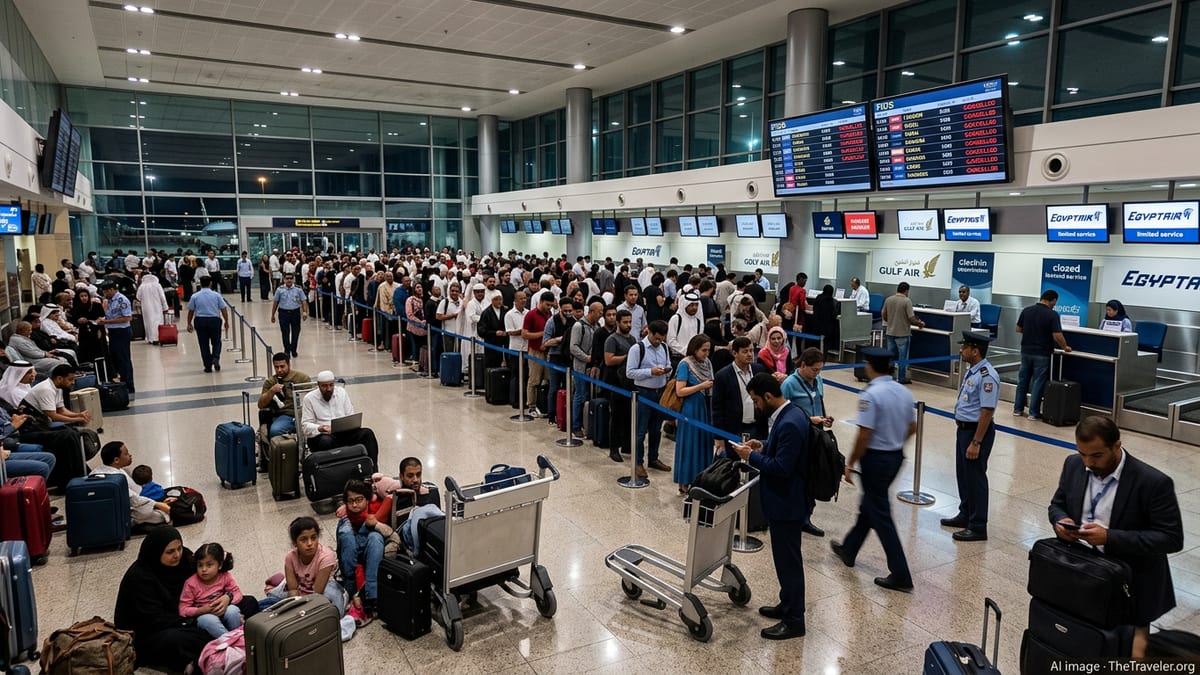
Published coverage of the February events describes temporary suspension of public transport services in the Guadalajara metropolitan area and disruptions at the city’s international airport, as well as similar impacts in Puerto Vallarta and other Jalisco hubs. Airlines and corporate travel managers briefly introduced special waivers for passengers holding tickets to Guadalajara during this period, illustrating the extent to which the unrest spilled over into the travel sector.
Subsequent analysis of the unrest suggests that much of the violence was directed at infrastructure and security forces rather than foreign tourists or World Cup preparations. However, the incidents underscored the capacity of organized criminal groups to shut down key transport corridors and to affect airports and bus networks on short notice. For fans planning tight itineraries around match days, such disruptions could pose logistical and safety challenges, even if they are not directly targeted.
The broader legacy of cartel activity in and around Guadalajara also includes a high number of disappearances and long-running battles between criminal factions. Human rights organizations and local search collectives have documented thousands of missing-person cases in Jalisco over the past decade. While this violence rarely intersects with tourist areas, it contributes to an atmosphere of anxiety among residents and shapes external perceptions of risk ahead of the World Cup.
Stadium Security, Fan Zones and Urban Crime Risks
World Cup matches in Guadalajara are scheduled for the modern stadium complex commonly known as Estadio Akron, located on the western edge of the metropolitan area. Event-focused safety analyses describe the venue as relatively self-contained, with dedicated access roads, controlled parking areas and extensive perimeter security. During the tournament, security measures are expected to include multi-layer screening, restricted-traffic perimeters and coordination between local and national agencies.
Specialist travel-safety briefings point out that most serious risks to fans are likely to arise not inside the stadium but in transit and in surrounding urban areas. Public information about Guadalajara highlights concerns about vehicle theft and armed robbery near certain transport nodes, including bus stations and park-and-ride facilities that may be used by supporters on match days. Travelers arriving by rental car or rideshare are often advised to avoid poorly lit parking areas and to keep valuables out of sight.
Within the city, typical big-city crime risks such as pickpocketing, bag snatching and opportunistic mugging are a concern in busy public spaces, nightlife districts and late-night public transport. Travel security advisories recommend that visitors stay within recognized hotel districts, use licensed taxis or vetted ride services, and move in groups when returning from fan zones or bars. They also caution against displaying team merchandise, smartphones or cameras in a way that might draw attention in quiet streets after dark.
Despite these concerns, crime statistics and expert assessments indicate that most visits to Guadalajara are completed without serious incident, particularly when travelers follow basic precautions. The risk environment is described as dynamic rather than uniformly extreme, with conditions varying by neighborhood and time of day. For FIFA fans, preparation and situational awareness are presented as central tools to reduce exposure to crime.
Transport Disruptions and Civil Unrest Scenarios
Beyond direct criminal activity, civil unrest and sudden security operations represent additional risk factors for World Cup visitors. The February 2026 unrest demonstrated how quickly protests, roadblocks and clashes can emerge in response to cartel-related crackdowns. Reports from that period describe buses and private vehicles set on fire, major highways partially blocked, and temporary closures at airports serving Jalisco’s major cities.
Risk analysis firms and logistics specialists note that similar disturbances during the World Cup period could complicate travel to and from Guadalajara on key match days. Even limited unrest in outlying districts could trigger flight delays, route diversions or advisories against nonessential road travel at night. Fans relying on same-day arrivals for matches may face heightened exposure to missed connections or unexpected overnight stays if security conditions deteriorate suddenly.
Travel-industry responses to the February 2026 events offer a preview of how carriers might react in the event of renewed unrest. Airlines introduced flexible rebooking policies for flights touching Guadalajara, and some corporate travel programs temporarily restricted staff travel to parts of Jalisco. For individual fans, similar measures could provide options to adjust plans but might also signal deteriorating local conditions, reinforcing the importance of monitoring airline and tour-operator alerts.
Unrest-related misinformation is another issue raised in post-event assessments. During the 2026 Jalisco operation, widely shared but inaccurate social media claims described airports overrun by gunmen and tourists held hostage. Analysts emphasize the need for travelers to rely on verified official advisories and credible news outlets rather than viral posts when evaluating security developments in Guadalajara.
Practical Safety Guidance for Visiting FIFA Fans
Given the elevated advisory level and the recent history of cartel-related unrest, independent safety experts recommend that visitors to Guadalajara in 2026 adopt a more structured approach to risk management than they might in lower-risk destinations. Common guidance includes pre-registering with consular notification systems, confirming that travel insurance explicitly covers civil unrest and trip disruption, and sharing itineraries with trusted contacts.
Published travel-safety resources advise fans to choose accommodation in established neighborhoods with good transport links, such as areas near the historic center or recognized business districts, and to avoid informal rentals in peripheral zones with limited security presence. Many recommend using hotel-arranged transfers or reputable transport apps for late-night movements, particularly after matches or celebrations.
Health-focused research on the 2026 World Cup has also highlighted infectious disease considerations linked to large crowds and international travel routes. Although Guadalajara is not identified as an exceptional hotspot compared with other host cities, travelers are encouraged to keep vaccinations up to date, observe basic hygiene measures, and factor potential healthcare access into their planning. This layer of risk sits alongside, rather than replaces, the more visible concerns about crime and unrest.
For fans determined to experience the World Cup in Guadalajara, publicly available assessments converge on a similar message: the city remains a major cultural and sporting destination, but it is embedded in a state facing significant security challenges. Understanding the travel advisories, tracking local developments closely in the run-up to match days and exercising caution in daily movements can help supporters balance the excitement of the tournament with a realistic appraisal of the risks.