


More news on this day
Turkish Airlines is preparing to enter the premium economy market, joining a growing list of global carriers that see the cabin as a key battleground for long-haul travelers seeking more comfort and flexibility without paying business-class fares.
Get the latest news straight to your inbox!
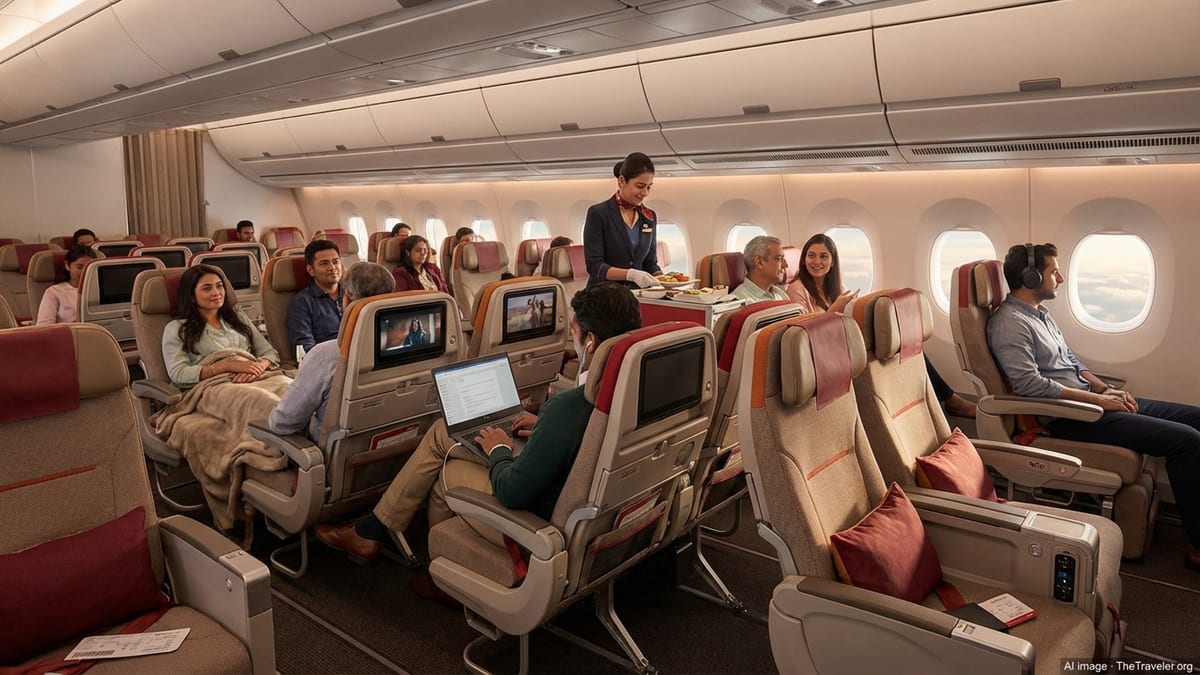
Turkish Airlines Targets 2028 for Dedicated Premium Economy
Recent industry reporting indicates that Turkish Airlines plans to introduce a true premium economy cabin from 2028, initially on new Airbus A350 aircraft before extending it across parts of its long-haul fleet. The move marks a strategic shift for the carrier, which previously relied on extra-legroom seating rather than a distinct intermediate cabin.
According to published coverage, the premium economy rollout is expected to be phased, pairing new deliveries with retrofit programs managed by the airline’s in-house maintenance subsidiary. This approach is designed to limit aircraft downtime while creating a more consistent four-cabin offering on key intercontinental routes from Istanbul.
The decision places Turkish Airlines firmly in line with leading European competitors that already promote premium economy as a core product. It also reflects broader network ambitions: with the airline serving more countries than any other carrier, a harmonized cabin structure is increasingly important for corporate contracts and connecting traffic.
For travelers, the development signals that future Turkish Airlines long-haul flights are likely to offer a clearer step-up path from standard economy, matching a trend in which passengers selectively “trade up” for comfort on overnight or ultra-long sectors.
European Flag Carriers Double Down on the Middle Cabin
Across Europe, premium economy has shifted from niche experiment to mainstream pillar of long-haul strategy. British Airways, Virgin Atlantic, Lufthansa, Finnair and SWISS all now position their intermediate cabins as distinct experiences rather than simply extra-legroom rows at the front of economy.
British Airways markets World Traveller Plus as a separate cabin with wider seats, increased legroom, enhanced dining and priority services. Publicly available information shows the airline has refreshed soft elements in recent years, including upgraded pre-takeoff drinks and seasonal food and beverage touches that aim to differentiate the product from standard economy on transatlantic and Asian routes.
Virgin Atlantic’s Premium cabin is promoted as offering larger leather seats, a seat pitch of up to around 38 inches, priority check-in and boarding, and upgraded catering with restaurant-style presentation. The airline highlights small touches such as welcome drinks, premium amenity kits and self-service snack areas on selected aircraft to support a more relaxed atmosphere on overnight flights.
Finnair and SWISS have also invested in their own premium economy products, focusing on improved ergonomics, increased personal space and tailored dining. Industry analysis notes that these carriers see the cabin as particularly attractive on high-yield routes to North America and Asia, where demand for comfort is strong but corporate travel budgets remain under pressure.
Lufthansa’s Allegris and SWISS Senses Showcase Next-Generation Design
Lufthansa’s new Allegris cabin family, which entered service on select Airbus A350 and Boeing 787 routes in 2024, illustrates how premium economy is being redesigned alongside business and first class rather than as an afterthought. Company material describes Allegris as a comprehensive revamp of all long-haul cabins, with a multibillion-euro investment running through 2025.
In the Allegris layout, premium economy is framed as a quieter, more spacious zone with enhanced seating and dedicated service, positioned clearly above standard economy. Reports from early flights highlight features such as increased recline, upgraded inflight entertainment and a more refined dining concept, while still maintaining a clear price gap to the reimagined business class suites.
Within the wider Lufthansa Group, SWISS is rolling out its own “SWISS Senses” long-haul interiors, also combining new business and first-class suites with updated premium economy seating. Group disclosures indicate that these projects are central to a broader push to modernize cabins, boost customer satisfaction scores and appeal to travelers who may no longer routinely book business class yet want a noticeably better experience than economy.
The synchronized upgrades suggest that premium economy is now built into aircraft design and fleet planning from the outset. Rather than simply increasing seat density, airlines are allocating significant real estate to this middle cabin in the expectation of sustained demand and higher yields.
Why Premium Economy Is Surging Worldwide
Industry observers point to several structural factors driving the premium economy boom. After the pandemic, many corporate travel policies were tightened, and some companies shifted long-haul trips from business to premium economy as a compromise between comfort and cost. At the same time, a portion of leisure travelers has become more willing to pay for additional space on long overnight flights.
Publicly available financial filings from leading groups show that premium cabins, including premium economy, generate disproportionately high revenue relative to their share of seats. This economic logic encourages airlines to allocate more cabin space to higher-yield products, even when that means reducing the number of standard economy seats on flagship aircraft.
Technology has also made product differentiation easier. Modern widebodies such as the Airbus A350 and Boeing 787 can be configured with sophisticated lighting, acoustic treatments and in-seat power, allowing airlines to create a more distinct “zone” for premium economy. This helps justify fare premiums while avoiding the cost of providing lie-flat beds on every higher-priced ticket.
As more carriers unveil refreshed cabins, competition is shifting from simply offering premium economy to how well the product is executed. Travelers now compare seat width, pitch, amenities, and soft-service touches across airlines when deciding whether the fare difference is worthwhile.
What Travelers Can Expect Next
With Turkish Airlines planning to join British Airways, Virgin Atlantic, Lufthansa, Finnair, SWISS and others in offering a full-fledged premium economy, frequent flyers are likely to see more consistent four-cabin choices on long-haul routes over the next several years. The Istanbul-based carrier’s timetable toward 2028 means its product will arrive once the latest generation of cabins from European peers is firmly established.
Analysts expect airlines to keep refining premium economy with incremental improvements rather than dramatic overhauls. Potential enhancements include more personalized dining options, expanded inflight connectivity, integrated wireless charging and refined seat designs that balance extra recline with privacy and ease of movement.
For international travelers, the message is clear: the gap between economy and business class is being filled with increasingly sophisticated options. As competition intensifies, premium economy is evolving from a niche cabin into a central part of global network strategy, giving passengers more ways to tailor comfort, budget and flexibility on long journeys.