


More news on this day
Passengers traveling through Athens International Airport this week are being urged to allow extra time, as scheduled air navigation system inspections trigger planned delays across a number of domestic and international flights.
Get the latest news straight to your inbox!
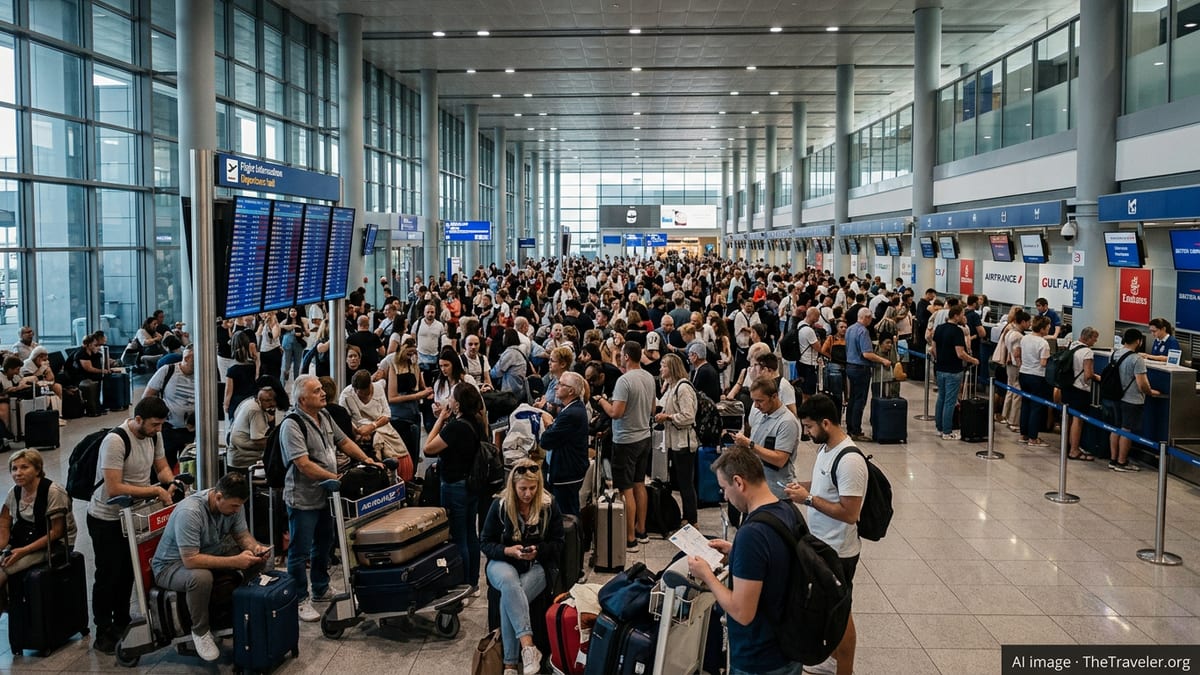
Planned checks bring controlled disruption to busy hub
According to Greek media reports, inspections of key air navigation systems in the Athens Flight Information Region are taking place over several hours on Wednesday and Thursday, prompting temporary adjustments to the airport’s handling capacity. Publicly available information indicates that the Hellenic Civil Aviation Authority has pre‑notified airlines of expected disruption so that flight schedules could be adapted in advance.
Local coverage describes these as scheduled technical checks on systems used to manage aircraft movements in the wider Athens airspace, with the aim of validating performance and resilience during the early peak of the summer travel season. The inspections are understood to be focused on navigation and communication infrastructure that underpins approaches and departures at Athens International Airport, the country’s primary aviation gateway.
As a result, airlines have been asked to factor in additional ground and airborne holding time, particularly for services operating in and out of Athens during the inspection windows. While the airport itself remains fully open, the overall flow of traffic is being modulated to match the temporarily reduced capacity of the navigation network.
The timing of the checks coincides with steadily rising passenger numbers as Greece moves into the core holiday period, adding pressure to an already busy operations environment at the capital’s main airport.
Passengers advised to expect up to one hour of delays
Greek news outlets report that airlines were informed to plan for delays of up to 60 minutes on affected flights, with some services rescheduled or retimed to smooth out the impact. The guidance reflects a controlled, pre‑planned slowdown rather than a sudden outage, but travelers are being warned that departure and arrival times may shift at short notice as the system calibrations proceed.
Operational updates shared in local coverage suggest that delays are likely to be most pronounced during the core inspection windows, before gradually easing as airspace capacity is restored. Air carriers have been encouraged to proactively notify passengers of any schedule adjustments and to build additional turnaround time into aircraft rotations serving Athens.
Travel forums and recent traveler accounts already point to longer processing times at the airport due to the European Union’s new Entry/Exit System for non‑EU arrivals and departures. The navigation inspections add an extra layer of complexity, meaning even modest flight delays can cascade into tighter connections and longer waits at gates or baggage belts.
Passengers connecting through Athens on separate tickets, or with short layovers, are being advised by travel commentators to allow a wider buffer than usual, particularly for domestic island links that rely on precise timing to connect with long‑haul services.
Safety and modernization pressures after past systems failure
The inspections come only months after a high‑profile technical incident in early January, when a serious problem in Greece’s radio frequency network led to the temporary closure of the Athens Flight Information Region and widespread disruption across the country’s airports. Subsequent reporting and commentary highlighted concerns about the age and resilience of parts of the national air navigation infrastructure.
In parallel, European aviation bodies have drawn attention to delays in rolling out performance‑based navigation procedures across Greek airports, a modernization effort intended to increase both safety and efficiency. Recent documentation from Eurocontrol and European Commission bodies has underlined the need for Greece to accelerate upgrades and ensure compliance with region‑wide navigation standards.
Against that backdrop, this week’s inspections at Athens International Airport are being interpreted by aviation observers as part of a broader push to validate, test, and, where necessary, reinforce the systems that manage the dense flow of traffic over the Aegean. Although inconvenient for travelers in the short term, the checks form part of a longer‑term effort to strengthen the reliability of the country’s aviation infrastructure before the peak summer rush reaches its height in July and August.
Reports from industry analysts suggest that Greece is facing particularly intense seasonal demand this year, with Athens serving as the primary hub for both mainland tourism and island connections. That context increases the stakes for ensuring that navigation systems are not only safe, but also able to handle sustained high volumes without triggering recurrent delays.
Operational measures to manage queues and protect connections
Public guidance from Athens International Airport emphasizes early arrival and careful planning during June, especially for passengers on international departures or those needing to clear Schengen border controls under the new biometric regime. Airport information pages recommend that travelers build in additional time for check‑in, security screening, and passport control, noting the potential for longer waits during peak hours.
Travel industry commentary indicates that airlines and ground handlers at Athens have already been working with tighter operating margins due to the new border control procedures and heavier flight loads. The temporary navigation checks add to that operational strain, prompting some carriers to re‑sequence aircraft rotations, consolidate services, or adjust crew schedules to reduce the risk of missed connections later in the day.
Local transport providers are also advising passengers to account for possible knock‑on effects beyond the airport perimeter. Higher congestion on access roads and public transport links, particularly during morning and late‑afternoon peaks, can lengthen the journey time from central Athens to the terminal. With departure times more fluid during the inspection period, conservative planning is being recommended for both inbound and outbound trips.
For travelers continuing on to island destinations, tour operators are encouraging the use of longer connection windows in Athens, especially when itineraries combine low‑cost carriers with full‑service airlines. Where possible, same‑ticket itineraries that offer greater protection in the event of delays are being presented as a lower‑risk option while the navigation system checks are underway.
What travelers passing through Athens should do now
For passengers due to travel through Athens during the inspection period, practical steps focus on flexibility and information. Travel advisors recommend monitoring airline apps and text alerts closely in the 24 hours before departure, as small schedule changes may be applied repeatedly as the impact of the checks becomes clearer.
Passengers are also being encouraged to arrive at the airport earlier than they might normally consider sufficient, especially for morning flights that coincide with busy security and border control peaks. Allowing a greater margin of time provides a buffer if check‑in opens later than expected or if upstream delays in airspace management lead to crowded departure areas.
Experts note that, while the disruption is noteworthy, it remains managed and time‑limited. Unlike an unplanned outage, the inspections are scheduled, and contingency measures have been developed in advance. For most travelers, the impact is expected to be experienced as moderate delays at the gate or on arrival rather than widespread cancellations.
Nevertheless, the episode highlights how sensitive densely used hubs such as Athens International Airport are to even carefully planned technical work on navigation systems. With Greece preparing for another record tourist season, the way these inspections are handled will be closely watched by airlines and passengers alike as an indicator of how resilient the country’s aviation infrastructure has become after a turbulent start to the year.